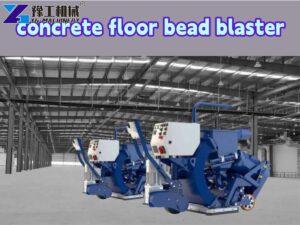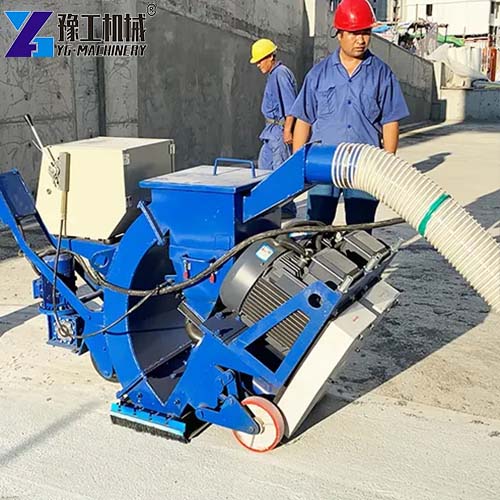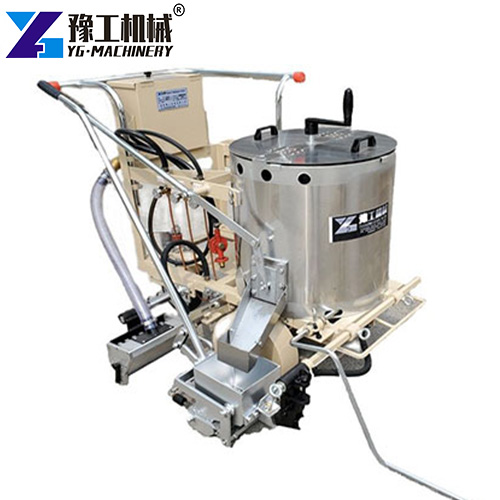

A concrete floor bead blaster cleans old coatings and dirt fast. It shoots steel shots onto the surface to expose a clean, rough profile for the next layer. High speed and low dust make it the smart choice for large commercial floors. Tell us your floor size, and YG will send a concrete floor bead blaster quote with a plan.
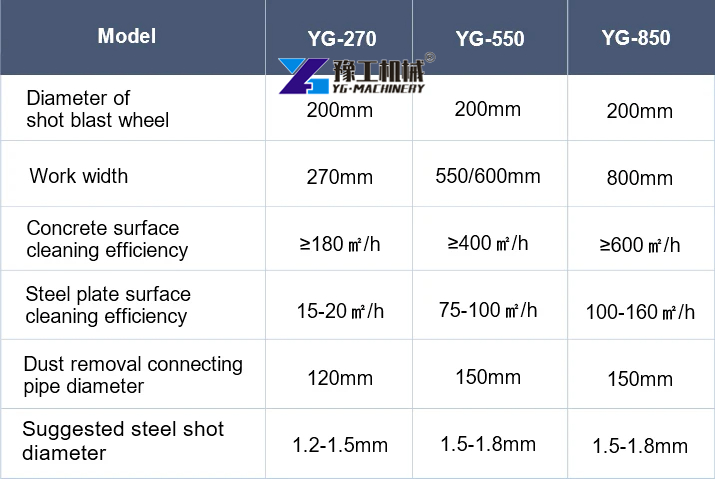
| Item | Unit | YG-270 | YG550-600 | YG-850 |
|---|---|---|---|---|
| Blast wheel diameter | mm | 200 | 200 | 200 |
| Working width | mm | 270 | 550/600 | 800 |
| Travel speed | m/min | 0.5-20 | 0.5-33 | 0.5-33 |
| Concrete cleaning eff. | m²/h | >=180 | >=400 | >=600 |
| Steel plate cleaning eff. | m²/h | 15-25 | 75-100 | 100-160 |
| Dust port diameter | mm | 120 | 150 | 150 |
| Steel shot size | mm | 1.2-1.5 | 1.5-1.8 | 1.5-1.8 |
| Shot consumption | g/m² | 10 | 10 | 10 |
| Dust collector | 7-cartridge auto reverse | 8-cartridge auto reverse | 8-cartridge auto reverse | |
| Blast wheel motor | kW | 11 | 11×2 | 15×2 |
| Travelling motor | kW | 0.5 | 1.5 | 3 |
| Overall size | mm | 1000x300x1100 | 1950×720/775×1400 | 1950x1020x1550 |
| Weight | kg | 150 | 570 | 700 |
| Power supply | 400V 50Hz 100A CEE | 400V 50Hz 100A CEE | 400V 50Hz 100A CEE |
How a Concrete Floor Bead Blaster Works
How does it bring an old floor back to grade? A spinning wheel flings steel shots at the surface, then a vacuum pulls dust and debris away. This leaves a clean profile ready for new coating.
Blast and Recovery Cycle
- Steel shots strike the floor at high speed
- A dust collector recovers the media and fines
- Reusable shots keep operating cost low
Self-Propelled Drive
- Travel speed ranges from 0.5 to 33 m/min
- One operator steers the whole unit
- Compact width suits aisles and doorways
A clean finish leaves no old paint or grease behind. Profile stays even across the whole bay. Work moves fast because each pass removes several layers. The vacuum system keeps the work zone tidy. Operators finish big areas in a single day. Low dust means less cleanup after the job. This keeps the next crew safe and ready.
Daily checks take only minutes. Operators inspect the wheel, hoses, and filters each morning. A worn shot size slows the profile and raises cost. Replace shots before output drops. Keep spare cartridges and belts on site. This routine protects quality across long jobs. Surface profile is the real deliverable. A controlled blast depth preps standard epoxy systems. A smooth base risks a weak bond. Too much force wastes coating and media. Correct pressure and feed avoid both issues. Contractors match settings to the coating spec. Good preparation extends the topcoat life.
Certain floors need several passes. Greasy automotive bays may take two runs. Deep rubber tracks need more time. Start with a coarse media for thick build-up. Finish with a finer profile for the topcoat. This staged approach saves material and time. A quick test patch sets the right starting point.
Shot Blasting Machine Efficiency by Model
Which shot blasting machine fits your output? Choose the model by floor size and daily target. Bigger floors gain from wide working heads.
Output By Width
- YG-270 cleans at least 180 m² per hour
- YG550-600 reaches 400 m² per hour
- YG-850 tops 600 m² per hour
Steel Surface Jobs
- Steel plate work from 15 to 160 m² per hour
- Deeper profiles suit marine and tank decks
- Adjustable feed matches substrate hardness
A 270 mm unit works aisles and edges. An 850 mm double-wheel unit clears hangar floors quickly. Higher output cuts labor cost per square meter. Weight from 150 to 700 kg keeps transport simple. The air road shot blasting machine price fits most project budgets. Compare running cost before you sign.
Consumption stays low at 10 g per square meter. Reusable media lowers supply bills. Operators return most shots to the feed. A good vacuum keeps recovery clean. This cuts waste and keeps floors tidy. Teams spend less on consumables each month. Steel decks and shipyards add another use. Shot blasting raises anchor profile for coating. This suits tanks, bridges, and offshore structures. Clean metal accepts primer without residue. Contractors switch modes between tasks. One machine saves a second purchase.
Operators normally run one unit with a mobile dust cart. The cart follows the machine on a rubber base. Suction stays strong along the full width. A stable vacuum holds shot in the feed. This loop keeps the floor clean and dry. Little debris escapes the working path.


Road Shot Blaster for High-Capacity Cleaning
High-traffic roads and parking decks need a road shot blaster that delivers day after day. Sturdy frames and steady feed keep the pace.
Double-Wheel Power
- Two blast wheels spread force evenly
- 11 kW or 15 kW motors hold momentum
- 8-cartridge vacuum removes dust on the move
Reliability for Long Shifts
- Auto reverse cleaning keeps filters active
- Steel shot consumption stays at 10 g/m²
- Heavy frame stays stable at full speed
A steady road shot blaster lifts rubber, oil, and old markings in one pass. Large cleaning jobs finish on schedule. Lower shot loss cuts consumable spending. Teams value the stable feed and even profile. The same unit works on bridges and airport aprons. Daily checks take only minutes between runs.
Dust control is central to the design. The 8-cartridge unit cleans the air while moving. Auto reverse purges filters without stopping work. This keeps the operator in a safe working zone. Bridge and deck crews appreciate the airflow. Less dust means fewer mask changes. Transport teams often ask about size and power. The YG-850 stays under 1950 mm long. A van or trailer moves most models.
Road marking removal works well on asphalt too. A light pass lifts old paint lines. Contrast stays clear for new markings. Airport runways use the same method. Teams coordinate for brief lane closures. Clean work keeps traffic moving. This expands the machine beyond floors. All units run on 400V industrial power. A CEE plug keeps setup standard. Ask for a power survey before delivery.
Key Advantages of a Concrete Floor Bead Blaster
Why choose a concrete floor bead blaster over older methods? It wins on speed, safety, and final surface quality.
Speed and Safety
- Fast profiling beats manual scarifying
- Dust is captured before it spreads
- Burns, fumes, and chemical risks stay low
Surface Quality
- Even profile supports strong coating bond
- Clean base accepts epoxies and topcoats
- Repeat passes remove more serious damage
A US warehouse re-finished a roll-out distribution floor. Epoxy bonding improved after one bead blasting pass. The job finished days ahead of grinding methods. Floor noise dropped, and slip risk fell after recoating. The investment paid back on the first large order. Operators kept working safely throughout the job.
Service support comes standard with every unit. We explain start-up, settings, and daily care. Spare wheels, cartridges, and belts stay in stock. A short video covers common adjustments. Most repairs need only basic tools. This keeps the machine running on schedule. Budget owners compare before buying. Balance working width with power draw. A single-wheel unit fits medium job sites. Double-wheel models pay off on large contracts. We share output data for each model. Review real numbers before you commit.

Why Shot Blasting Beats Grinding and Chemicals
Grinding and acid etching look cheap, but they hide real costs. Shot blasting delivers a cleaner result with less mess.
Avoid Hidden Damage
- Grinding smears fine paste and dust
- Acid use risks stains and safety hazards
- Shot blasting leaves a dry, open profile
Cleaner Process
- One vacuum step removes waste at source
- No chemicals and no wastewater disposal
- Media is reused across many passes
Shot blasting also protects the crew and the neighboring spaces. A dry process avoids residue and bad smells. Contractors finish faster with less liability. This method shines on food plants and clean workshops. Clear planning keeps the work zone sealed. Good results come from consistent settings.
YG supplies equipment for the full site flow. A full hydraulic core drill rig tests slab bases before coating. A rotary drilling rig handles deep foundation piles. Utility crossings use a horizontal directional drilling rig. Water wells run on a reverse circulation drill rig. Rock and quarry work uses a down-the-hole drill rig. One supplier covers the whole project.
Quality checks happen before shipment. Every unit runs a short test at the factory. This catches leaks and misalignment early. We pack machines, so they arrive ready to work. Documentation covers part numbers for reorder. Clear labels make service simple on site. Our support team responds in one business day.
Contractors also use shot blasting on overhead tanks. Media recovers fast and cleanly. Workers avoid ladders and spray mess. A longer hose reaches most surfaces. This keeps crews productive and safe. Consistent coverage builds trust with owners.
Get a Concrete Floor Bead Blaster Quote
Ready to make your next floor project easy? Contact YG Machinery for a concrete floor bead blaster quote today.
We match the model to your floor size and coating. We explain output, dust control, and power needs clearly. Our team provides training, spares, and maintenance support. Ask about steel shot supply and vacuum packages. Compare YG-270 to YG-850 against your schedule. We send clear pricing and delivery details. Share a floor photo for a custom recommendation. We reply within one business day.
Many buyers confirm after a quick site review. We can discuss rental and purchase options. Ask about local agents and spare depots. A demo video shows real output before you buy. We guide you from quote to commissioning. Your first floor becomes the next reference.