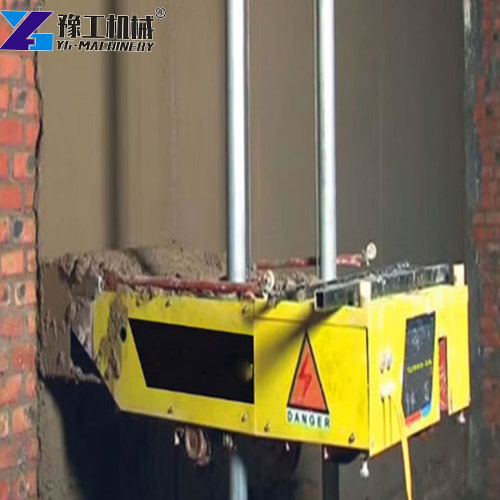
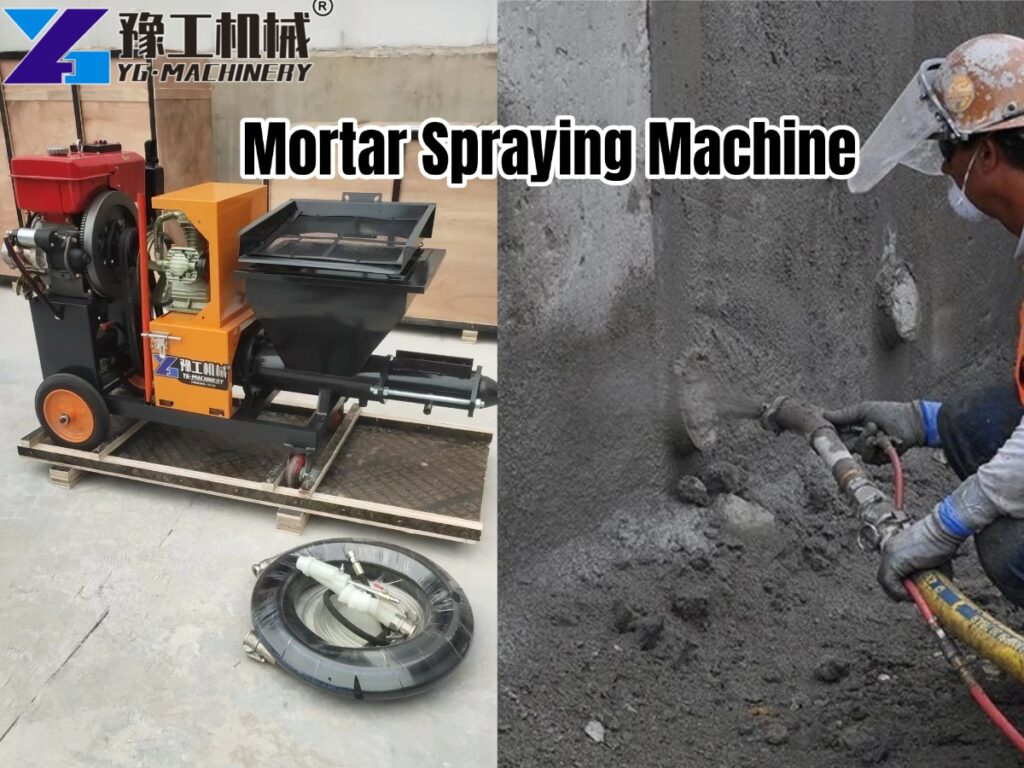
Global construction output grows by over 4 percent each year. Builders need faster and more consistent wall coating methods. A cement plaster spray machine applies mortar evenly at 3 to 4 cubic meters per hour. This output replaces the work of 10 to 15 manual laborers. YG Machinery has manufactured wall spraying equipment for more than 20 years. Our machines work on high-rises, warehouses, and residential projects across 50 countries.
| Type | Electric | Diesel |
|---|---|---|
| Output | 3m³/h | 4m³/h |
| Power | 220V-380V/7.5kW | Diesel engine |
| Pressure | 3MPa | 3MPa |
| Conveying Tube | 32mm | 32mm |
| Max. Aggregate Size | ≤8mm | ≤8mm |
| Hopper Volume | 80L | 80L |
| Air Consumption | 0.3m³/min | 0.3m³/min |
| Weight | 320kg | 320kg |
| Material Proportion | 1:1:3 | 1:1:3 |
| Conveying Distance | H:50m / V:30m | H:50m / V:30m |
How Does a Cement Plaster Spray Machine Work
The machine starts with a powerful motor that drives the pumping system. Workers load mixed cement mortar into the 80-liter hopper. The pump pushes the material through a 32mm conveying tube. At the nozzle, compressed air atomizes the mortar into a fine spray. The operator guides the spray across the wall in even passes.
The electric model runs on 220V to 380V with a 7.5kW motor. The diesel version uses a standard diesel engine for sites without grid power. Both models deliver 3MPa pressure for strong adhesion. Maximum aggregate size is 8mm, which suits most standard mortar mixes. The spraying ratio follows the common 1:1:3 cement-sand-proportion mix. After each work session, workers flush the pump with clean water to prevent blockage. This simple step keeps the machine ready for the next shift.


Key Advantages of Cement Plaster Spray Machine
- High output speed. The machine covers 50 meters horizontally and 30 meters vertically. One operator can finish a standard room wall in under two hours.
- Consistent coating quality. The spray creates a uniform layer with no gaps or thick spots. This reduces the need for secondary leveling and saves finishing time.
- Lower labor cost. One machine with three workers replaces a team of 10 to 15 manual applicators. The labor saving pays for the machine within a few projects.
- Dual power options. The electric model suits indoor and urban job sites with stable power. The diesel model handles remote sites where electricity is unreliable.
- Compact and portable. The unit weighs only 320kg with a small footprint. It fits through standard doorways and rides easily on a construction elevator.

What Affects Stucco Sprayer Machine Price
Buyers often wonder why prices vary across different models. Several factors determine the final cost. The power type is one major factor. Diesel engines cost more upfront but save on electricity at remote sites. Electric models are cheaper to buy and run where grid power is available.
The output capacity also plays a role. A 3m³/h unit serves small contractors well. A 4m³/h model suits larger projects with tight deadlines. Additional features like variable speed control and extended hose length add to the cost. Contact YG Machinery for a detailed quote based on your specific needs.
Wide Applications of Cement Plaster Spray Machine
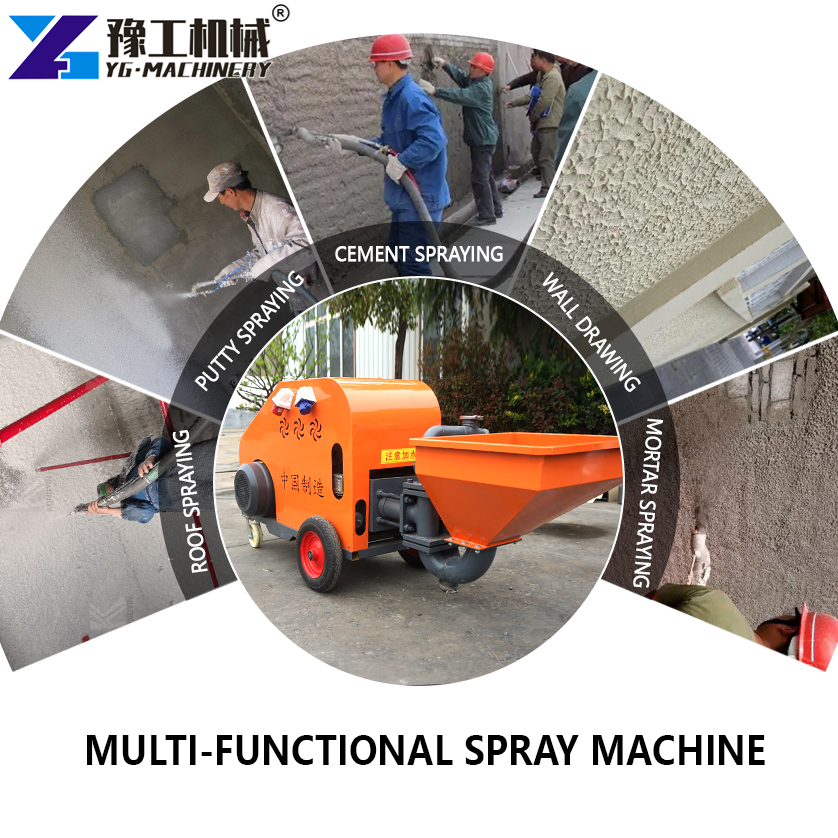
This machine handles more than just basic wall plastering. Here are the most common application scenarios:
- Interior wall plastering: Smooth and even cement coating for rooms, corridors, and ceilings in residential buildings.
- Exterior rendering: Weather-resistant mortar layers on building facades with consistent thickness.
- Warehouse and factory walls: Large flat surfaces that benefit from fast and uniform spray application.
- Swimming pool coating: Waterproof cement layers applied with precise thickness control.
- Bridge and tunnel lining: Structural protection layers that require strong adhesion and even coverage.
The construction industry continues to shift toward mechanized plastering. Manual plastering is slow and depends heavily on worker skill. Machine spraying delivers repeatable quality at a fraction of the time. As labor costs keep rising in many countries, more contractors turn to spray machines for better margins.
Real Case: Cement Plaster Spray Machine in Vietnam
A construction contractor in Ho Chi Minh City, Vietnam faced a tight schedule. The project involved a 15-story commercial building with 18000 square meters of interior wall area. The deadline allowed only 20 working days for all plastering work. Manual methods would have required at least 25 workers over 35 days.
The contractor ordered the electric model from YG Machinery in March 2025. The 7.5kW motor provided enough power for continuous daily operation. The 80-liter hopper held sufficient mortar for long spraying runs without frequent refills. The 32mm conveying tube reached all floors through the building service elevator.
YG engineers provided online installation guidance and operator training. The local team set up the machine within one day. Six workers operated the system in two rotating shifts each day. They averaged 1500 square meters of wall coating per shift.
The full 18000 square meters were completed in 12 working days. The surface quality passed inspection on the first attempt. The contractor saved over 40 percent on labor costs compared to manual methods. They have since ordered a second unit for their next project.
How to Choose a Spray Rendering Machine Manufacturer
Picking the right spray rendering machine manufacturer affects your long-term costs. Here are the key points to check:
- Years of experience: Builders with 10 or more years understand real jobsite demands better. They design machines that hold up under daily use.
- Product range: A good manufacturer offers both electric and diesel models. This shows engineering depth and real understanding of customer needs.
- Spare parts availability: Ask about wear parts like nozzles, seals, and pump liners. Fast parts delivery keeps your machine running without long downtime.
- Technical support: The best manufacturers provide video guides, remote troubleshooting, and on-site installation help. YG Machinery offers all these services to every buyer.
FAQ About Cement Plaster Spray Machine
The cost depends on power type and output capacity. Electric models are more affordable, while diesel units suit off-grid projects. Email us your requirements for a precise quote.
The machine handles cement mortar, gypsum plaster, and lime-based mixes. The maximum aggregate size is 8mm. The standard mix ratio is 1:1:3 for best results.
Both models reach 50 meters horizontally and 30 meters vertically. This covers most building heights up to 10 floors without relay pumps.
With regular maintenance, the pump and motor last over 5 years. Key wear parts like seals and nozzles are easy to replace.
YG Machinery uses standard export packaging for all machines. Each unit is packed in a steel frame with moisture protection. We provide full export documents including commercial invoice, packing list, and certificate of origin. Our team can help buyers check import rules in their country before shipping.
Yes. The control panel uses simple buttons with clear labels. New operators can learn basic operation within half a day. Daily maintenance includes flushing the pump after each use and checking the nozzle for wear. Spare parts like seals and nozzles cost little and ship fast.
Get Your Free Quote Today
Ready to upgrade your wall plastering process? YG Machinery offers both electric and diesel cement plaster spray machines. Output reaches 3 to 4 cubic meters per hour. We provide free consultation, operator training, and lifetime spare parts supply. Email admin@yugongheavy.com or WhatsApp us at +86 183 3715 2861. Visit https://yugongheavy.com to see our full product range. Contact us now for your free quote.