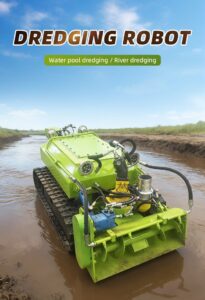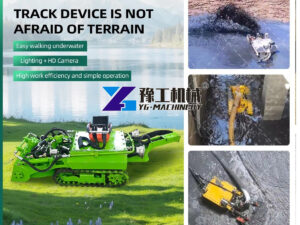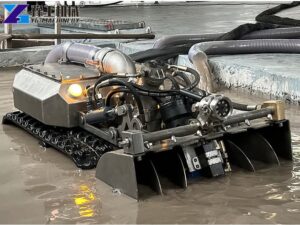

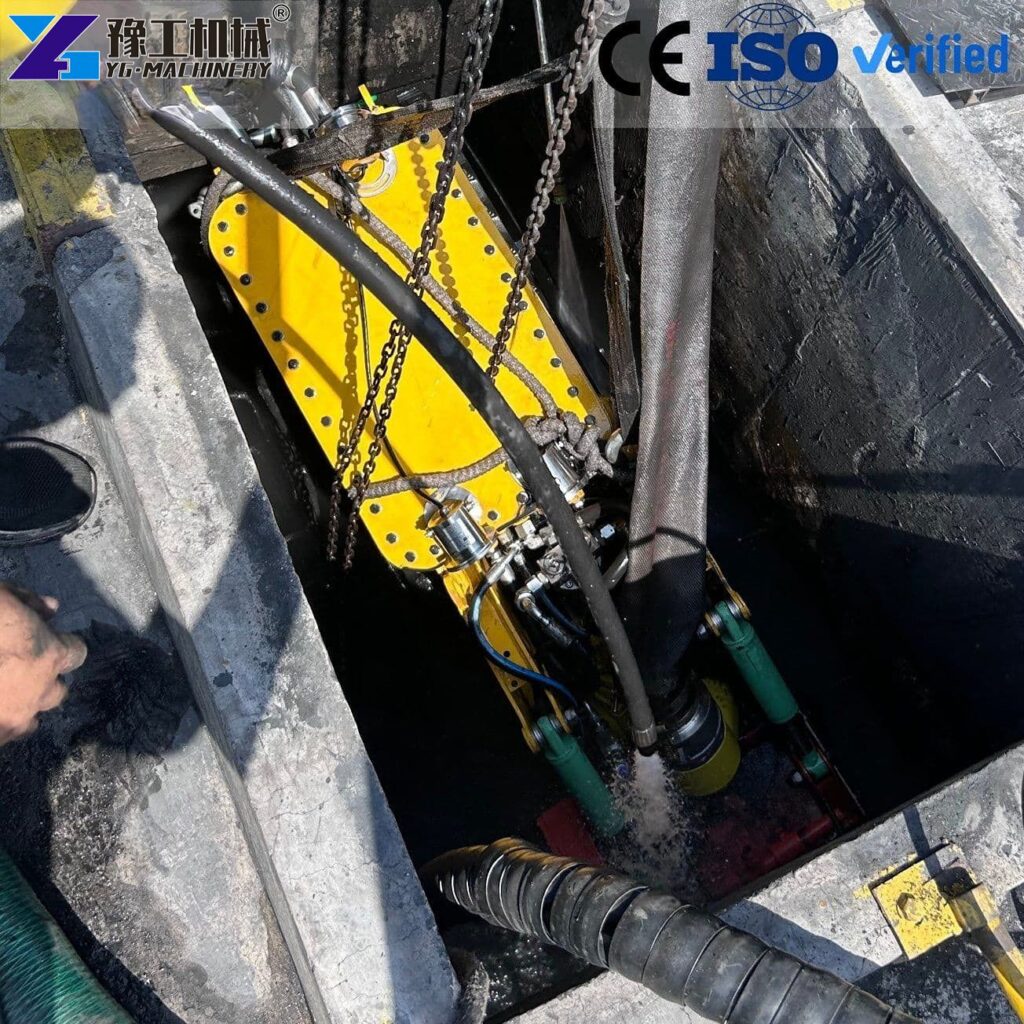
Waterway silt and sewer sludge build up fast and block drainage systems everywhere. Removing this material by hand is slow, dangerous, and costs too much labor. Pumps alone struggle to reach thick mud and sediment in deep channels. A remote-operated underwater crawler solves this problem with precision and power. A submersible dredging robot walks across the channel floor and sucks sediment out steadily. Hydraulic power drives both the tracks and the high-capacity slurry pump onboard. Operators control the whole machine safely from the water’s edge. YG Machinery builds six dredging robot models for canals, reservoirs, and industrial ponds.
| Model | YG-500 | YG-600 | YG-700 | YG-800 | YG-900 | YG-1200 |
| Robot dimensions | 1500*500*650mm | 1500*600*650mm | 1600*700*650mm | 1600*850*700mm | 1650*960*750mm | 1900*1200*750mm |
| Dredging width | 500mm | 600mm | 700mm | 800mm | 900mm | 1200mm |
| Track travel speed | 3-15m/s | 3-15m/s | 3-15m/s | 3-15m/s | 3-15m/s | 3-15m/s |
| Robot weight | 320kg | 350kg | 380kg | 400kg | 420kg | 500kg |
| Pump output diameter | 3inch | 3inch | 4inch | 4inch | 4inch | 4inch |
| Pump flow rate(cubic meters/ hour) | 100 m³ | 100m³ | 200m³ | 200m³ | 200m³ | 200m³ |
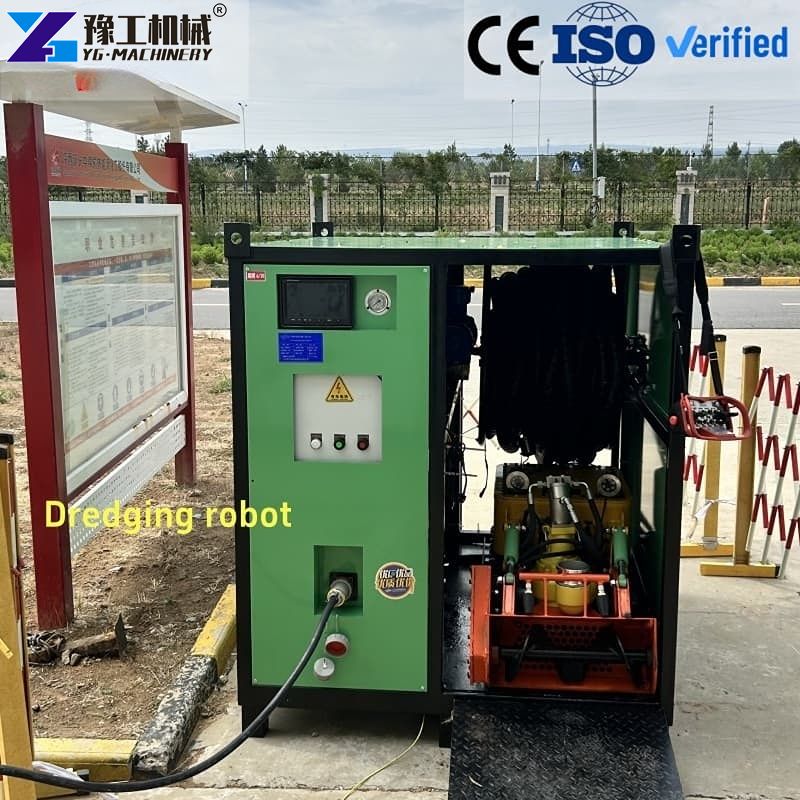
| Hydraulic station dimensions(mm) | 2200*1200*1700 | 2200*1200*1700 | 2200*1200*1700 | 2200*1200*1700 | 2200*1200*1700 | 2120*1240*1200 |
| Main motor power | 22kw | 22kw | 30kw | 30kw | 30kw | 45kw |
| Hydraulic system pressure | 0-16Mpa | |||||
| Particle size | 15mm | 15mm | 38mm | 38mm | 38mm | 60mm |
| Reeling system speed | 0-10r/min | |||||
| Hydraulic hoses | 50m (Standard configuration) | |||||
| Control system | Wireless remote control | |||||
| Lighting system | Underwater LED lights *2 | |||||
Get Factory Quote | WhatsApp/Tel: +86 183 3715 2861
What Makes a Submersible Dredging Robot Different?
A normal pump cannot crawl across the bottom or follow a curved channel. This machine combines tracked mobility with a powerful suction pump in one unit. It moves forward, backward, and turns while digging continuously. The result is clean, even removal of mud across the full channel floor.
Tracked Crawler That Walks Underwater
The robot moves on steel tracks designed for soft, slippery sediment.
- Wide tracks spread the robot’s weight to avoid sinking deep into mud.
- The crawler climbs over sandbars, rocks, and low obstructions easily.
- Operators steer in any direction using a wireless control pad.
- Track speed adjusts from a slow creep to 15 meters per second.
- The machine follows the channel shape without external guidance.
High-Flow Slurry Pump on Board
Each robot carries a pump sized for the sediment at your site.
- The suction inlet pulls wet mud, sand, and gravel into the hose.
- Pump flow reaches 100 to 200 cubic meters per hour by model.
- Larger units handle particles up to 60mm in diameter.
- Material travels through strong hoses to a discharge point onshore.
- The pump keeps running even when suction touches the floor.
Key Advantages of a Submersible Dredging Robot on Site
Why do more contractors choose a submersible dredging robot over older methods? The answer lies in speed, safety, and cost that crews can measure directly. This machine replaces dangerous manual labor with one operator and one remote pad. It also pushes productivity far beyond what a handheld pump can deliver.
Faster Than Manual and Conventional Methods
A single robot removes mud and silt many times faster than a labor crew.
- The tracked unit clears a full-width pass without stopping and restarting.
- It keeps working continuously for long shifts with minimal downtime.
- Pump flow moves up to 200 cubic meters of slurry per hour on large models.
- One operator runs the entire job instead of a big labor team.
- Projects that took weeks now finish in days on most sites.
Safer for Workers and Harder to Reach
Remote control removes the biggest risk that comes with underwater work.
- No worker enters the water, trenches, or confined sewer spaces.
- The operator stays on dry, stable ground throughout the whole job.
- The crawler reaches deep or narrow sections a person cannot access.
- Polluted or low-oxygen water is cleared without exposing the crew.
- Safety compliance becomes easier with fewer confined-space entries.
Lower Operating Costs Over the Long Term
Owners see real savings that build up with every hour the robot runs.
- Less fuel and fewer people mean lower cost per cubic meter moved.
- The hydraulic system uses tough, serviceable parts that last longer.
- Regular maintenance is simple and does not need specialist tools.
- Reliable construction cuts unplanned downtime and repair bills.
- The machine keeps working for years on canal, pond, and river sites.
Precise Control for Delicate and Complex Work
The wireless pad gives the operator fine control that pumps cannot match.
- Track speed and pump power adjust smoothly to suit the sediment.
- The robot can stop, reverse, and reposition within a tight space.
- It cleans edges and corners instead of just the deep center line.
- Automatic reeling keeps hoses tidy and prevents snags or kinks.
These advantages together make the dredging robot a fast, safe investment. Any site manager comparing cost and output will see the difference quickly. The result is cleaner water, lower risk, and better use of every working hour.
Submersible Dredging Robot: Core Models to Match Any Job
YG offers six robot sizes so you can match power to the task. Small models suit narrow drains and confined ponds. Larger models clear wide canals and big settling basins at high speed.
Picking the Right Robot Size
Model choice depends on channel width, flow needs, and particle size.
- YG-500 and YG-600 suit small channels and drainage ditches.
- YG-700 and YG-800 cover medium canals and reservoir edges.
- YG-900 handles wide waterways with heavier sediment loads.
- YG-1200 is built for large ponds and industrial settling basins.
- Particle capacity rises from 15mm on small units to 60mm on the largest.
Hydraulic Power Delivered Onsite
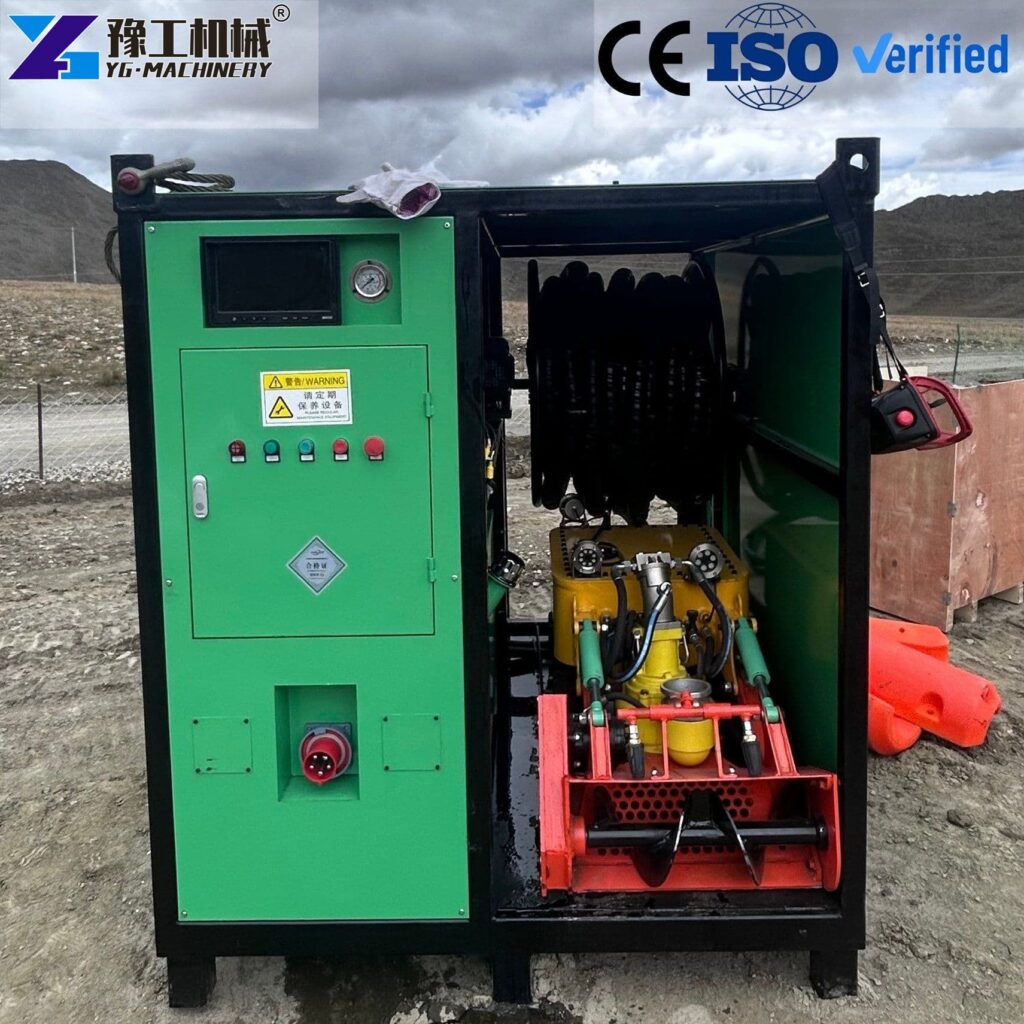
The robot runs from a hydraulic power unit stationed on the bank.
- A diesel-driven station supplies pressure up to 16 MPa.
- Main motors run at 22kW to 45kW depending on the model.
- Hydraulic hoses extend to 50 meters as the standard setup.
- The reeling system winds and unwinds hoses automatically.
- This design keeps heavy equipment safely on dry land.
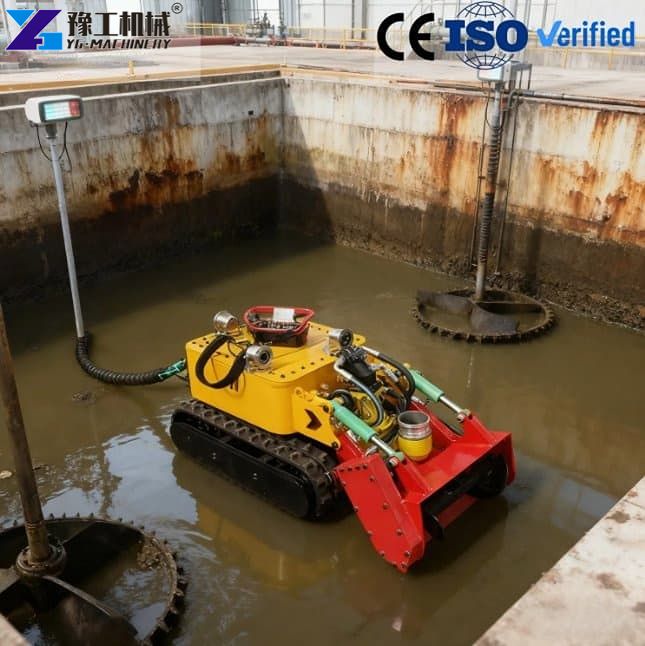

Where Autonomous Dredging Robot Technology Excels
Autonomous excavation is transforming how utilities maintain water systems. Remote controls let teams clean difficult areas without entering the water. This cuts labor risk and keeps operations running with fewer people.
Sewer and Drain Cleaning
Municipal crews use these robots for blocked sewer and stormwater lines.
- The crawler removes silt that restricts pipe flow capacity.
- It works through manholes and culverts that are hard to reach.
- Robotic sludge removal reduces the need for confined-space entry.
- Teams clear long runs faster than handheld vacuum systems.
- A sewer cleaning robot empties the channel in a controlled pass.
Reservoir and Industrial Pond Maintenance
Factories rely on these tools to keep settling ponds working at full volume.
- Accumulated sludge is removed before it cuts storage capacity.
- The robot works continuously while the plant keeps running.
- Tailings and process fines are pumped out for recovery or disposal.
- Regular dredging prevents costly shutdowns and overflows.
- A pipe cleaning robot keeps feed lines and discharge clear of buildup.
River and Canal Restoration
Waterway managers use larger models to restore flow in silted channels.
- Wide dredging passes open a clean channel for boats and drainage.
- Removed sediment can be used for land reclamation nearby.
- The unit reaches shallow areas a barge dredger cannot enter.
- Remote operation avoids crew exposure in polluted waterways.
Get Factory Quote | WhatsApp/Tel: +86 183 3715 2861
Submersible Dredging Robot: Can Tho Canal Cleanup Case
In 2025, the irrigation department of Can Tho, Vietnam, faced badly silted canals. A 6-kilometer urban waterway had filled with mud and household waste. Flooding worsened each rainy season as the blocked channel backed up. Traditional labor crews took weeks and could not reach the deep sections.
The department searched for modern dredging options and found YG Machinery. After reviewing channel depth and sludge volume, our team recommended the YG-900 model Water Tank Cleaning Robot. This unit delivered 900mm dredging width and a 200 m³/h pump rate. The robot arrived by sea at Ho Chi Minh City and then was trucked to Can Tho.
Project Execution
- The crew set up the power station on a stable riverbank.
- Operators trained on the wireless controls within one day.
- The robot worked up to eight hours safely in all weather.
- It cleared a 2-meter-wide path along every channel section.
- Excavators on shore lifted collected debris and mud into trucks.
Project Results
- The main urban channel regained full flow capacity in ten days.
- Average floodwater levels dropped notably in the next rainy season.
- Manual labor hours for sludge removal fell by about 70 percent.
- The department ordered two smaller YG-600 units for side drains.
The canal system now drains properly, and the team maintains it year-round. They estimate the robot paid for itself in less than eight months of use.
Request Solution for My Business
FAQ About Sludge Cleaning Robot
A1: Working depth depends on the hydraulic hose length and pump power. The standard 50-meter hose set supports most canal and pond depths. Deeper sites can use extended hose configurations on request. Our team confirms the depth limit for your exact model. Most urban and agricultural channels fall within the normal range.
A2: The tracked crawler handles sand, mud, gravel, and small stones. Each model accepts a maximum particle size listed in the table above. Larger YG-900 and YG-1200 units clear particles up to 60mm. Oversized rocks or trash should be removed before dredging. Tough obstructions can be broken first with a hydraulic breaker.
A3: The wireless control system is designed to be easy to learn. Most operators become confident within one to two days of practice. Our engineers provide remote video training during setup and startup. A single trained operator can manage the whole dredging operation. We also supply a detailed operating and maintenance manual.
A4: Routine checks cover track tension, hydraulics, and the pump inlet. Clean the suction screen and any blocked hoses after each work session. Inspect underwater seals and lighting after long or heavy use. Follow the service schedule for oil, filters, and wear parts. We stock replacement hoses, seals, and track parts for fast shipping.
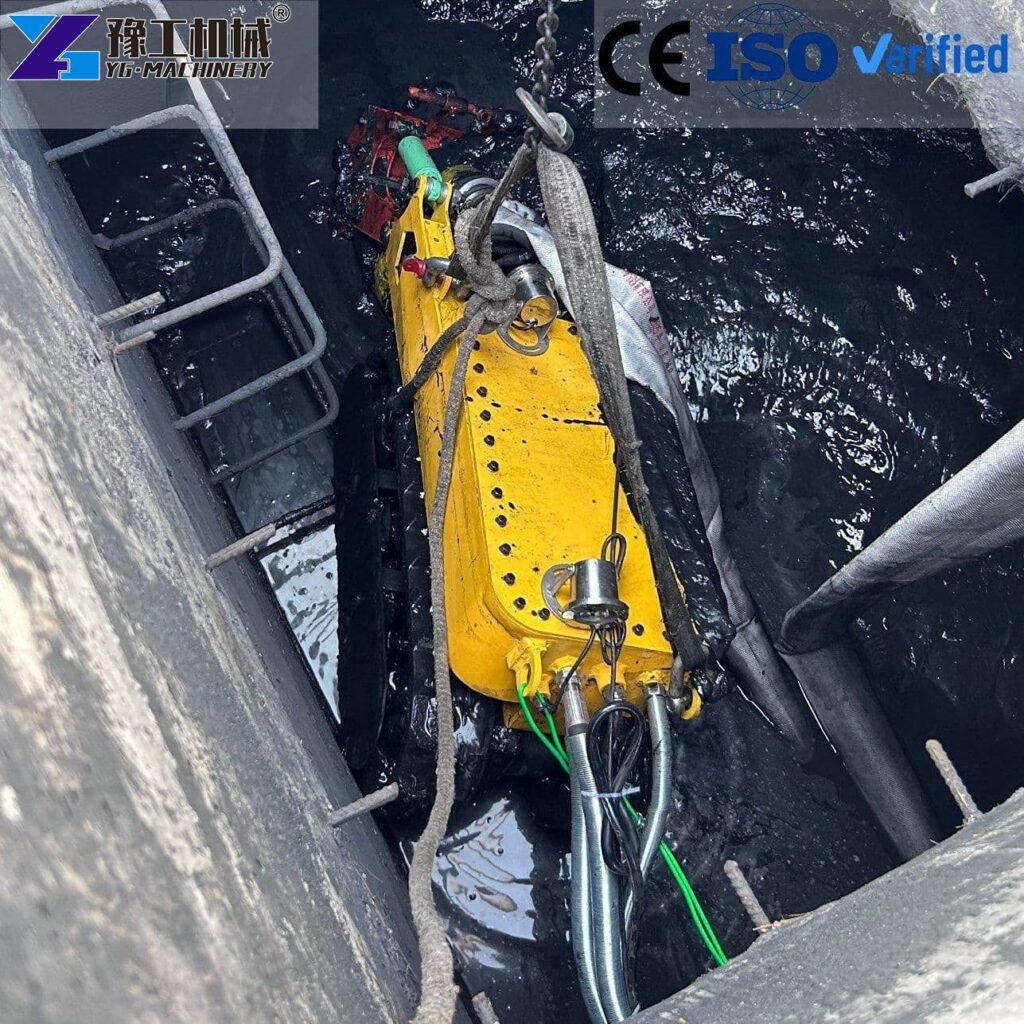
YG Machinery: Your Submersible Dredging Robot Manufacturer
YG Machinery supplies water and excavation equipment to contractors worldwide. Every submersible dredging robot passes full pressure and leak testing before export. We use branded hydraulic motors, pumps, and track components throughout. Our factory-direct model removes middleman costs from each purchase.
Service and Customization Support
Our engineers help you select and configure the right robot for your site.
- We provide training, manuals, and remote video troubleshooting.
- Custom hose lengths, pumps, and lighting are available on request.
- Spare parts for robots, reels, and power stations are kept in stock.
- Our team responds within 8 hours to any technical question.
- Pricing includes a clear scope with no hidden delivery charges.
Request Your Free Quotation
Ready to clear blocked canals or ponds without dangerous manual labor? Contact YG Machinery today for a free quotation and model recommendation. Tell us about your channel width, depth, and sediment type. We will match you with the right dredging robot and pump capacity. Email admin@yugongheavy.com or WhatsApp +86 183 3715 2861. Our team replies within 8 hours with pricing and delivery details.