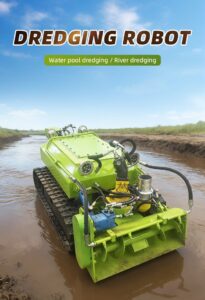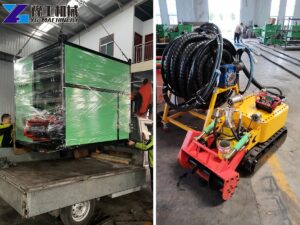

A water plant in Selangor was losing storage to a silent thief. Years of silt stole a third of its raw-water basin capacity. The usual fix meant draining the tank and halting supply. That trade-off was too costly for any manager to accept. This water tank cleaning robot removed the silt underwater instead. It never stopped the plant, never sent in divers, and never hired a barge. Here is the full case, from the first survey to a restored basin. You will see how a remote crawler turned a shutdown risk into routine maintenance.
YG Water Tank Cleaning Robot Parameters
The table below lists the full YG series. Each model suits a different tank width and particle size.
| Parameter | YG-500 | YG-600 | YG-700 | YG-800 | YG-900 | YG-1200 |
|---|---|---|---|---|---|---|
| Robot dimensions (mm) | 1500×500×650 | 1500×600×650 | 1600×700×650 | 1600×850×700 | 1650×960×750 | 1900×1200×750 |
| Dredging width (mm) | 500 | 600 | 700 | 800 | 900 | 1200 |
| Track speed (m/s) | 3-15 | 3-15 | 3-15 | 3-15 | 3-15 | 3-15 |
| Robot weight (kg) | 320 | 350 | 380 | 400 | 420 | 500 |
| Pump outlet (inch) | 3 | 3 | 4 | 4 | 4 | 4 |
| Pump flow (m³/h) | 100 | 100 | 200 | 200 | 200 | 200 |
| Main motor power (kW) | 22 | 22 | 30 | 30 | 30 | 45 |
| Final particle size (mm) | 15 | 15 | 38 | 38 | 38 | 60 |
| Hydraulic hoses (m) | 50 | 50 | 50 | 50 | 50 | 50 |
| Control system | Wireless remote | Wireless remote | Wireless remote | Wireless remote | Wireless remote | Wireless remote |
Get Factory Quote | WhatsApp/Tel: +86 183 3715 2861
Project Background: Sediment in a Selangor Water Basin
Malaysia meets most water demand from raw storage reservoirs. Dry spells build a heavy silt layer on each basin floor. The client runs a treatment plant in Selangor near Kuala Lumpur. Years of build-up had cut their raw-water storage capacity by roughly 35%.
A lost third of tank volume threatened peak-season supply. Operators usually fix this by draining and dredging the basin. That path here was painful. Draining would idle the plant and cut supply across the district. Divers and heavy dredgers added cost and risk.
The client wanted the sediment removed without stopping the plant. They needed a machine that could work underwater, through the existing water depth. This meant a remotely controlled crawler, not a manual crew.
- Capacity lost 35% to accumulated silt
- Draining would halt district water supply
- Manual underwater removal risked worker safety
- A remote unit could work while the plant ran
Professional tip: map the silt depth and tank floor first. Depth and particle size pick the robot model before you order.


The Core Problem: Draining Was Too Expensive and Too Slow
The basin held a large volume of raw water. Emptying it meant days of lost supply. During the monsoon, operators could not spare even one day offline. Every postponement let the silt build.
Contract dredging giants bid high for this small basin. Mobilising a barge and crew raised the bill further. Divers working in raw water carried real safety risk. The math made a small robot the obvious answer.
The real cost was not removal alone. It was the shutdown, the lost supply, and the safety exposure. A compact unit avoided all three at once.
Professional tip: price the full downtime before choosing a method. Shutdown hours often cost more than the dredging itself.
The Solution: A Remotely Driven Underwater Dredging Robot
After a silt survey, YG engineers recommended the YG-800 model. Its 800 mm dredging width matched the yard’s floor area. A 200 m³/h pump moved slurry to the dewatering lagoon. Its 38 mm particle capacity handled the basin’s silt mix.
This underwater dredging robot works entirely underwater. The operator stands on dry shore. A wireless remote drives the tracked unit across the floor. Dual under-mud LED lights let the camera guide the pass. No diver ever enters the raw water.
The robot removed silt while the plant stayed online. Power came from the 30 kW motor at the surface station. Slurry flowed through the 4-inch outlet to a holding area. The tracked body steered around inlet gates and baffles.
- Operated fully underwater by a shore operator
- 800 mm width matched the basin floor
- 200 m³/h pump cleared sediment fast
- Wireless remote kept workers dry and safe
- Plant kept running during the whole job
Professional tip: check the particle size of your sediment before choosing. Oversized rocks jam any pump. A simple sieve sample avoids a stuck clean.

Deploying the Robotic Dredge for Sale On Site
Deployment followed a staged plan. Stage one placed the robot at the basin edge. Stage two ran a test pass to confirm pump and track control. Stage three started full cleaning in overlapping lanes.
Each lane overlapped by about 30% to avoid leaving ridges. The operator steered the robot in a grid pattern. The camera and underwater light kept the view clear. When silt rolled back, the second pass caught it.
Dewatering ran as a parallel step. Slurry pumped to a lined lagoon settled into clean water and firm silt. The firm material was dried, then trucked out. This kept the whole process within one footprint.
- Robot placed at the safe basin edge first
- Test pass confirmed track and pump control
- Lanes overlapped 30% for even cleaning
- Slurry settled and dried in a lined lagoon
- Dried silt trucked off-site after each day
Professional tip: keep a second robot on standby for large basins. If one jams, swap it fast and keep the line moving. Downtime clocks cost real money.
Operating Results of the Water Tank Cleaning Robot
The YG-800 cleared the basin in about three weeks. Operators removed the stored silt without a single shutdown. Raw-water capacity climbed back to about 95% of design. The plant maintained full supply through the job.
Slurry dewatering worked better than expected. The lined lagoon settled solids within two days. Dry silt lifted out easily with a standard excavator. Hauling stayed within the existing local routes.
The results surprised the plant’s engineering team. No divers worked in raw water. No contract barge or heavy line mobilised. A small crew ran the whole clean remotely from the shore.
- Basin cleaned in about three weeks
- Tank capacity restored to about 95%
- Zero shutdown during the entire operation
- Slurry dewatered in a lined lagoon in two days
- Small shore crew ran the full clean
Professional tip: record depth before and after cleaning. These two numbers prove capacity gain to your board and regulators.
Customer Feedback and ROI of the Water Tank Cleaning Robot
The plant manager shared the outcome plainly. “We restored the tank without halting a single day of supply,” he said. His team now keeps the robot for scheduled annual cleaning.
The ROI case was easy to present. Draining and barging a tank would have cost far more. That bill would include lost supply, divers, and civil works. The robot sidestepped every one of those items.
He now budgets the unit into normal plant maintenance. Annual cleaning keeps the basin at full capacity. No future silt spike will cut their district supply again.
Professional tip: quote cost per cubic metre removed from your own data. Compare it with the quoted drain-and-barge route. Real numbers settle the case fast.

Key Results of the Water Tank Cleaning Robot
- 3 weeks to clear the silted basin
- 35% loss in capacity reversed to about 95%
- Zero plant shutdown during cleaning
- 800 mm dredging width matched the basin floor
- 200 m³/h pump moved slurry to dewatering
- 100 % of the work done by a remote shore crew
Frequently Asked Questions About YG Underwater Dredging Robot
A1: Yes. The tracked unit works fully underwater from shore control.
A2: Models pass particles from 15 mm up to 60 mm, depending on the unit.
A3: The wireless remote works with a 50 m standard hose length.
A4: Yes. The tracked chassis covers floors, ponds, and basins.
A5: The main motor ranges from 22 kW to 45 kW across the series.
Buy Crawler Dredging Robot from YG Machinery
Ordering starts with a simple site review. Share your basin size, depth, and sediment sample. Compare a robotic dredge for sale against a full barging contract first. Our engineers then confirm the right YG model and send a firm price.
Contact YG Machinery today for a free quote. Send us your tank dimensions and silt sample now. We will reply with the correct water tank cleaning robot and delivery time. Get your custom quote within one working day.