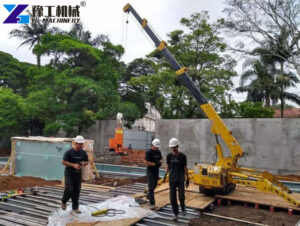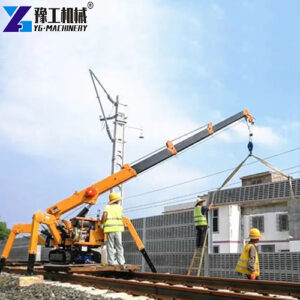

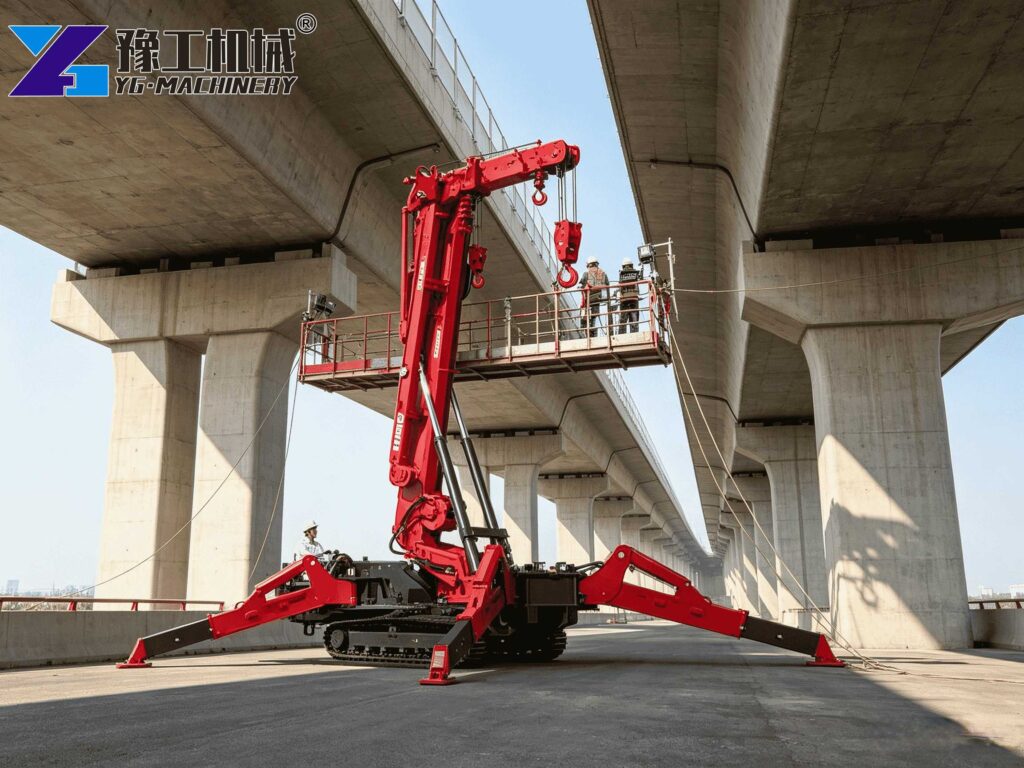
This real‑world case shows how a tracked spider crane solved narrow‑space lifting problems in Australia. A civil maintenance contractor carried out repair work on an aging urban highway bridge. Limited ground access prevented large‑size mobile cranes from entering the job site. After comparing multiple lifting solutions, the client chose compact lifting equipment from YG Machinery. This full case covers project challenges, custom configuration, site workflow, and long‑term operational gains.
Request Solution for My Business
Project Background for Australian Urban Bridge‑Repair Work
This bridge maintenance project took place in suburban New South Wales, Australia. The multi‑span concrete bridge had been in service for more than 28 years. Inspection reports identified corroded steel parts, cracked concrete, and worn expansion joints. Repair teams needed to lift heavy maintenance materials beneath and along both bridge sides. Wide‑access roads were not available near the bridge abutments. Large truck‑mounted cranes could not reach many narrow working zones. Local traffic rules limited long‑term lane closure on this busy commuter route. The contractor began searching for compact lifting machinery with strong off‑road performance.
Professional tip: Many old Australian urban bridges have tight‑access work zones. Always carry out a full site access survey before selecting your lifting equipment.
Key Customer Pain Points Before Using the Tracked Spider Crane
The maintenance team met several serious bottlenecks with their original lifting plan. Large‑size cranes, manual hoists and temporary scaffolding all showed clear disadvantages. These issues threatened safety standards, construction schedules and overall project budgets. Main challenges are listed below:
- Not enough space: Standard mobile cranes could not drive into narrow riverside work zones
- Long traffic disruption: Big‑crane setup required full‑day road‑closure permits
- Low lifting efficiency: Manual hoisting consumed lots of working hours for heavy components
- Poor uneven‑ground adaptability: Scaffolding platforms slipped on sloped, soft soil
- Limited outreach: Short‑boom lifting gear could not reach underneath deep bridge sections
The contractor once tested a common spider lift crane rented from a local equipment dealer. Its maximum outreach could not cover the far‑side repair points under the bridge. After on‑site testing, they decided to source a 3-ton spider crane with longer boom performance for long‑term bridge‑service jobs.
Professional tip: When planning under‑bridge lifting work, measure both horizontal outreach and vertical clearance first. Insufficient boom reach will stop repair work halfway.
Download YG-3 Crane Specs (PDF)
Custom‑Tailored Tracked Spider Crane Solution from YG Machinery
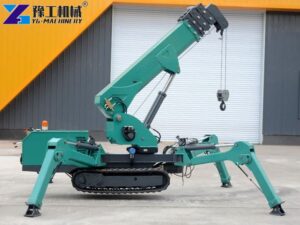
YG’s engineering team analyzed site photos, ground‑slope data, and lifting‑weight requirements. Our technical engineers recommended the YG‑3 tracked spider crane for this bridge maintenance job. This compact model perfectly fitted the contractor’s 3‑ton lifting‑load requirement. We configured a five‑section pentagonal boom for extended horizontal outreach. Wide‑adjustable outriggers improved stability on sloped, uneven riverside ground. Remote‑control operation allowed operators to stand in safe zones far from lifting loads.
Full technical parameters of the YG Mobile Spider Crane series
| Item | YG‑3 | YG‑5 | YG‑8 |
|---|---|---|---|
| Specification | 3t | 5t | 8t |
| Maximum working radius | 8.83m×0.15t | 14m×0.5t | 16.5m |
| Maximum above‑ground head | 9.9m×0.7t | 16.8m | 18m |
| Hook Speed (4 rope) | 0‑8m/min | 12m/min | 12m/min |
| Rope diameter | φ8mm×45m | Φ11mm×80m | Φ11mm×80m |
| Boom Type | 5‑section boom, pentagonal structure | 5‑section boom, pentagonal structure | 5‑section boom, pentagonal structure |
| Boom Length Range | 3.1m‑9.2m | Up to 12.3m | Up to 12.3m |
| Boom Angle Range | 0°~78° | 0°~78° | 0°~78° |
| Slew Angle | 0‑360° continuous rotation | 0‑360° continuous rotation | 0‑360° continuous rotation |
| Walking Speed | 0~2.5km/h | 0~2.5km/h | 0~2.5km/h |
| Grade Ability | 36% (25°) | 36% (25°) | 36% (25°) |
| Operation Mode | Manual & optional remote control | Manual & optional remote control | Manual & optional remote control |
| Transport Size LWH(mm) | 29509801560 | 500015001900 | 500016002180 |
| Total weight(kg) | 2700 | 6200 | 7200 |
Australian Safety & Compliance Guarantee
- Australian Standards Compliant: Designed and engineered to meet relevant AS 1418 safety standards for mobile and crawler cranes.
- On-Site Safety Ready: Equipped with an automatic Over-Hoist Limit Switch, Anti-Two-Block system, Outrigger Interlock, and Moment Limiter for high-risk job sites.
- Worksite Approved: Meets local noise and environmental regulations for suburban New South Wales and urban infrastructure projects.
Professional tip: Always fully extend all four outriggers before lifting heavy loads under bridges. Uneven outrigger support creates major tipping risks on sloped ground.
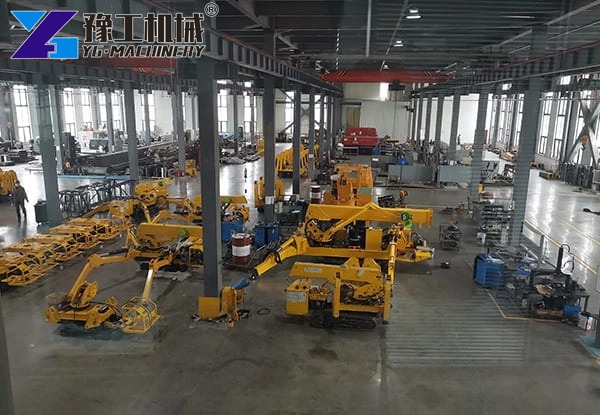
Spider Lift Crane: Production, Ocean Shipment and Commissioning
All lifting equipment passed strict factory load‑testing before export packaging. The tracked spider crane was packed inside fumigated wooden crates to meet Australian import quarantine rules. Goods departed from China coastal port and travelled by sea freight toward Sydney port. Our team provided remote step‑by‑step guidance during on‑site assembly. Local technicians completed track connection, boom hydraulic debugging and safety‑limit testing. Two machine operators finished full remote‑control training before formal bridge‑repair tasks. No unexpected breakdowns appeared during commissioning.
Full Project Timeline
| Project Phase | Time Duration |
|---|---|
| Technical discussion, drawing confirmation & order signing | 5 working days |
| Equipment manufacturing, factory inspection and load test | 9 working days |
| Ocean freight shipment to Sydney Port | 23 days |
| Australian customs clearance and local site delivery | 4 working days |
| Installation, commissioning and operator safety training | 1 working day |
Professional tip: Book sea freight well ahead of your construction start‑date. Australian port quarantine inspections often add extra waiting time for imported machinery.
On‑Site Bridge‑Repair Workflow and Operation Outcomes
After successful testing, crews deployed the tracked spider crane for regular under‑bridge lifting jobs. Operators followed our recommended safe workflow for narrow‑space maintenance work. The standard construction steps are listed below:
- Survey ground slope and mark safe outrigger placement zones near the bridge
- Drive compact crawler unit slowly into narrow riverside working position
- Fully deploy four hydraulic outriggers and double‑check ground stability
- Extend boom gradually to reach underneath bridge repair positions
- Lift maintenance components slowly to target working height
- Retract boom completely before relocating the crawler base unit
After two weeks of continuous work, clear operational improvements appeared. The machine easily travelled along narrow, sloped riverside paths that large cranes could never access. Road‑closure time dropped sharply because setup work became much faster. Repair teams safely delivered concrete patches, steel plates and waterproof materials to hard‑to‑reach bridge sections. No lifting safety incidents happened during the whole maintenance phase.
Professional tip: Avoid long‑time boom extension at maximum horizontal outreach. Rotate lifting positions regularly to reduce hydraulic system fatigue.
Verified Customer Testimonials & Real Project Evaluation
Real user feedback proves the practical performance of the tracked spider crane in Australian urban bridge repair scenarios. The NSW local civil contractor submitted authentic usage reviews after one month of continuous on-site operation. The team fully recognized the equipment’s safety, efficiency and site adaptability.
Mark Wilson, Site Manager, Australian Civil Infrastructure Group:
“Traditional mobile cranes were completely unusable for our under‑bridge maintenance. This tracked spider crane fits tight access zones perfectly. The 360‑degree slewing boom and remote control make under‑bridge component replacement fast and safe. It has become our primary lifting equipment for urban bridge repair contracts.”
David Scott, Chief Operator:
“We previously relied on rented spider lift crane units for narrow‑space jobs. This YG 3-ton spider crane delivers more stable hydraulic output and longer boom outreach. Setup time is 60% faster, and we have zero safety risks on sloped riverside terrain. The after‑sales technical support is responsive and professional.”
The tracked spider crane effectively solved multiple construction bottlenecks for bridge maintenance. Its low-noise and low-vibration operating mode strictly complies with Australian urban construction and environmental regulations. Consistent lifting precision greatly improved overall project quality and official acceptance rates.
Equipping the in-house compact lifting unit eliminated long-term spider crane rental expenses for frequent maintenance tasks. Improved construction efficiency shortened project cycles and helped the contractor win more local government bridge maintenance tenders. YG Machinery offers a 2-year warranty for core hydraulic parts and 24/7 remote technical support for all Australian clients.
Core Project Achievements of Tracked Spider Crane Application
This Australian bridge repair project obtained measurable improvements after applying the tracked spider crane. All optimization results are summarized based on real on-site construction data.
- Compact crawler chassis realizes safe access to narrow riverside and under-bridge work zones inaccessible for large cranes
- Greatly reduces road closure duration, minimizing traffic disruption on busy urban highway routes
- Completes high-risk, hard-to-reach under-bridge material lifting and component replacement safely
- Cuts manual labor input for heavy material handling and reduces on-site labor costs
- Enhances the contractor’s project qualification and market competitiveness for Australian infrastructure bids
Frequently Asked Questions for Buyers of Tracked Spider Crane
The YG‑3 3‑ton model suits most small‑to‑medium under‑bridge maintenance lifting jobs. Select YG‑5 or YG‑8 for heavier component replacement work.
Yes, crawler traction and four independent outriggers provide stable support on uneven terrain. Always inspect ground bearing capacity before lifting.
Standard Australian mobile‑plant operator licences are required. YG provides free remote‑control operation training videos for overseas buyers.
Its five‑section boom offers enough outreach to reach most mid‑span repair zones of small urban bridges.
Lubricate boom joints, inspect hydraulic hoses, and test safety limit switches before each lifting shift.
Custom technical configurations can be discussed after you send detailed site‑condition drawings.
Get Factory Quote | WhatsApp/Tel: +86 183 3715 2861

Professional Procurement Advice for Australian Bridge‑Maintenance Contractors
When you source compact lifting machinery for Australian bridge‑repair jobs, evaluate three key factors first. Measure site‑access width, maximum required horizontal outreach and typical lifting loads. Compare crawler traction performance for sloped or soft ground near bridge abutments. Rental costs for spider‑type lifting equipment can become very high for repeated maintenance work. Purchasing your own tracked spider crane is usually a better long‑term investment for bridge‑service firms. Always confirm after‑sales support and spare‑part availability before you sign an equipment purchase contract.
Get Custom Tracked Spider Crane Solution for Your Next Lifting Project
Contact YG Machinery to receive your free tailored lifting‑equipment proposal. Share your site‑access photos, lifting‑load data, and outreach requirements. Our engineering team will recommend the most suitable spider‑crane model for your maintenance work. Email: admin@yugongheavy.com Tel / WhatsApp: +86 183 3715 2861