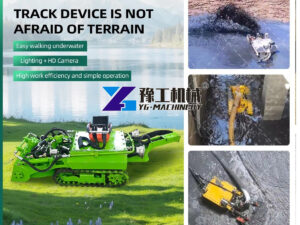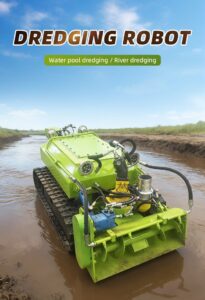
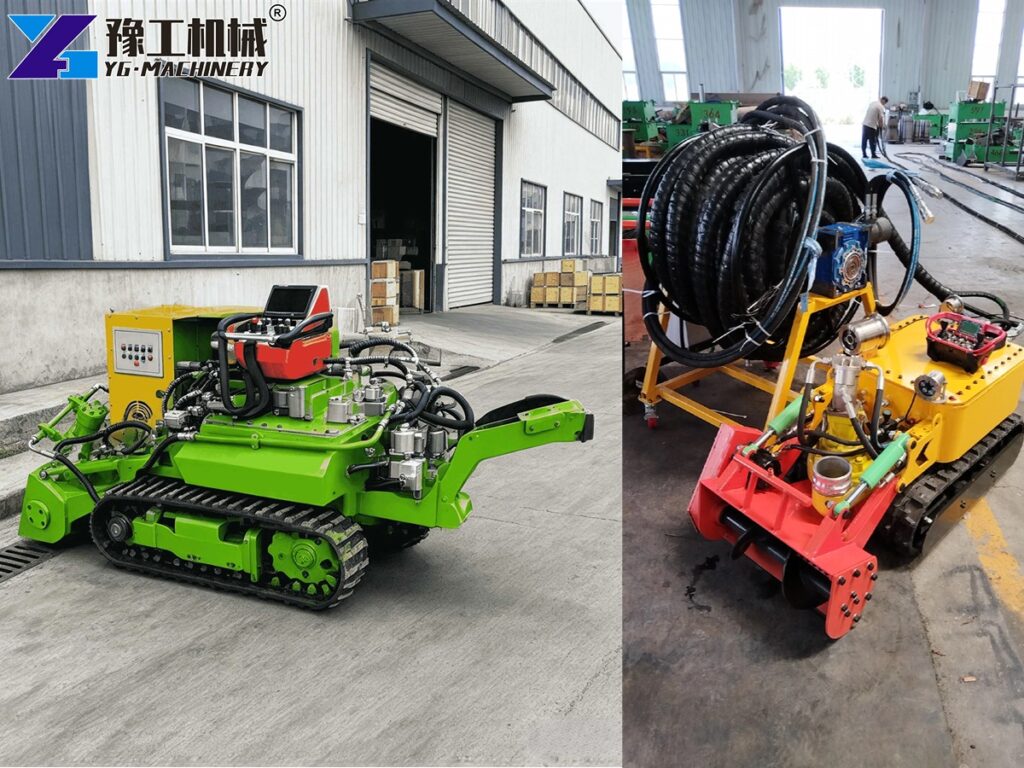
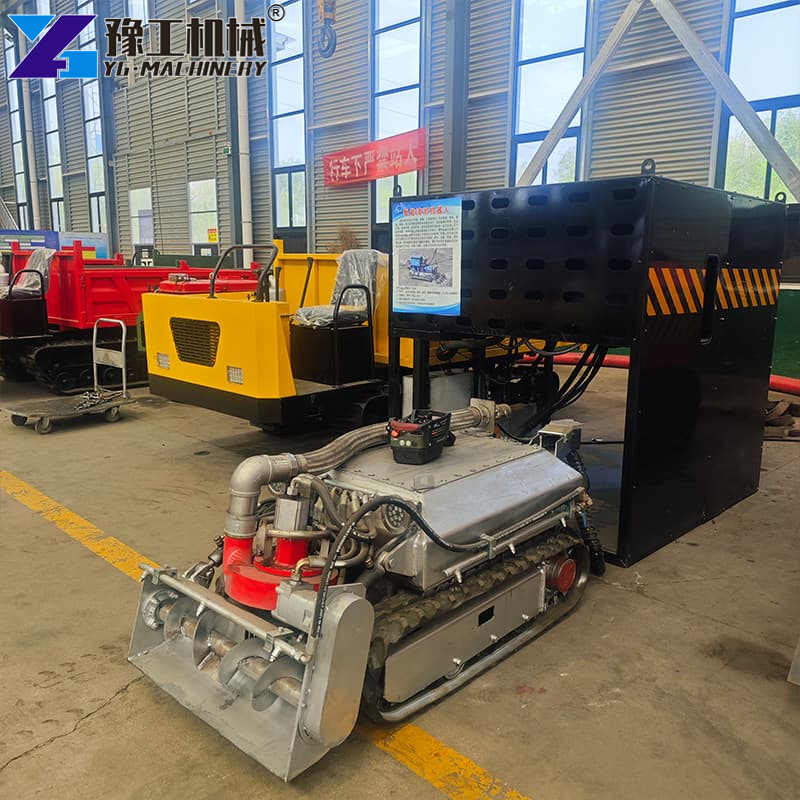
YG manufactures a sewer cleaning robot for sale in six model sizes. These units dredge sediment and debris from pipelines without entry by workers. Each robot pairs a hydraulic drive system with a wireless remote control. Dredging width ranges from 500mm up to large culvert applications. All models ship with factory-tested pump flow, motor power, and pressure ratings.
Sewer Cleaning Robot Parameters
| Parameter | YG500 | YG600 | YG700 | YG800 | YG900 | YG1200 |
|---|---|---|---|---|---|---|
| Robot Dimensions (mm) | 1500×500×650 | 1500×600×650 | 1600×700×650 | 1600×850×700 | 1650×960×750 | 1900×1200×750 |
| Dredging Width (mm) | 500 | 600 | 700 | 800 | 900 | Suitable for large culverts |
| Travel Speed | 3-15 m/s | 3-15 m/s | 3-15 m/s | 3-15 m/s | 3-15 m/s | 0-17 m/min |
| Pump Diameter (inch) | 3 | 3 | 4 | 4 | 4 | 4 or 6 |
| Pump Flow (m³/h) | 100 | 100 | 160 | 160 | 200 | 250 |
| Pump Head (m) | 0-30 | 0-30 | 0-25 | 0-25 | 0-25 | 0-30 (Horizontal: 100-150m) |
| Hydraulic Station Dimensions (mm) | 2200×1200×1700 | 2200×1200×1700 | 2200×1200×1700 | 2200×1200×1700 | 2200×1200×1700 | 2120×1240×1200 |
| Main Motor Power | 18kW | 18kW | 22kW | 22kW | 22kW | 45KW (50KW) or Diesel 76KW (123KW) |
| Hydraulic System Pressure (MPa) | 0-16 | 0-16 | 0-16 | 0-16 | 0-16 | Not specified |
| Particle Size (mm) | 15 | 15 | 40 | 40 | 50 | 0-40 (customizable) |
| Winch Speed (r/min) | 0-10 | 0-10 | 0-10 | 0-10 | 0-10 | 0-10 |
| Pipe Length (m) | 30-50 optional | 30-50 optional | 30-50 optional | 30-50 optional | 30-50 optional | 30m/pack, 20kg pressure resistant, optional |
| Control System | Wireless remote | Wireless remote | Wireless remote | Wireless remote | Wireless remote | Wireless remote |
| Lighting System | Underwater LED*2 | Underwater LED*2 | Underwater LED*2 | Underwater LED*2 | Underwater LED*2 | Underwater LED*2 |
Get Factory Quote | WhatsApp/Tel: +86 183 3715 2861
How Does a Sewer Cleaning Robot Actually Work?
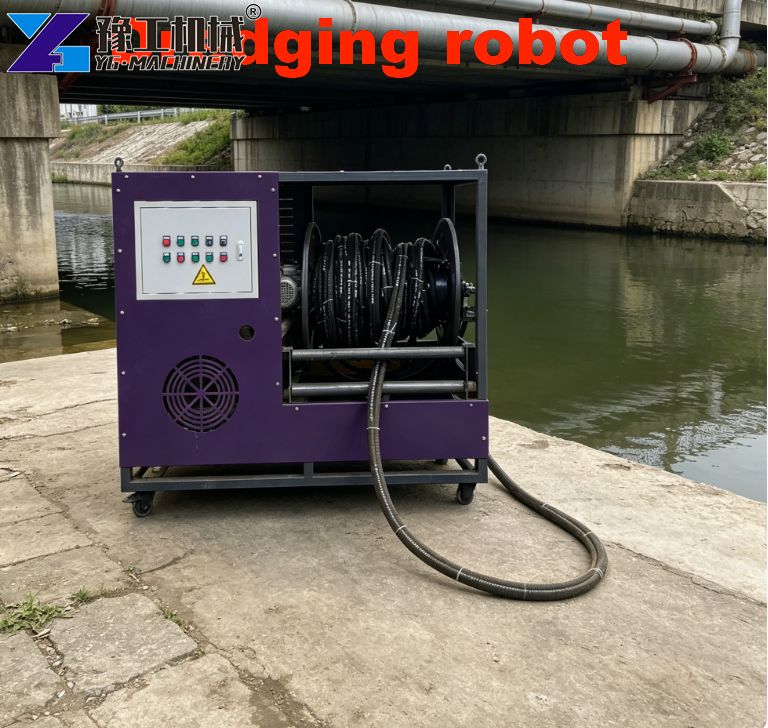
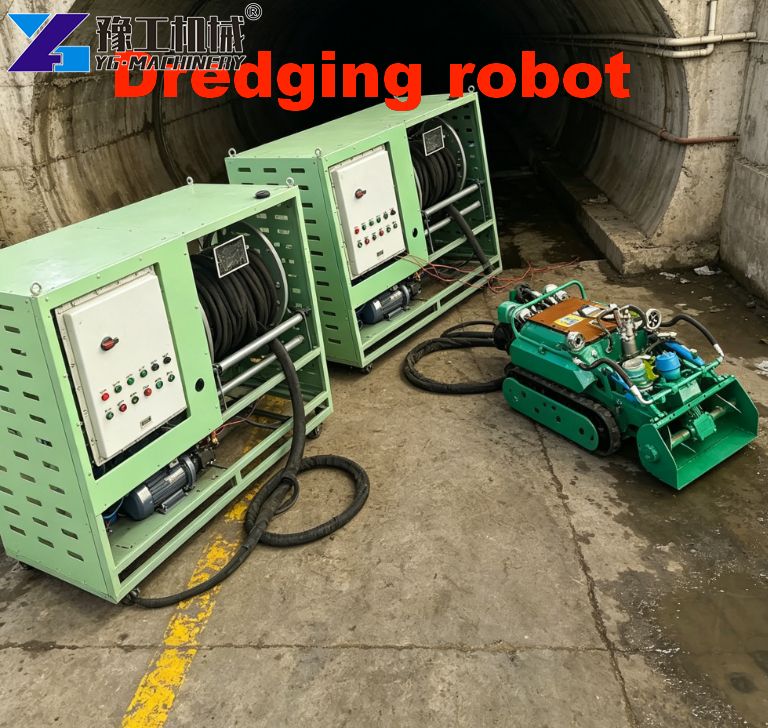
A sewer cleaning robot enters pipelines through standard manhole access points. The hydraulic station sits above ground, connected to the robot by cable and hose. This station supplies pressurized hydraulic fluid that drives the robot’s tracks and pump. Operators control movement, dredging, and lighting from a wireless remote at a safe distance.
Inside the pipe, a submersible pump draws in sediment, grit, and standing water. Pump flow ranges from 100 m³/h on the YG500 up to 250 m³/h on the YG1200. This flow rate determines how quickly the robot clears a blocked section. Particle size handling also scales with model size, from 15mm on smaller units to 50mm on the YG900. Pipelines with heavy construction debris or compacted sediment need this larger particle capacity.
Hydraulic system pressure stays steady at 0-16 MPa across most models. Consistent pressure matters because flow and torque drop off if pressure fluctuates mid-task. A drop in pressure during dredging can stall the pump or slow track movement. The YG1200 adds a diesel power option, rated at 76KW output. This suits remote culvert sites where grid power is unavailable or unreliable.
Two underwater LED lights are mounted on every model as standard equipment. These lights pair with connected camera systems for real-time pipe inspection. Operators can spot cracks, root intrusion, or structural damage while dredging continues. This combined inspection-and-cleaning workflow reduces the number of separate site visits needed.
Why Does Pipeline Diameter Decide Your Robot Choice?
Pipe diameter is the single biggest factor in sizing a dredging robot correctly. A robot too large cannot physically enter the target pipe section. A robot too small wastes time on pipes it could clear faster with more pump flow. Dredging width figures in the parameter table map roughly to typical pipe diameter ranges in the field.
Consider how this plays out in practice:
- A 500mm dredging width suits residential or light commercial sewer lines
- A 700-800mm width fits most municipal trunk sewers and stormwater drains
- A 900mm width handles industrial discharge lines and larger stormwater systems
- Large culvert applications need the YG1200’s customizable particle handling
Pump head also affects which model fits a given site. A 0-30m pump head, found on the YG500, YG600, and YG1200, suits deeper manholes or elevated discharge points. Models rated at 0-25m pump head suit shallower, flatter pipeline networks instead. Checking both dredging width and pump head together avoids a mismatch between robot capability and site conditions.
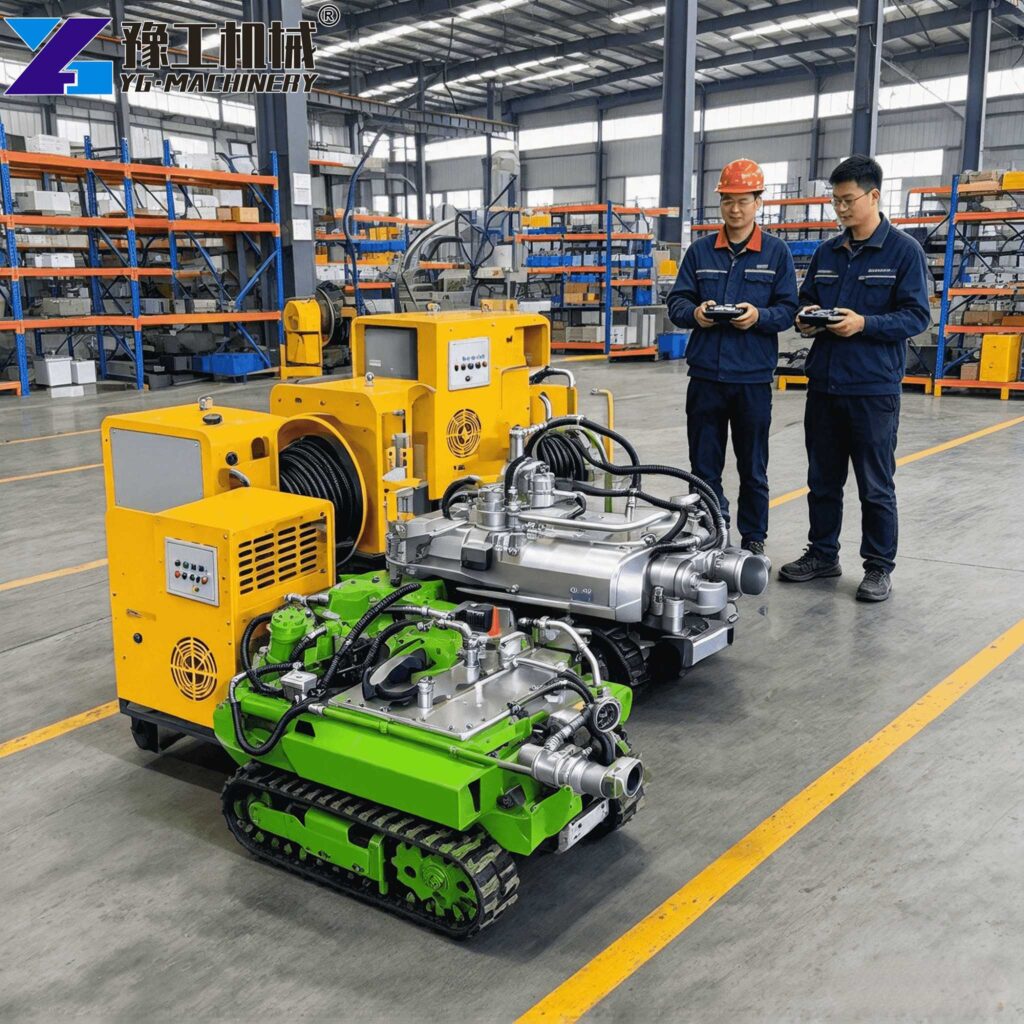
Pipeline Cleaning Robot Manufacturer: What Should You Verify Before Buying?
Choosing a reliable pipeline cleaning robot manufacturer affects equipment performance for years. Not every supplier tests hydraulic output under conditions matching real dredging work. A robot rated at 200 m³/h on paper may underperform if components were not tested under load. YG verifies pump flow, motor power, and hydraulic pressure before each unit ships from the factory.
Buyers should ask specific questions before committing to a supplier. Confirm whether pipe length options, from 30 to 50 meters, match your network’s manhole spacing. Check hydraulic station dimensions against your transport vehicle and site access constraints. Ask whether the manufacturer offers remote diagnostic support if a fault occurs mid-project. A manufacturer willing to walk through model selection by pipe diameter and sediment type reduces the risk of a costly sizing error. YG provides this technical guidance from initial inquiry through equipment delivery and ongoing operation.
Industrial Pipeline Cleaning Robot Applications Across Sectors
An industrial pipeline cleaning robot serves far more than municipal sewer maintenance alone. Industrial facilities generate sediment and debris loads that differ significantly from residential sewer lines. Matching robot capability to the specific industry prevents underperformance on site.
Common applications include:
- Municipal sewer and stormwater drain maintenance programs
- Industrial wastewater treatment plant inlet and outlet pipelines
- Culvert and large stormwater channel sediment removal
- Power plant cooling water intake pipeline maintenance
- Port and harbor drainage system upkeep and inspection
Each application carries distinct particle size and flow demands. Power plant cooling pipelines, for example, often accumulate fine silt requiring high flow rather than large particle handling. Culvert projects, by contrast, often need the YG1200’s customizable particle size range for mixed debris. Matching robot size to actual sediment type, not just pipe diameter, improves cleaning results across repeat jobs.
Case Study: Municipal Trunk Sewer Rehabilitation in Vietnam
A municipal utility in central Vietnam faced recurring blockages in an aging trunk sewer line. The line ran 700mm in diameter across a dense urban district. Manual crews had previously entered the line for cleaning, raising safety concerns under local confined-space regulations.
The utility selected a YG700 sewer cleaning robot to replace manual entry crews. Three factors guided this decision:
- 700mm dredging width, matching the trunk line’s diameter exactly
- 160 m³/h pump flow, sufficient for the line’s typical sediment load
- 40mm particle handling, suited to the mixed grit and debris found on inspection
The robot entered through existing manholes, eliminating the need for excavation or line access modifications. Operators monitored progress through the onboard camera and underwater LED lighting throughout each run.
Results after six months of scheduled cleaning cycles:
- Blockage-related service calls dropped compared to the prior twelve months
- Confined-space entry incidents were eliminated from the cleaning program entirely
- Average cleaning time per 500m pipe segment decreased compared to manual methods
- Camera footage from each pass supported a structural condition database for the network
The utility’s maintenance supervisor noted that wireless control let one technician manage work previously requiring a full entry crew. This freed staff for inspection and reporting tasks instead of physical pipe entry.
This project shows how matching dredging width and particle handling to actual pipe conditions pays off. A correctly sized robot cuts both safety risk and total cleaning time together.
Request Solution for My Business
Robotic Sewer Maintenance Equipment: Key Advantages
Robotic sewer maintenance equipment removes the need for confined space entry during routine cleaning work. This directly reduces safety risks tied to manual sewer access procedures. Every YG robot includes wireless remote control and underwater LED lighting as standard equipment, not an added-cost option.
Main advantages reported by our customers include:
- Six model sizes covering 500mm to large culvert dredging width
- Hydraulic drive system rated for consistent output during extended daily operation
- Particle handling up to 50mm on larger models for heavy debris loads
- Optional pipe lengths from 30 to 50 meters, matched to manhole spacing
- Diesel power option on the YG1200 for sites without reliable grid access
- Dual underwater LED lighting paired with camera systems for inspection during cleaning
Many buyers also pair this robot with a sewer inspection camera system for pre-cleaning assessment. Others add a vacuum truck for sediment removal once dredging finishes. Sourcing related equipment from one supplier simplifies long-term parts and service coordination.
FAQ: Sewer Cleaning Robot Questions Answered
Models range from 500mm dredging width up to large culvert applications. Dredging width should roughly match your target pipe diameter. Share your pipe size with our team for an exact model recommendation.
The submersible pump draws in sediment along with standing water as it operates. Pump flow, from 100 to 250 m³/h, determines clearing speed. Higher flow models suit pipelines with significant standing water volume.
Hydraulic station specifications are matched to each robot model’s power needs. Larger models require higher motor power and pressure output. Confirm compatibility with our team before planning a multi-robot fleet.
Particle handling ranges from 15mm on smaller models to 50mm on the YG900. The YG1200 offers customizable handling up to 40mm or more. Match this figure to your pipeline’s typical debris composition.
Yes, our team provides setup and operational guidance during installation. Wireless remote systems are designed for straightforward operator learning. Technical support remains available for questions after deployment.
Dredging width and pump flow capacity have the largest impact on price. Pipe length options and diesel power configurations also affect final cost. Share your pipeline specs with our team for an accurate quote.
Service, Support, and How to Get Your Free Quote
Pre-sale consultation helps match the correct model to your pipeline diameter and sediment type. Our team reviews your particle size and pump flow requirements before recommending a unit. Customized solutions are available for unusual pipe lengths or culvert dimensions. After delivery, technical support remains available for installation and setup questions.
Spare parts stay in stock for pumps, hydraulic components, and control systems. Scheduled maintenance guidance helps extend your robot’s working lifespan across repeated project cycles. This support structure removes common risks tied to equipment ownership overseas. You are not left without help once the purchase is complete.
Share your pipeline diameter and sediment type with our team now. We will recommend the correct model and prepare a free custom quote. Contact YG Machinery via WhatsApp at +86 183 3715 2861, or email admin@yugongheavy.com. We reply within 8 hours with your tailored sewer cleaning solution.