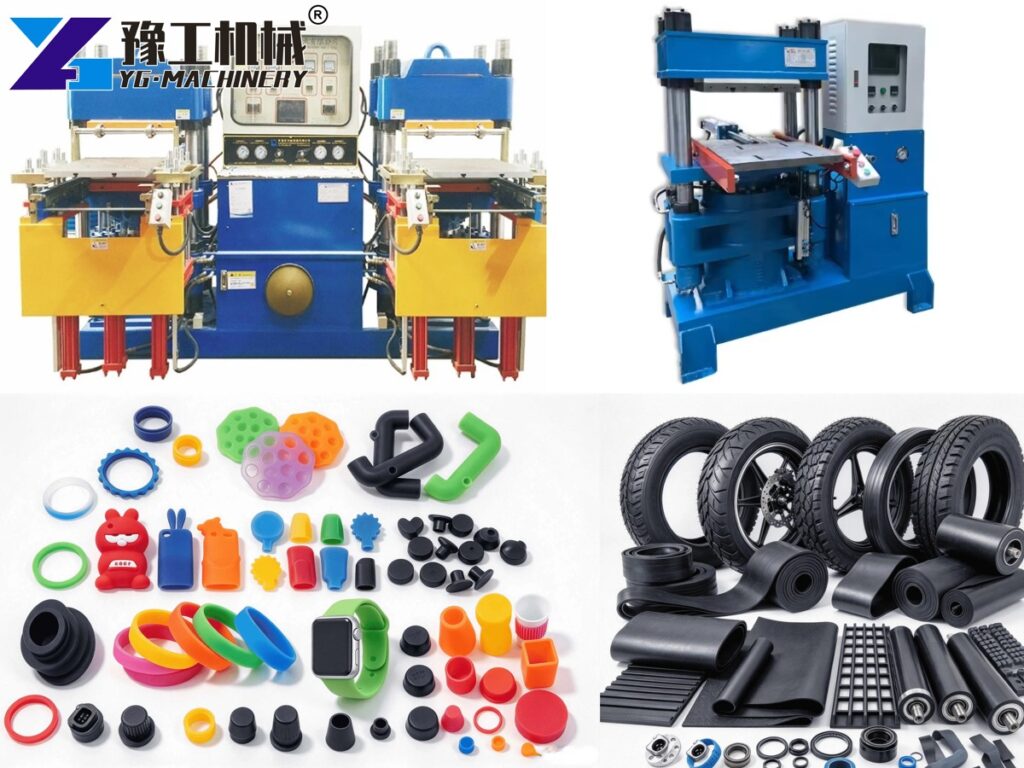
Does your rubber production line struggle with incomplete curing or slow output? A rubber vulcanizing machine solves both problems at once. Raw rubber needs precise heat and pressure to cure into a durable finished product. Without enough tonnage, parts stay soft or crack under stress later. YG offers seven press models, rated from 150 to 500 tons. Each unit suits a different product size, from small seals to large rubber sheets. Plate sizes range from 380mm up to 1200mm across the lineup. This flexibility lets manufacturers match press capacity to actual mold dimensions. The sections below cover specs, working principle, and how to pick the right model. Share your product size now with our team via WhatsApp at +86 183 3715 2861, or email admin@yugongheavy.com, for a free custom quote within 8 hours.
YG Machinery Rubber Vulcanizing Machine Parameters
| Parameter | 150 Ton | 200 Ton | 250 Ton | 300 Ton | 350 Ton | 400 Ton | 500 Ton |
|---|---|---|---|---|---|---|---|
| Total Pressure (T) | 150 | 200 | 250 | 300 | 350 | 400 | 500 |
| Plate Size (mm) | 380×380 / 400×400 | 503×508 / 560×560 | 600×600 / 600×650 | 600×600 / 650×650 | 700×700 / 700×750 | 800×800 / 850×850 | 1000×1000 / 1200×1000 |
| Gap (mm) | 250-300 | 250-350 | 300-350 | 300-350 | 300-350 | 300-400 | 300-400 |
| Piston Diameter (mm) | 300 | 360 | 400 | 450 | 475 | 500 | 560 |
| Piston Stroke (mm) | 250 | 250 | 300 | 300 | 300 | 300 | 300 |
| Cover Stroke (mm) | 200 | 250 | 250 | 250 | 250 | 300 | 300 |
| Motor Power (kW) | 4×2 | 7.5×2 | 7.5×2 | 7.5×2 | 11×2 | 11×2 | 11×2 |
| Weight (kg) | 6500 | 9000 | 11500 | 13500 | 17000 | 22500 | 30000 |
Get Factory Quote | WhatsApp/Tel: +86 183 3715 2861
How Does a Rubber Vulcanizing Machine Actually Work?
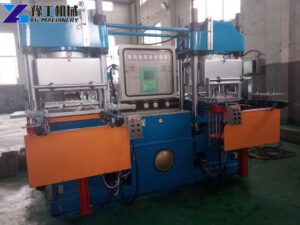
A vulcanizing press cures raw rubber into its final shape. Heated plates press the rubber compound under high tonnage. This pressure, combined with heat, triggers the curing reaction. Sulfur bonds form across the rubber’s polymer chains during this stage. The result is a stronger, more elastic finished product.
The piston system drives this entire process. Piston diameter grows from 300mm on the 150-ton model to 560mm on the 500-ton model. Larger pistons generate higher pressure for thicker or larger rubber parts. Piston stroke ranges from 250mm to 300mm, controlling plate travel distance. Cover stroke works alongside this, opening the press for loading and unloading.
Why does plate size matter so much? Larger plates, like the 1200×1000mm option on the 500-ton model, handle bigger rubber sheets or multiple molds at once. Smaller plates suit precision parts production. Dual motors, paired at matching kW ratings, drive hydraulic pressure evenly across the press frame.

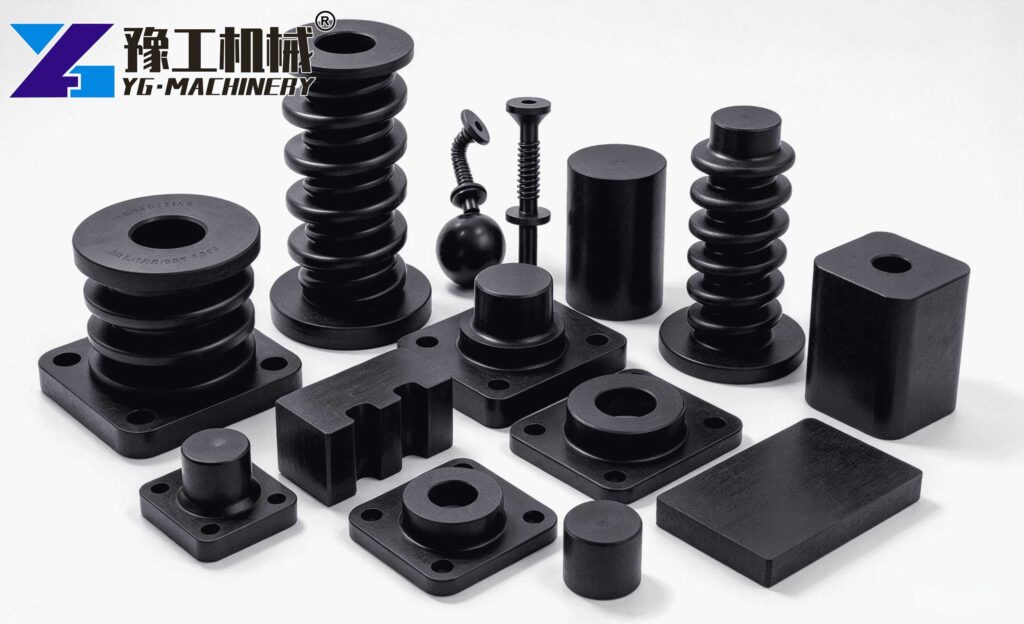
Hydraulic Rubber Vulcanizing Machine for Sale: Matching Tonnage to Output
Buyers searching for a Hydraulic Vulcanizing Machine often start with product thickness and size. These two factors decide tonnage requirements quickly. Here is how output needs typically map to press selection:
- 150-200 ton presses: Suit small rubber parts, seals, and gaskets
- 250-300 ton presses: Fit mid-size molded products and rubber sheeting
- 350-400 ton presses: Handle thicker rubber blocks and larger molds
- 500-ton presses: Support high-volume sheet production with large plates
Undersized presses cannot generate enough pressure for complete curing. Oversized presses waste energy and raise equipment cost unnecessarily. Match gap distance and plate size to your mold dimensions before ordering.
Vulcanizer Rubber Machine Price: What Drives the Cost?
Buyers often ask about vulcanizer rubber machine price before comparing full specs. Several factors shape the final quote. Tonnage plays the largest role in pricing. A 500-ton press costs more than a 150-ton unit. Plate size, motor power, and frame weight also affect cost directly.
How do you get an accurate price? Share your product dimensions and daily output target. Our team then matches this data to the correct tonnage. This approach avoids overpaying for pressure capacity you will not use. It also prevents underbuying a press that cannot fully cure your product.
Automatic Rubber Vulcanizing Machine Options for Higher Output
An automatic rubber vulcanizing machine reduces manual steps during the curing cycle. Automated models control heating time, pressure, and cooling stages together. This consistency matters most for high-volume production runs. Manual presses still suit smaller workshops with lower daily output.
Key differences worth considering:
- Automatic models reduce operator involvement per curing cycle
- Manual models cost less upfront for lower-volume operations
- Both share the same core piston and plate mechanics
- Automation improves consistency across repeated production batches
Many buyers pair a vulcanizing press with a rubber mixing mill for compound preparation. Others add a hydraulic rubber cutting machine for finishing cut parts after curing. Sourcing related equipment from one supplier simplifies parts and service coordination.

Key Advantages of YG Rubber Vulcanizing Machines
Every YG press undergoes pressure testing before shipment. This confirms piston performance matches the rated tonnage specification. Reinforced frame construction supports repeated daily curing cycles. Fewer breakdowns mean less downtime across your production schedule.
Main advantages reported by our customers include:
- Seven tonnage options covering 150 to 500 tons
- Plate sizes from 380mm up to 1200mm for different product ranges
- Dual-motor drive for even hydraulic pressure distribution
- Consistent gap and stroke control across the curing cycle
- Reinforced frames built for continuous production use
FAQ: Rubber Vulcanizing Machine Questions Answered
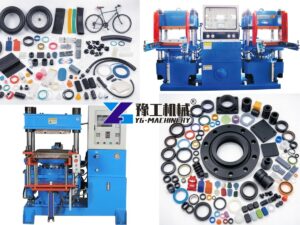
A rubber vulcanizing machine cures raw rubber into finished products. It applies heat and pressure to trigger the curing reaction. Common outputs include seals, gaskets, sheets, and molded rubber parts.
Match tonnage to your product’s thickness and plate area. Thicker or larger rubber parts need higher pressure to cure fully. Share your mold dimensions with our team for an exact recommendation.
Manual presses need operator control for each curing stage. An automatic rubber vulcanizing machine controls heating, pressure, and cooling automatically. Automation suits higher-volume production with consistent cycle requirements.
Cycle time depends on rubber compound, product thickness, and press temperature. Thicker products generally need longer curing time under pressure. Our team can estimate cycle time based on your specific product.
Press tonnage has the biggest impact on price. Plate size, motor power, and automation level also affect final cost. Request a quote with your product specs for an accurate price.
Yes, we offer customized solutions for specific plate sizes and mold setups. Share your product dimensions and production goals with our team. We will recommend a configuration suited to your output needs.

Rubber vulcanizing machine manufacturer: YG Machinery
Pre-sale consultation helps match the correct tonnage to your product size. Our team reviews your plate size and daily output before recommending a model. Customized solutions are available for unusual mold dimensions or production needs. After delivery, technical support remains available for installation and setup questions.
Spare parts stay in stock for seals, pistons, and heating components. Scheduled maintenance guidance helps extend your press’s working lifespan. This support structure removes common risks tied to equipment ownership overseas. You are not left without help once the purchase is complete.
Ready to improve curing consistency and output on your production line? Share your product dimensions and daily volume with our team. We will recommend the correct tonnage and prepare a free custom quote. Contact YG Machinery via WhatsApp at +86 183 3715 2861, or email admin@yugongheavy.com. We reply within 8 hours with your tailored vulcanizing solution.