
Thailand produces more natural rubber than any other country. Yet many Thai rubber factories still cure product on presses built decades ago. This case follows a family-run rubber mat factory in Songkhla. They replaced a 25-year-old steam press with a 200T hydraulic rubber vulcanizing press. Cure time fell from 12 minutes to 7.5 minutes. Rejects dropped from 7.2% to 1.4%. Output rose 55% on the same floor space. Here is the full story, from problem to payback. If you run a rubber shop in Southeast Asia, these details help you judge your own upgrade.
Get Factory Quote | WhatsApp/Tel: +86 183 3715 2861
Hydraulic Rubber Vulcanizing Press Parameters
The table below covers the full YG series. This project used the 200T model.
| Parameter | 150T | 200T | 250T | 300T | 350T | 400T | 500T |
|---|---|---|---|---|---|---|---|
| Total pressure | 150T | 200T | 250T | 300T | 350T | 400T | 500T |
| Plate size (mm) | 380×380 / 400×400 | 503×508 / 560×560 | 600×600 / 600×650 | 600×600 / 650×650 | 700×700 / 700×750 | 800×800 / 850×850 | 1000×1000 / 1200×1000 |
| Gap (mm) | 250-300 | 250-350 | 300-350 | 300-350 | 300-350 | 300-400 | 300-400 |
| Piston diameter (mm) | 300 | 360 | 400 | 450 | 475 | 500 | 560 |
| Piston stroke (mm) | 250 | 250 | 300 | 300 | 300 | 300 | 300 |
| Cover stroke (mm) | 200 | 250 | 250 | 250 | 250 | 300 | 300 |
| Motor power (kW) | 4×2 | 7.5×2 | 7.5×2 | 7.5×2 | 11×2 | 11×2 | 11×2 |
| Weight (kg) | 6,500 | 9,000 | 11,500 | 13,500 | 17,000 | 22,500 | 30,000 |
One number matters most: tonnage is not pressure on the rubber. Divide tonnage by platen area. A 200T press on 560×560 mm platens gives about 64 kg/cm². Most mat and gasket compounds need 30-80 kg/cm². Tonnage alone cannot tell you if a press fits your part.
How to read the model name: the number is total clamping force, not pressure on your part. Each tonnage comes with two platen sizes, so confirm both before ordering. Buyers also call this unit a rubber curing press or a vulcanizing press for rubber.
Project Background: Thailand’s Rubber Processing Heartland
Songkhla sits at the center of Thailand’s rubber belt. Plantations, trading houses, and processing plants cluster around Hat Yai. The client’s factory makes rubber mats, gaskets, and sheet goods on a rubber sheet production line. Output goes to Thai construction suppliers and to Malaysian distributors. The family has run the plant for 22 years.
Their main product is a 6 mm ribbed rubber mat, 900×600 mm. It is a simple part with a strict surface finish. Buyers reject mats with shallow ribs or soft spots. The plant ran two shifts, six days a week.
The compound is natural rubber with carbon black filler.
The old press set a ceiling on growth. The owner wanted more output in the same floor space. He also wanted fewer rejects before a buyer audit.
The Core Problem: Slow Curing and Uneven Pressure
The old unit was a 100T steam press with 400×400 mm platens. It was reliable but too small for the mat size. Workers loaded one mat at a time, then waited 12 minutes.
Three problems hurt the plant daily:
- Uneven heat. Platen spread reached 8°C, so corners cured more slowly.
- Low pressure. Steam often dropped below the set point.
- Boiler dependence. A shared boiler fed three machines.
Rejects reached 7.2%, mostly soft corners and thin ribs. Each reject wasted compound, labor, and steam.
Professional tip: measure platen temperature at five points, not one. A single probe hides the corner drift that ruins thick parts.
The Solution: A 200T Hydraulic Rubber Vulcanizing Press in Songkhla
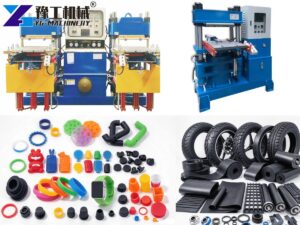
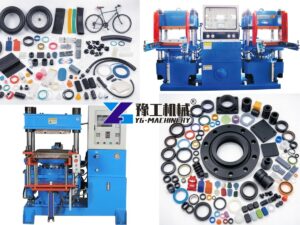
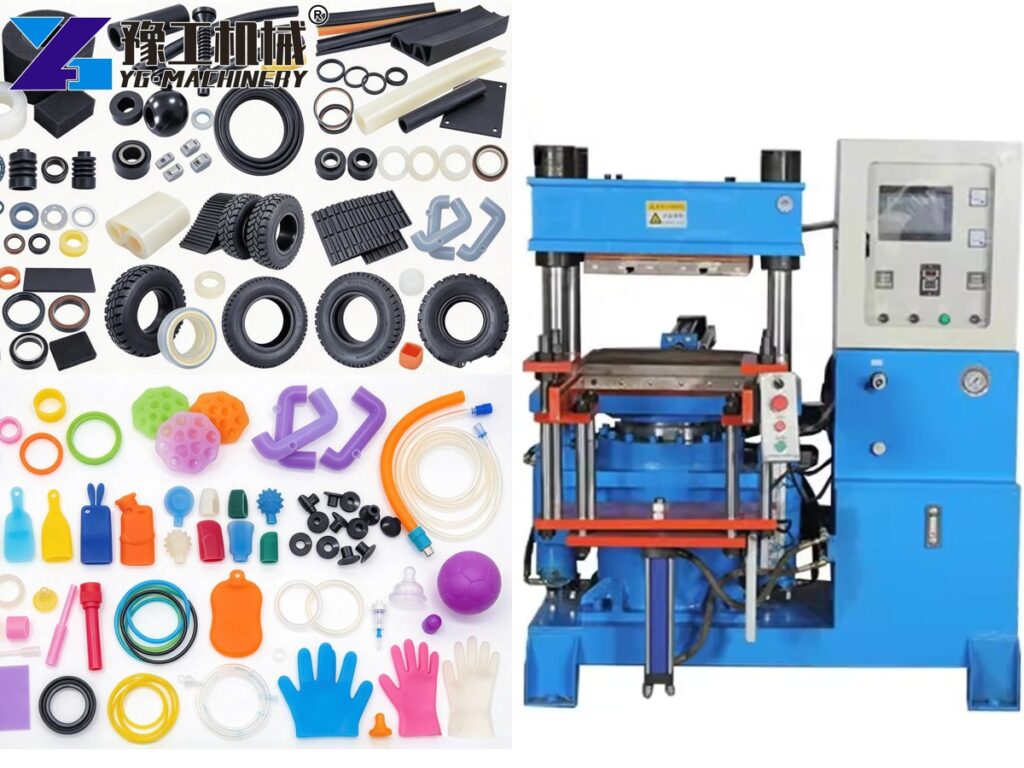
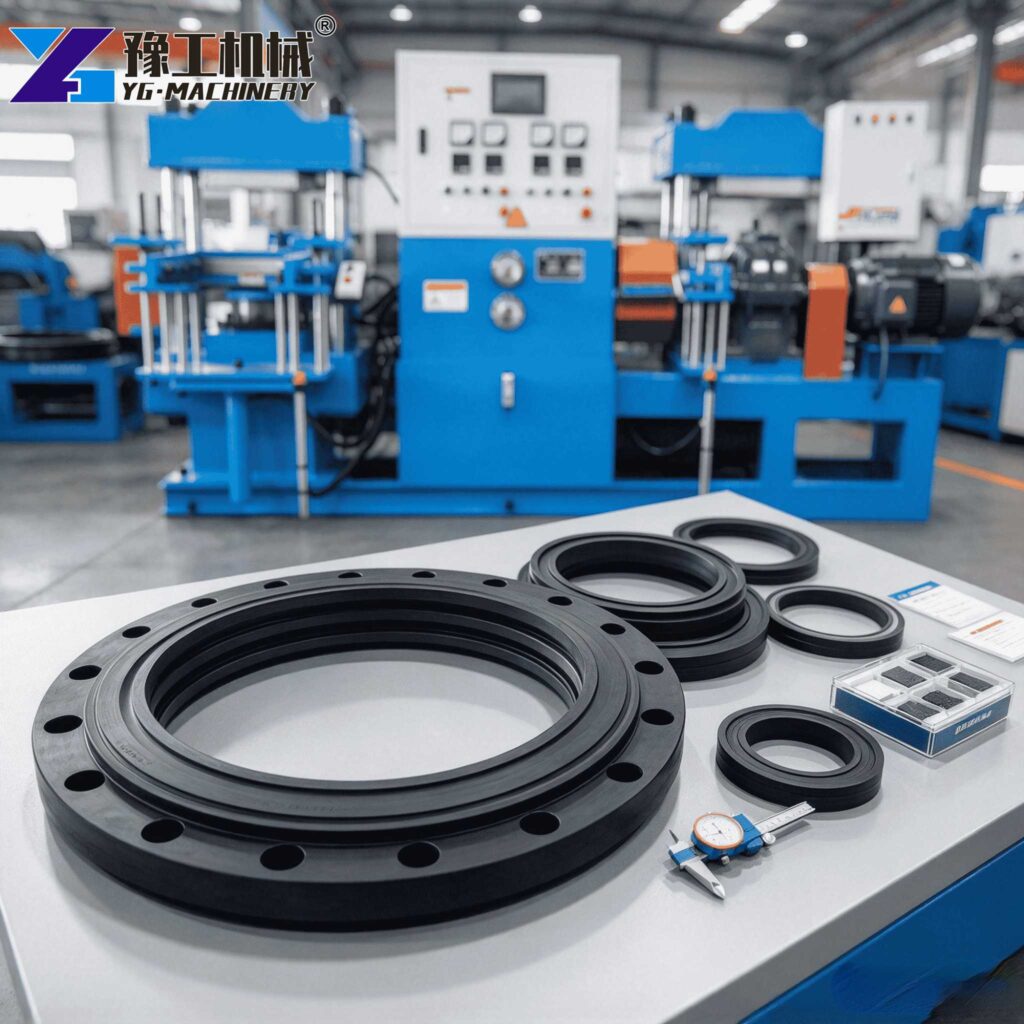
YG proposed the 200T hydraulic rubber vulcanizing press with 560×560 mm platens. The larger platen lets the plant cure two mats per cycle.
Four independent heating zones with PID control hold each area within ±2°C. That removed the corner drift behind the soft spots. Dual 7.5 kW motors drive the pump for fast closing.
The plant chose electric platen heating over steam. That removed the boiler from the process. It also ended the pressure drops caused by other lines. A rubber vulcanizing machine without a boiler is simpler to permit and easier to run.
The press pairs well with a rubber mixing mill upstream. Even batch weight keeps cure times stable.
Professional tip: match platen size to your largest part, not your average part. Two small parts per cycle usually beat one large cycle.
Shipping the Rubber Vulcanizing Machine to Thailand
The unit left Qingdao and reached Laem Chabang in about nine days. Total weight was 9,000 kg, shipped in one 20ft container. It traveled in a fumigated crate with steel reinforcement. Manuals came in English and Thai, with a spare seal kit and heater elements.
Documents that traveled with the press:
- Factory pressure test certificate for the hydraulic circuit
- ISO 9001 certificate from the works
- CE declaration available on request
- Electrical diagram and spare parts list
Thai factories do not need CE for domestic use. Many still ask for it when they export to Europe.
Thai customs cleared the shipment in three days. A truck moved the crate to Songkhla in about 14 hours. Every part arrived intact.
Professional tip: confirm voltage and frequency before shipping. Thailand uses 380V/50Hz three-phase, and a 60Hz motor will run hot.

Commissioning the Hydraulic Rubber Vulcanizing Press On Site
Our engineer spent four days on site. Day one covered foundation bolts and leveling. Day two covered hydraulic oil, wiring, and pressure testing. Day three covered temperature calibration. Day four covered training and trial production.
- Set the base on a level pad with anchor bolts
- Fill 46# anti-wear hydraulic oil to the sight glass
- Connect 380V three-phase power and check motor rotation
- Set the pressure relief valve, then calibrate four heating zones
- Run a trial cure and check rib depth
The first trial cured a 6 mm mat in 7.5 minutes at 150°C. Rib depth stayed within tolerance across the sheet. Operators learned the recipe panel in one shift.
Professional tip: keep a cure log for the first month. Record temperature, time, and pressure for every batch. That log becomes your quality record for audits.
Operating Results of the Hydraulic Rubber Vulcanizing Press
Output rose from 220 to about 340 mats per shift. Three changes drove the gain. Two mats now cure per cycle. Each cycle is shorter. Wider platen opening cuts loading time.
- Cycle time: 12 minutes down to 7.5 minutes
- Output per shift: 220 up to 340 mats
Energy cost also fell. The plant no longer runs the boiler for this line. The owner reported a 17% drop in energy cost per mat. Floor space stayed the same.
Professional tip: track energy per finished part, not per hour. Idle time can hide real savings on a shared boiler.
Customer Feedback and ROI: Numbers Behind the Press
The owner summed up the change in one sentence. “We stopped losing mats to soft corners,” he said. His quality manager added that the audit passed with no findings on curing records.
The ROI was clear within five months. Extra output added about USD 3,900 in gross margin each month. Lower rejects saved another USD 1,100. Energy and labor savings added roughly USD 400. Total gain was near USD 5,400 per month.
The press price was about USD 26,000 with installation support. Payback came in about five months, or roughly 130 working days. Every month of delay costs about USD 5,400 in lost margin. After payback, that gain flows straight to margin.
Professional tip: calculate payback on margin per part, not on revenue. Revenue flatters the case and hides weak pricing.
Request Solution for My Business
Key Results of the Hydraulic Rubber Vulcanizing Press
- 55% more output per shift on the same floor space
- 7.5 minutes cure time, down from 12 minutes
- 1.4% reject rate, down from 7.2%
- ±2°C platen control, up from ±8°C
- 17% lower energy cost per mat
- About 5 months to full payback
Why Buyers Pick This Rubber Vulcanizing Press Manufacturer
Choosing a rubber vulcanizing press manufacturer comes down to three things. Platen quality, hydraulic reliability, and spare-part speed. A press that loses temperature control ruins product quality.
YG drills thick steel platens for even heat and pressure tests each unit. The company ships to more than 50 markets with English documentation.
- 12-month warranty on hydraulics and controls
- Spare heaters and seals shipped within 48 hours
- Free cure-cycle review before purchase
Professional tip: ask for a platen temperature map at three loads. A flat map at one load proves little about real production.
Frequently Asked Questions About the Hydraulic Rubber Vulcanizing Press
A1: Use at least a 600×650 mm platen. The 250T or 300T model fits well.
A2: Yes. We build motors and heaters for the local voltage and frequency.
A3: No. Electric platen heating is standard and needs no boiler permit.
A4: A 6 mm natural rubber mat cures in about 7.5 minutes at 150°C.
A5: Twelve months on hydraulics and controls, plus a spare seal kit.
Get Factory Quote | WhatsApp/Tel: +86 183 3715 2861
How to Order: Vulcanizer Rubber Machine for Sale Advice
Start with three numbers: part size, part thickness, and target cycle time. Then choose tonnage and platen size. After that, confirm heating method, voltage, and safety devices.
Buyers searching for a vulcanizer rubber machine for sale often compare price first. Compare specific pressure and platen flatness instead. Those two values decide whether your product cures evenly.
For long belts rather than mats, look at a conveyor belt vulcanizing press instead. For flat sheet goods, the platen press in this case is the better fit.
Send YG your part drawing, compound, and target output. Our engineers will reply with the right model, a cure-cycle estimate, and a delivered price to Thailand. Request your quote today.