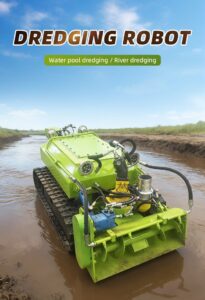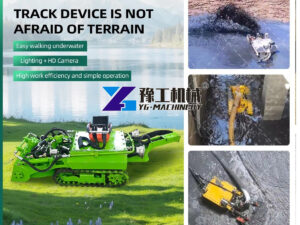
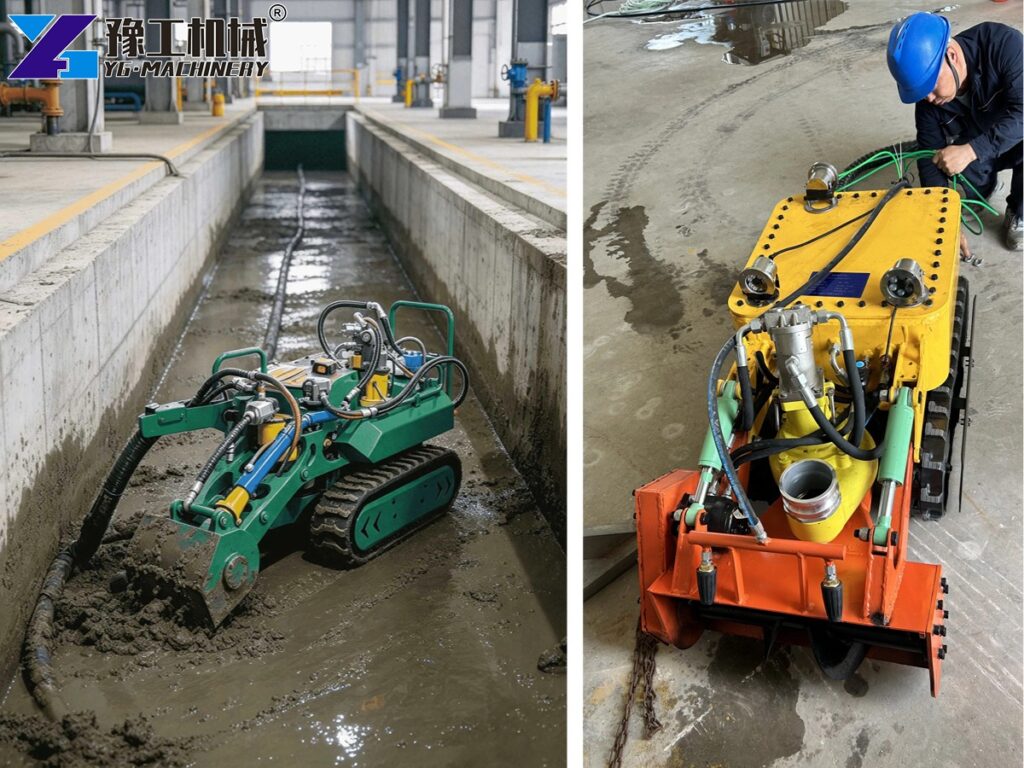
Sludge buildup in storage tanks and reservoirs cuts usable capacity. Manual cleaning forces workers into confined spaces with toxic gas risk. Long downtime also stops production for weeks. A Desilting Robot for sale from YG Machinery handles this work by remote control. Six models cover 500mm to 1200mm dredging width with 100-200 m³/h pump flow. Send your tank size and sludge depth for a free quote today.
Desilting Robot for Sale: 6 Models from 500mm to 1200mm
Every model shares the same hydraulic drive concept and wireless control. Width, flow rate, and particle capacity scale up with tank size.
| Parameter | YG-500 | YG-600 | YG-700 | YG-800 | YG-900 | YG-1200 |
|---|---|---|---|---|---|---|
| Robot dimensions | 1500×500×650mm | 1500×600×650mm | 1600×700×650mm | 1600×850×700mm | 1650×960×750mm | 1900×1200×750mm |
| Dredging width | 500mm | 600mm | 700mm | 800mm | 900mm | 1200mm |
| Track travel speed | 3-15m/s | 3-15m/s | 3-15m/s | 3-15m/s | 3-15m/s | 3-15m/s |
| Robot weight | 320kg | 350kg | 380kg | 400kg | 420kg | 500kg |
| Pump outlet diameter | 3 inch | 3 inch | 4 inch | 4 inch | 4 inch | 4 inch |
| Pump flow rate | 100 m³/h | 100 m³/h | 200 m³/h | 200 m³/h | 200 m³/h | 200 m³/h |
| Hydraulic station size | 2200×1200×1700mm | 2200×1200×1700mm | 2200×1200×1700mm | 2200×1200×1700mm | 2200×1200×1700mm | 2120×1240×1200mm |
| Main motor power | 22kw | 22kw | 30kw | 30kw | 30kw | 45kw |
| Hydraulic pressure | 0-16MPa | 0-16MPa | 0-16MPa | 0-16MPa | 0-16MPa | 0-16MPa |
| Particle size | 15mm | 15mm | 38mm | 38mm | 38mm | 60mm |
| Reeling system speed | 0-10r/min | 0-10r/min | 0-10r/min | 0-10r/min | 0-10r/min | 0-10r/min |
| Hydraulic hoses | 50m standard | 50m standard | 50m standard | 50m standard | 50m standard | 50m standard |
| Control system | Wireless remote | Wireless remote | Wireless remote | Wireless remote | Wireless remote | Wireless remote |
| Lighting | LED ×2 | LED ×2 | LED ×2 | LED ×2 | LED ×2 | LED ×2 |
Get Factory Quote | WhatsApp/Tel: +86 183 3715 2861
How Does a Submersible Dredge Robot Work Inside a Tank?
Does the machine really enter a full tank without opening the shell? Yes. It passes through the standard manhole, so no cutting work is needed.
The operator stands outside and controls the unit by wireless remote. A high-definition camera sends live video back to the screen.
Inside the tank, steel tracks move the body along the bottom. The tracks grip wet, oily, or uneven surfaces. Once in position, a high-pressure nozzle sprays the wall and floor. Jets peel off sludge, scale, and hardened sediment.
At the same time, the suction pump pulls the sludge-water mix away. A hose carries it to a waste treatment system outside. Cleaning and discharge happen in one pass. This keeps the tank bottom visible for camera monitoring.
Every electrical part follows explosion-proof standards. That makes the unit safe in flammable tank atmospheres.
Some models add obstacle sensing and path planning. The unit then finds the best route and covers more floor area.
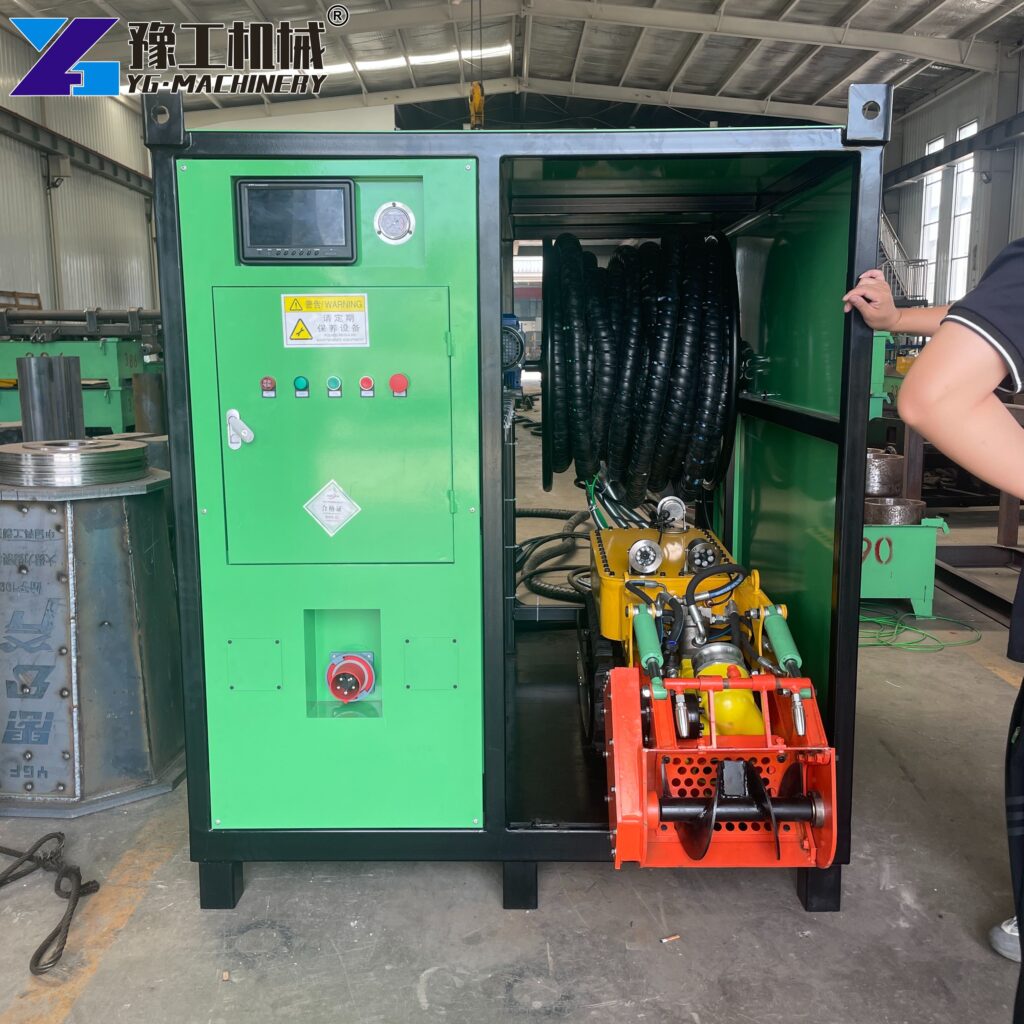
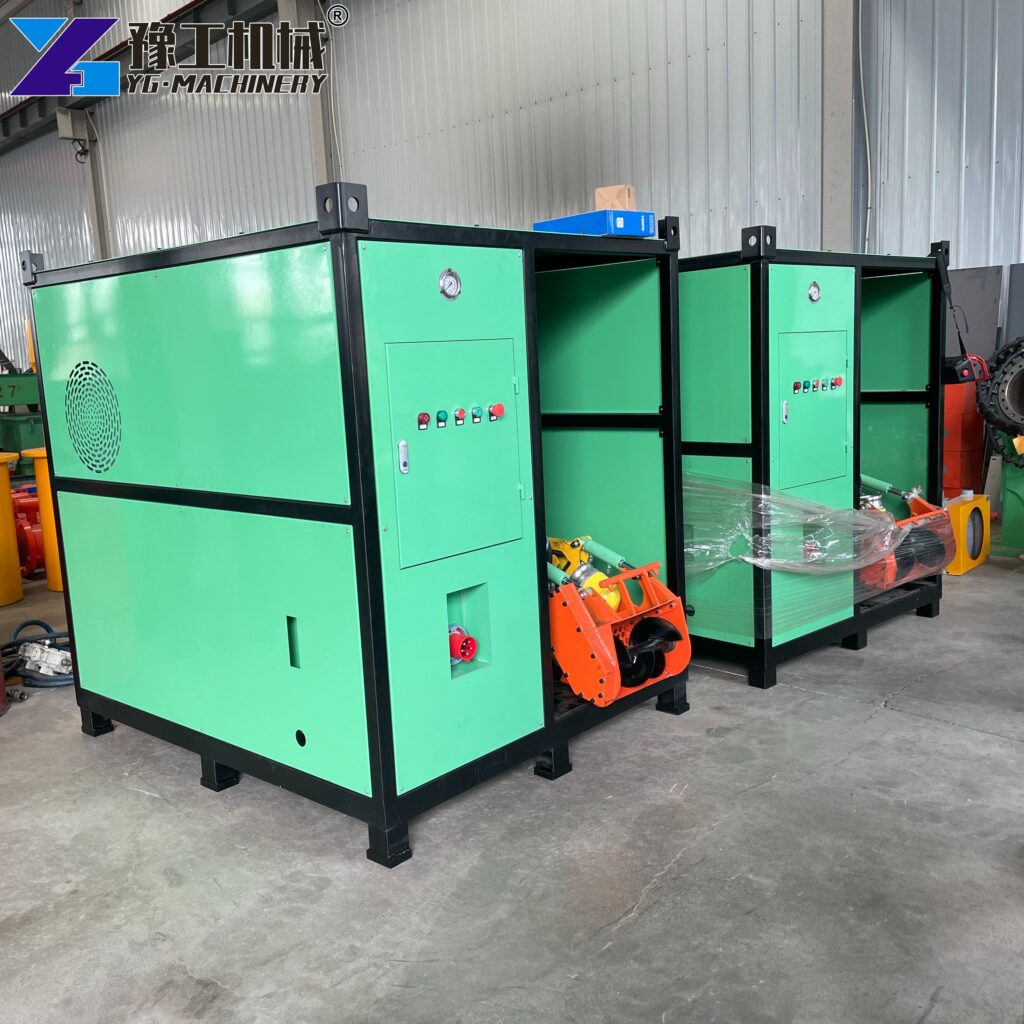
Core Advantages of a Desilting Robot for Sale
Why do plant operators switch from manual cleaning to this machine? The answer lies in five practical gains.
- No confined space entry: Workers stay outside during the whole job. Toxic gas and asphyxiation risk drops to near zero.
- One-pass cleaning: Jets break sludge, and the pump removes it together. No separate discharge step or rework time.
- Short downtime: Most jobs finish in days, not weeks. Plants return to service faster and lose less output.
- Corrosion-resistant build: Stainless steel and engineering plastic parts. The body survives wet and chemical-heavy conditions.
- Modular cleaning heads: Brush, jet, or suction heads swap by task. One platform covers tanks, basins, and open channels.
Crawler dredging robot weight starts at 320kg for the YG-500 and reaches 500kg for the YG-1200. Light models suit small pumps and tight vessels. Heavy models handle wide, deep tanks with coarse material. The 50m standard hose keeps a safe working distance.
Desilting Robot for Reservoir Cleaning: Where It Fits Best
Silt layers cut reservoir storage and block intake screens. Draining a large basin costs money and takes weeks.
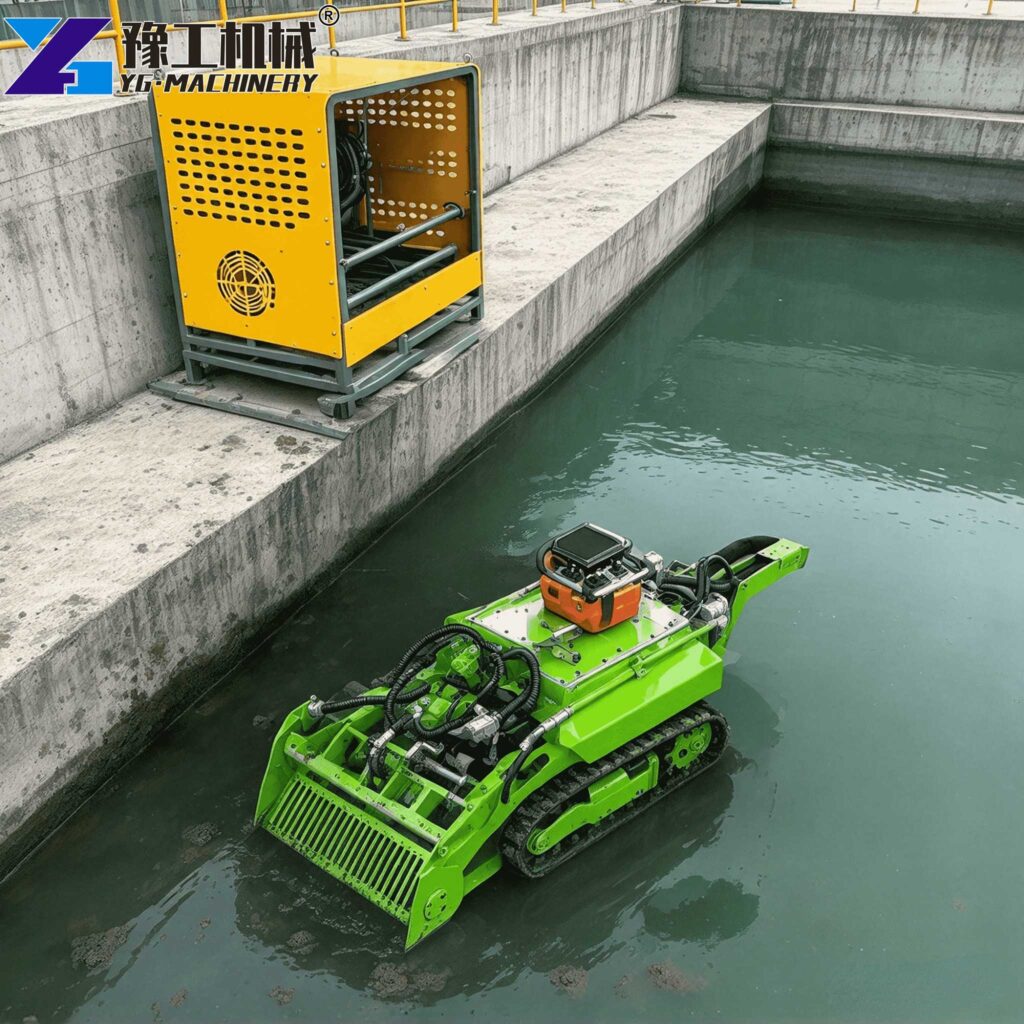
This machine works while the basin still holds water. That avoids a full drain and keeps supply online. It suits raw water plants, cooling ponds, irrigation basins and storm ponds.
For open reservoirs, the unit needs a firm launch point near the bank. It then walks on a prepared route to the silt zone. The camera helps the operator avoid pipes and baffles.
The 700 to 1200 models fit wider basins with bigger debris. Flow rate reaches 200 m³/h at those sizes. Particle size rises to 60mm on the YG-1200 for coarse gravel mix.
Check two points before ordering a unit. First, measure the manhole or roof gap on your tank. The YG-1200 body needs 1200mm width plus clearance. Second, test the sludge density and average particle size.
Talk to our team about the dredging robot version when your site is an open channel. That variant runs without a sealed tank entry.
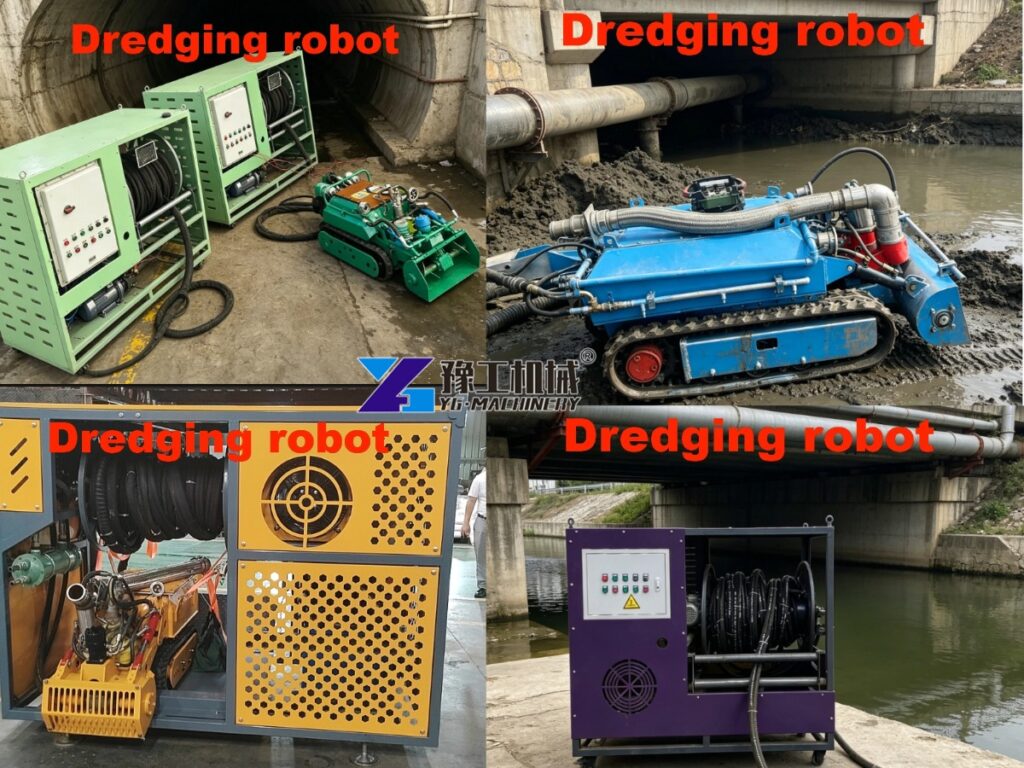
Case Study: Crude Oil Tank Cleaning Automation (Texas Refinery)
A crude oil storage and distribution center in Texas ran dozens of giant tanks. Traditional cleaning needed long entry permits and many staff hours. A major crude oil storage and distribution facility in Texas successfully modernized its maintenance operations by replacing manual tank entry with an automated, remote-controlled tank cleaning robot.
Operational Challenges & Results
Traditional tank maintenance presented significant operational bottlenecks, including hazardous confined-space entry permits, high labor overhead, and extended asset downtime. Deploying a heavy-duty, explosion-proof tank cleaning robot altered the site’s maintenance economics.
+-----------------------------------------------------------------------------------+
|                            Operational Impact Metrics                             |
|                                                                                   |
|  [ Cleaning Cycle Duration ]     25 Days (Manual) ──► 10 Days (Automated) [-60%]  |
|  [ Confined-Space Entry ]        Continuous Crew Entry ──► Zero Tank Entry [100%] |
|  [ Sludge Removal Efficiency ]   Multi-Stage Scraping ──► Single Continuous Pass  |
|  [ Inspection & QC ]             Post-Clean Entry ──► Real-Time HD Camera Stream  |
+-----------------------------------------------------------------------------------+
Key Performance Improvements
- 60% Reduction in Asset Downtime: Single-tank cleaning turnarounds dropped from 25 days down to 10 days, returning storage tanks to active service faster and reducing lost opportunity costs.
- 100% Confined-Space Risk Elimination: Cleaning crews operate the robot remotely from outside the tank shell, eliminating exposure to volatile organic compounds (VOCs), toxic gas pockets, and collapse hazards.
- Single-Pass Sludge Extraction: High-torque drive tracks and heavy-duty solids-handling pumps process dense, heavy crude oil bottom sludge continuously without clogging or manual shoveling.
- Real-Time Coverage Verification: Integrated explosion-proof (ATEX/IECEx certified) HD camera arrays and high-intensity illumination systems allow supervisors to monitor cleaning progress and verify wall/floor cleanliness in real time from a remote control cabin.
System Operating Architecture
[ Remote Control Operator Console ]
               │
               ├─► Wireless / Tethered Signal
               │
               ▼
[ Heavy-Duty Tank Cleaning Robot ] ──► (Dislodges & Pushes Sludge)
               │
               ▼
[ Integrated Sludge Extraction Pump ] ──► [ External Solids/Oil Separation Unit ]
- Access Point: Deployed directly through standard 24-inch side manholes or roof access hatches.
- Sludge Breaking & Fluidization: High-pressure sludge cannons or mechanical scrapers break up heavy hydrocarbon deposits, mixing them into a pumpable slurry.
- Continuous Discharge: Onboard slurry pumps extract fluidised waste to external separation or reclamation equipment continuously.
Cross-Industry Applications
While engineered for crude oil terminals, this heavy robotic cleaning system is deployed across multiple industrial sectors facing hazardous cleaning environments:
| Industry Sector | Application | Target Residue / Contaminants |
| Oil & Gas Terminals | Crude oil, heavy fuel oil (HFO), and slop tanks | Heavy paraffin wax, bitumen, sand, and asphaltic sludge |
| Water & Wastewater Treatment | Potable water reservoirs, digesters, and clarifiers | Bio-sludge, heavy sediment, sand, and mineral deposits |
| Pulp & Paper Mills | Black liquor storage, chemical recovery tanks, and pulp chests | Fiber sludge, chemical scale, and corrosive slurries |
| Chemical Processing | Solvents, petrochemicals, and acid storage vessels | Corrosive residues, toxic chemical sediments |
YG Machinery Service, Warranty & Free Quote
YG Machinery has built construction and cleaning machinery since 2005. We design, test, and ship the units from our own plant. Every robot runs a full load test before packing.
Our team also supplies related site equipment. You can link the hydraulic breaker hammer, diamond wire saw, pile breaker, and rock splitter into one purchase plan.
Support through each stage:
- Pre-sales: Free model matching by tank size, sludge depth, and access gap.
- Custom build: Track type, head selection, hose length, and voltage options.
- Installation: Remote video guidance and on-site help for large orders.
- Spare parts: Nozzles, seals, pumps, and wear plates held in stock.
- Maintenance: Scheduled checks and fault diagnosis from our engineers.
We ship under FOB, CIF, or EXW terms. Export packing is designed for sea transport. Typical lead time is 20 to 30 working days after deposit.
Send us your tank diameter, manhole width, and sludge depth. We will confirm the right model and return a factory price. The quote arrives within 6 working hours. Contact YG Machinery now for your Desilting Robot for sale plan.