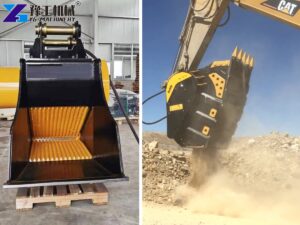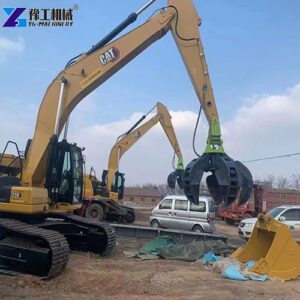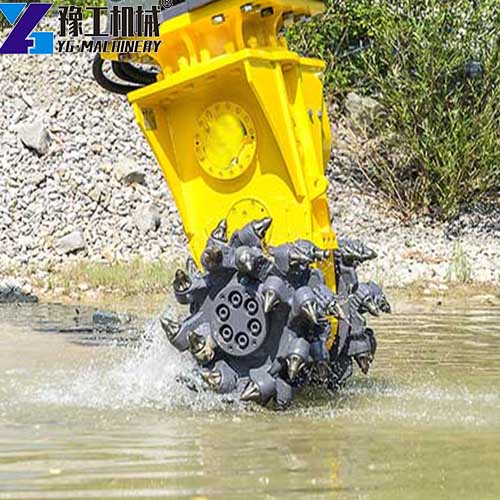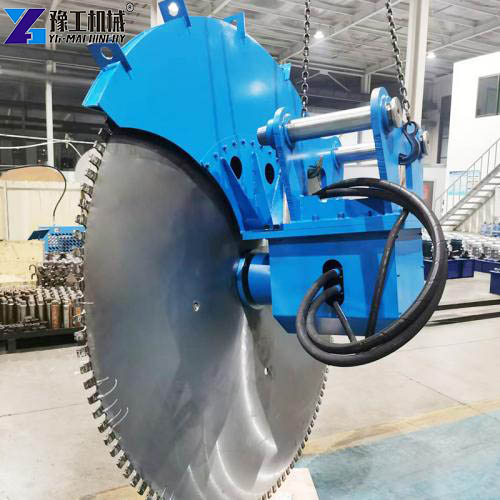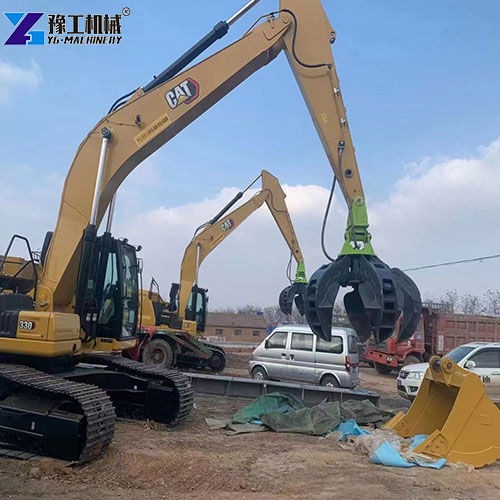

A demolition contractor in Bangkok faced a costly pile of broken concrete. Every tonne they hauled off-site drained profit and blocked city streets. This excavator rock crusher bucket changed their numbers within weeks. It turned demolition waste into reusable aggregate, on site, on budget. Here is how the project ran from quote to revenue.
YGDP Excavator Rock Crusher Bucket Parameters
The table below lists the full YG series. Each model matches a specific excavator weight class. This helps buyers match capacity to their own fleet.
| Parameter | YGDP-25 | YGDP-35 | YGDP-45 | YGDP-55 | YGDP-65 |
|---|---|---|---|---|---|
| Excavator weight (T) | 20-25 | 24-35 | 30-40 | 35-50 | 45-70 |
| Working pressure (MPa) | 25 | 25 | 25 | 25 | 25 |
| Recommended flow (L/min) | 180 | 220 | 260 | 300 | 390 |
| Weight (kg) | 2,900 | 3,950 | 4,850 | 5,800 | 6,900 |
| Bucket capacity (m³) | 0.7 | 0.9 | 1.05 | 1.2 | 1.4 |
| Output size range (mm) | 15-130 | 15-130 | 15-130 | 15-140 | 15-160 |
| Jaw plate width (mm) | 750 | 900 | 1,100 | 1,300 | 1,500 |
| Jaw plate height (mm) | 400 | 400 | 450 | 450 | 450 |
Get Factory Quote | WhatsApp/Tel: +86 183 3715 2861
Project Background: A Bangkok Contractor and Excavator Rock Buckets
The client ran a demolition and recycling business in Bangkok. They won a contract to clear a 15-storey commercial building. The site would release about 4,800 tonnes of waste concrete and brick. Early estimates showed dumping would consume most of the job’s margin.
The old process was inefficient. Trucks hauled rubble to a landfill outside the city. Each round trip took hours through heavy traffic. The contractor paid high tipping fees per tonne. They also bought fresh aggregate for backfill. Two costs now hit the same budget twice.
This is a common trap in Thai urban demolition. City sites have little storage space. Permits restrict truck movement during peak hours. Landfill capacity near Bangkok has shrunk. Many small contractors feel stuck with old methods.
- Dumping fees rose sharply across the region
- Truck permits limited site output each day
- Fresh aggregate prices kept climbing
- Site footprint allowed no stockpiling of waste
Professional tip: measure the real cost per tonne before starting. Include tipping, hauling, truck time, and new material. This baseline decides if crushing on site makes sense.
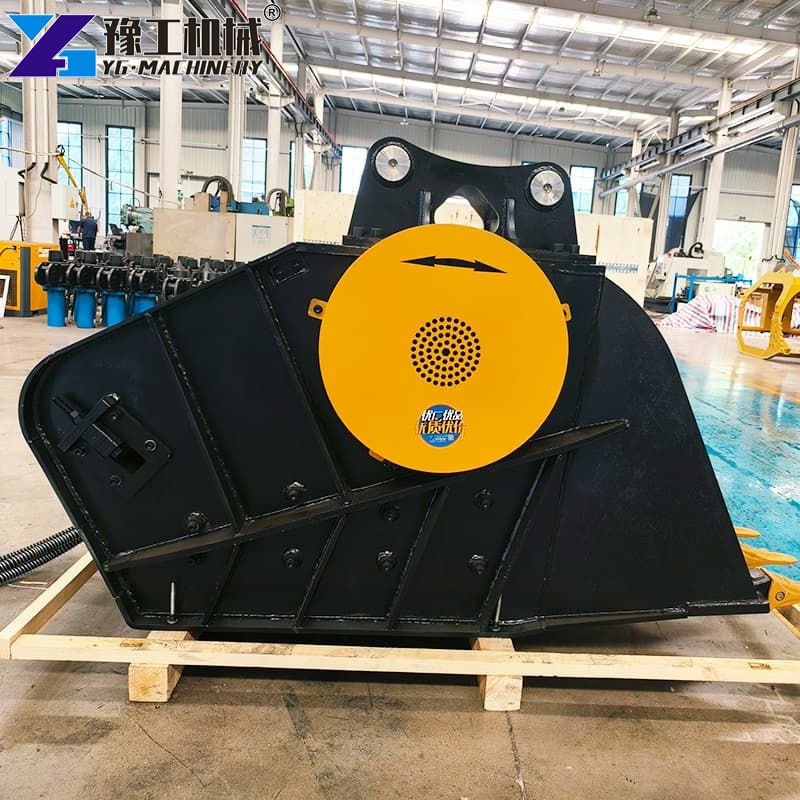
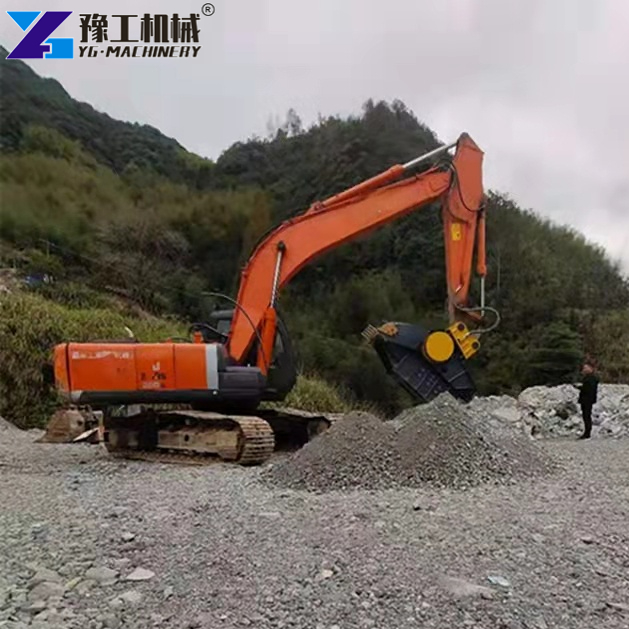
The Solution: Installing a YGDP-45 Excavator Rock Crusher Bucket
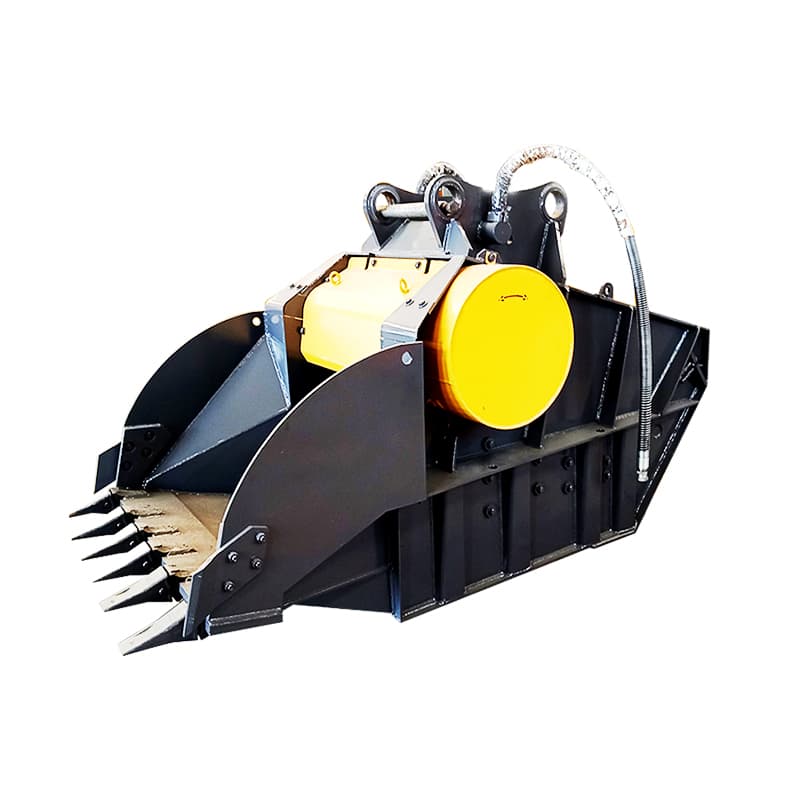
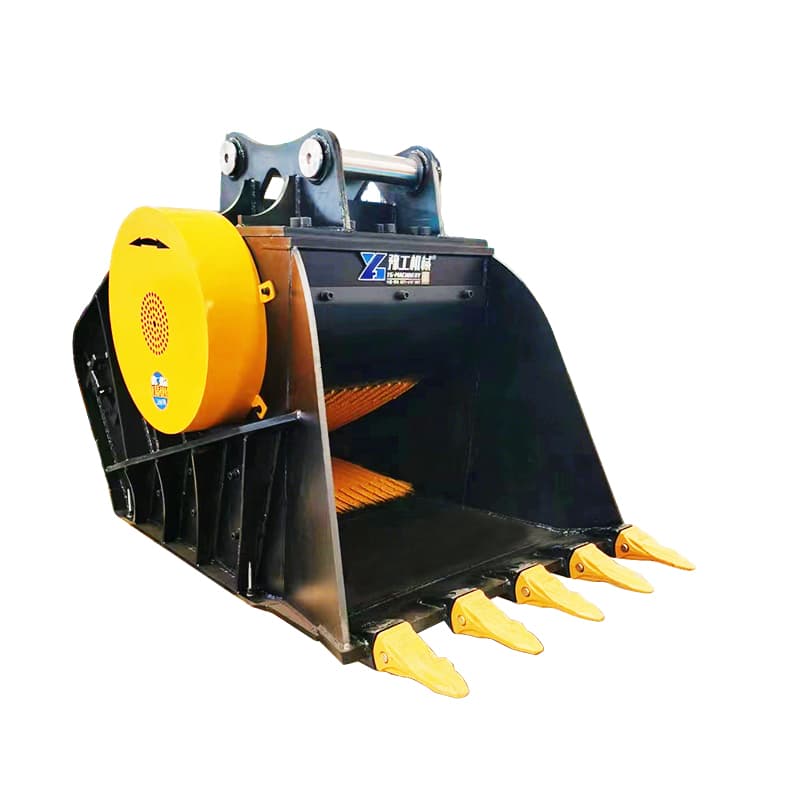
After a site audit, the contractor chose the YGDP-45 model. It suited their 35-tonne excavator. The bucket offers 1.05 m³ of capacity. Its output range of 15-130 mm matched the aggregate they needed for backfill and sub-base.
A crusher bucket for an excavator offers an obvious advantage here. It removes the need for a separate static crusher. The machine already on site does the work. No foundation, no power line, and no extra operator cost. This cut their capital risk sharply.
The solution removed blow-up costs early. The excavator speared, lifted, and crushed material in one flow. Rubber, steel, and rebar were pulled out first by a magnet crew. Clean concrete then fed straight into the jaw chamber.
Professional tip: match bucket size to the excavator, not to the biggest job. Oversizing adds weight and slows the carrier. Undersizing forces extra passes and wastes fuel. The YGDP-45 sat safely in the middle of the 30-40 T band.
Shipment, Installation and Commissioning of the Crusher Bucket for Excavator
The excavator crusher attachment unit shipped from our YG Machinery works in China to Laem Chabang port. Sea freight to Bangkok took about 12 days. Crates protected the bucket and all hydraulic fittings. Delivery included a full set of safety documents and spare jaw plates.
Installation took less than a day on site. Our engineer first checked the excavator’s oil flow and pressure. The recommended flow of 260 L/min matched the carrier output. A quick-exchange coupling then locked the bucket to the arm.
Commissioning followed a three-stage plan. Stage one verified hydraulic pressure at 25 MPa. Stage two ran a dry jaw cycle without material. Stage three crushed five test loads and measured the output size. Each stage passed before full production began.
- Hydraulic pressure set and locked at 25 MPa
- Jaw gap adjusted to the target aggregate size
- All seals and hoses pressure-tested
- Operator training held for two full shifts
Professional tip: never run a crusher bucket with dirty hydraulic oil. Contaminants damage valves and jaw pumps. Change the return-line filter after the first 50 hours. This small step extends bucket life by years.
How the Excavator Rock Crusher Bucket Delivered Real Results
Production began in the third week. Within four months, the crew processed all 4,800 tonnes of material. The YGDP-45 crushed about 30 tonnes per hour at typical feed size. Output sat mostly in the 20-80 mm range.
The results changed the whole job economics. Hauling trips dropped from 12 to 5 per day. Tipping fees fell by almost 70%. The contractor reused 31% of the crushed material as sub-base on the same site. The rest was sold to local concrete plants.
These are excavator rock buckets built for daily abuse. The hinge pins and high-strength steel kept wear low. After four months of heavy feed, the jaw plates still held their original profile. Only routine greasing was needed. Site managers logged zero structural damage across the campaign.
Professional tip: match feed rate to the jaw opening. Do not overload the chamber during a restart. A steady rhythm produces a more uniform aggregate and protects the drive system.
Client Feedback and ROI of the Excavator Rock Crusher Bucket
The contractor spoke plainly about the outcome. “We recovered the bucket cost in about nine months,” the owner said. “The recycled sub-base alone saved our backfill budget.” Their crew praised the single-day installation and the simple controls.
The ROI math was clear. They avoided about 3,300 tonnes of dumping and hauling. They cut purchased aggregate by roughly 1,500 tonnes. Lower truck traffic also reduced permit issues and site congestion. All of this flowed straight to the bottom line.
This case shows why the ROI of an excavator rock crusher bucket stacks up. It is not only about the crusher. It is about the haul, the fee, the fuel, and the new rock you no longer buy. Each saved tonne repeats the payback daily.
Professional tip: track savings for one full month after startup. Record tonnes crushed, trips saved, and material sold. These figures justify the equipment to project owners and banks.
Key Results of the Excavator Rock Crusher Bucket
The Bangkok project delivered concrete and measurable outcomes. These numbers help any buyer compare a crusher bucket for sale against static plants.
- 4,800 tonnes of concrete and brick processed on site
- 70% reduction in dumping and hauling cost
- 31% of material reused as on-site sub-base
- 9-month payback period on the bucket
- 12 to 5 truck trips per day after startup
- 2.9 t to 6.9 t bucket weight range across the series
Frequently Asked Questions About the Excavator Rock Crusher Bucket
A: It suits machines in the 30-40 T class. A 35-tonne excavator is ideal.
A: The YGDP-45 delivers material from 15 to 130 mm. You can set the jaw gap to your target.
A: No. Pull out steel before feeding. Our recommended magnet crew prevents damage.
A: Most sites install within one day. A two-shift training session covers safe operation.
A: We supply spare parts, jaw plates, remote guidance, and a dedicated engineer for startup.