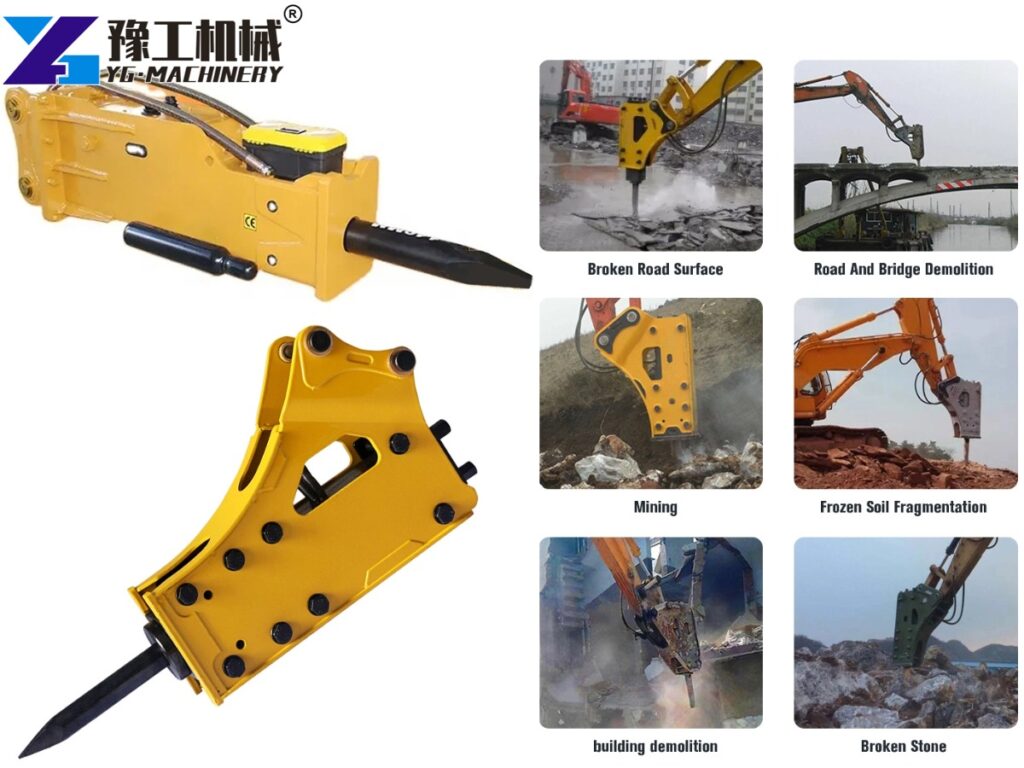
Rock, concrete, and frozen ground stop most excavation work. A hydraulic breaker turns the carrier’s hydraulic power into fast impact energy. It splits rock at the face and breaks concrete slabs without blasting. The right unit fits the carrier, the job, and the local climate. Our range covers 22 models, from 35 mm to 210 mm chisel diameter. Carrier weight runs from 0.5 tons to 80 tons. Operating pressure sits between 90 and 240 kg/cm². Oil flow runs from 15 to 350 liters per minute. Blow frequency falls as size grows, from 1,300 down to 150 bpm. Each model ships with a chisel, hoses, and a nitrogen kit.
Hard rock, reinforced concrete, and permafrost each need a different chisel. A moil point splits hard stone. A flat chisel works on concrete and asphalt. A blunt tool suits soft or layered ground. Wear shows first at the tip and the retainer pin. Check both at every service interval. Why does matching matter so much? A breaker that is too small stalls in hard rock. One that is too large damages the carrier arm. We help you compare carrier weight, oil flow, and rock type. Then we confirm the hose diameter and mounting bracket. Tell us your excavator model and daily output. We will send a quote with the right size within 8 hours. Ask for a free site review before you order.
Get Factory Quote | WhatsApp/Tel: +86 183 3715 2861
YG Hydraulic Breaker Series Parameter
| Model | Chisel diameter (mm) | Suitable carrier (ton) | Main body weight (kg) | Operating pressure (kg/cm²) | Hydraulic oil flow (l/min) | Blow frequency (bpm) | Hose diameter (inch) |
|---|---|---|---|---|---|---|---|
| YG350 | 35 | 0.5-1 | 40 | 90-120 | 15-25 | 800-1300 | 1/2 |
| YG400 | 40 | 1-3 | 53 | 90-120 | 15-25 | 800-1300 | 1/2 |
| YG450 | 45 | 1.2-3.0 | 67 | 90-120 | 20-30 | 700-1200 | 1/2 |
| YG530 | 53 | 2.5-4.5 | 85 | 90-120 | 25-50 | 600-1100 | 1/2 |
| YG600 | 60 | 2-5 | 140 | 90-120 | 25-50 | 600-1100 | 1/2 |
| YG680 | 68 | 4-7 | 152 | 110-140 | 40-70 | 500-900 | 1/2 |
| YG750 | 75 | 6-9 | 210 | 120-150 | 50-90 | 400-800 | 1/2 |
| YG850 | 85 | 7-14 | 278 | 130-160 | 60-100 | 400-800 | 3/4 |
| YG100 | 100 | 10-15 | 475 | 150-170 | 80-110 | 350-700 | 3/4 |
| YG1250 | 125 | 15-18 | 616 | 150-170 | 80-110 | 350-700 | 3/4 |
| YG1350 | 135 | 16-26 | 846 | 160-180 | 130-150 | 400-800 | 1 |
| YG1400 | 140 | 18-26 | 916 | 160-180 | 120-180 | 350-500 | 1 |
| YG1400A | 140 | 18-26 | 952 | 160-180 | 120-180 | 350-500 | 1 |
| YG1500 | 150 | 27-35 | 1088 | 160-180 | 150-190 | 350-700 | 1 |
| YG1550 | 155 | 28-36 | 1309 | 180-200 | 200-260 | 250-400 | 1-1/4 |
| YG1650 | 165 | 30-40 | 1438 | 180-200 | 200-260 | 250-400 | 1-1/4 |
| YG1650P | 165 | 30-40 | 1586 | 180-200 | 200-260 | 250-380 | 1-1/4 |
| YG1750 | 175 | 35-40 | 1929 | 180-200 | 210-290 | 200-350 | 1-1/4 |
| YG1850 | 185 | 35-45 | 2411 | 190-220 | 220-270 | 200-250 | 1-1/4 |
| YG1990 | 190 | 40-55 | 2626 | 190-220 | 220-290 | 180-200 | 1-1/4 |
| YG2100 | 210 | 60-80 | 3396 | 200-240 | 290-350 | 150-200 | 1-1/4 |
How a Hydraulic Breaker Works on Site
The breaker is a simple machine with a hard job. Oil pressure drives a piston, and the piston hits the tool.
The Impact Cycle
- Oil enters the back chamber and pushes the piston down
- The piston strikes the chisel top at high speed
- A nitrogen chamber pushes the piston back up
- The cycle repeats up to 1,300 times per minute
Strike energy depends on piston mass and oil pressure. Bigger models hit harder but slower. Small models strike fast and suit thin concrete. Match the tool to the material, not to habit. A fast, light hammer wastes time on hard granite.
Choosing the Chisel Type
- A moil point splits hard, brittle rock
- A flat chisel works on concrete and asphalt
- A blunt tool suits soft or layered ground
- A wide chisel clears trench bottoms
Tool choice changes output more than most buyers expect. A wrong tip can double the time per cubic meter. Ask for a tip chart with the quote. Keep two spare tools on site for long shifts.
What the Operator Feels
Good mounting cuts vibration at the cab. Rubber pads and a correct bracket protect the arm. A worn retainer pin lets the tool shift and damage the bore. Operators hear a change in sound before they see wear. Stop and check the tool when the note changes.
A dry firing check protects the piston. Never run the breaker without the tool in rock or concrete. Idle strikes heat the tool and crack the retainer. Warm the oil before the first blow on cold mornings. Five minutes at low speed is enough. This simple habit extends seal life.
Daily checks take ten minutes. Look for oil leaks at the hose joints. Test the gas pressure with a gauge. Tighten the mounting bolts to the manual torque. Note any change in sound or speed. Early notes prevent a mid-shift failure.
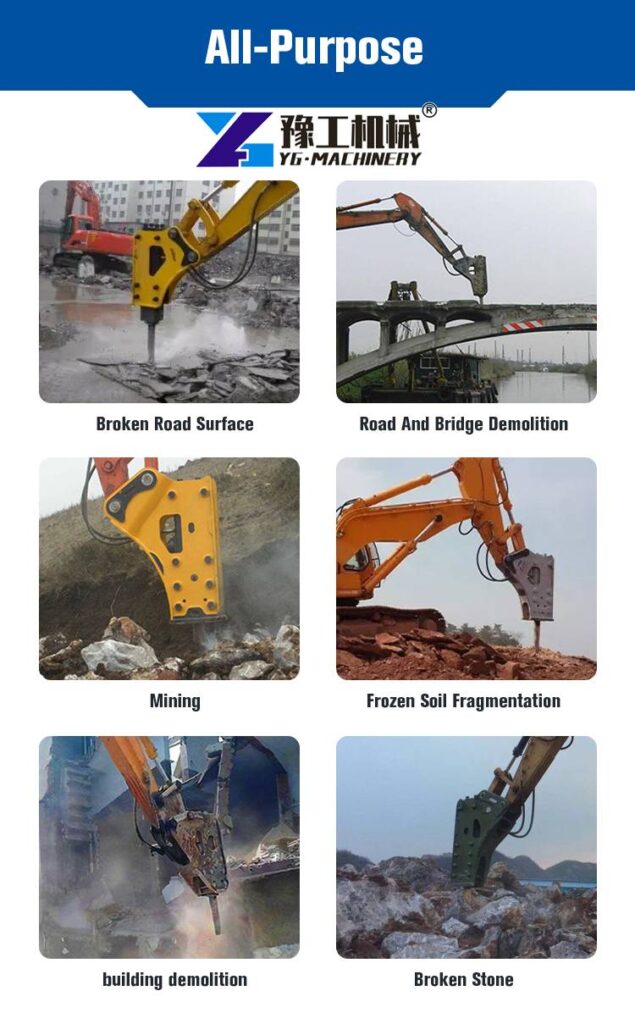

OEM Breaker for Sale: What the Package Really Covers
Buyers ask for an OEM hydraulic breaker for sale, but the word OEM means different things. Confirm what is actually included.
What OEM Means in This Trade
- Factory-built to a carrier maker’s mounting standard
- Bracket holes match the excavator pin size
- Hose kit matches the carrier’s auxiliary circuit
- Chisel and pins follow the original wear limits
A true OEM hydraulic breaker for sale should fit without adapter plates. Ask for the bracket drawing and pin diameter. Compare them with your excavator manual. A cheap copy often needs welding on site.
Ask who builds the bracket and who tests it. A local fabricator can copy a drawing badly. Weld cracks appear after a few weeks on hard rock. A factory bracket comes with a torque sheet and a fit check. That paper matters when a warranty claim starts.
Compare the chisel steel, not just the price. A soft chisel wears fast and costs more per ton. Ask for the hardness range and the steel grade. Good steel holds an edge through long shifts.
Brackets, Hoses and Pins
The bracket carries the whole load, so weld quality matters. Hoses must handle pressure spikes without ballooning. Pins and bushings wear first on hard jobs. Order one spare set with the first machine.
What to Verify Before You Order
- Carrier model and pin diameter
- Auxiliary oil flow in liters per minute
- Relief pressure setting
- Hose size and coupler type
Send these four numbers with your inquiry. We check them against the model chart. A wrong flow figure is the most common mistake. It leads to slow striking or overheated oil.
Rock Breaker Attachment: Matching Carrier and Chisel
A rock breaker attachment must match the carrier before anything else. Weight, flow, and pressure decide the safe size.
Carrier Weight First
- 0.5-4 tons: YG350 to YG530, 35-53 mm chisel
- 4-9 tons: YG680 to YG850, 68-85 mm chisel
- 10-18 tons: YG100 to YG1250, 100-125 mm chisel
- 27-45 tons: YG1500 to YG1850, 150-185 mm chisel
- 60-80 tons: YG2100, 210 mm chisel
A breaker that is too heavy tips the carrier forward. A unit that is too light bounces on hard rock. Stay inside the maker’s carrier range. The chart here uses operating weight, not bucket size.
Oil Flow and Pressure
Flow sets strike speed, and pressure sets strike force. A carrier with low flow runs a small hammer well. High flow on a small hammer overheats the oil. Check the relief valve setting before the first start.
Track the carrier’s hydraulic temperature during the first week. Oil above 80 °C points to a flow problem. Check the cooler and the return filter. A hot circuit thins the oil and wears seals. Fix the cause before it becomes a repair.
Many carriers need a case drain line. This line protects the motor seal from back pressure. Skipping it is a common and costly error. Ask your mechanic to confirm the port location. Add the line before the first day of work.
Related Attachments for the Same Carrier
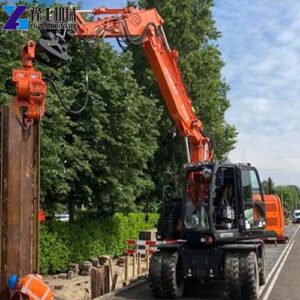
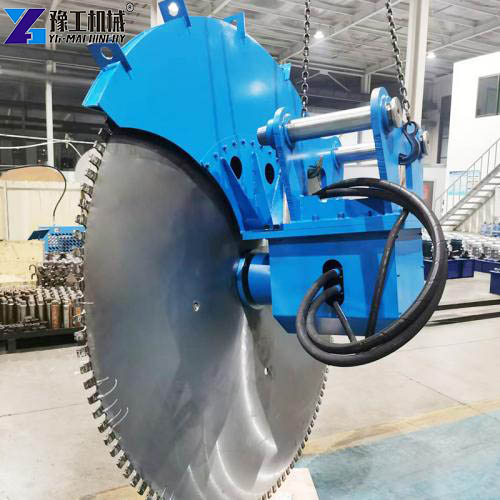
One carrier can run more than a hammer. A drill and split machine handle oversize boulders without blasting. A rock saw cuts clean lines in stone and concrete. A hydraulic shear cuts rebar and steel beams. A pile breaker trims cast piles to level. Ask which tools share the same hydraulic circuit.
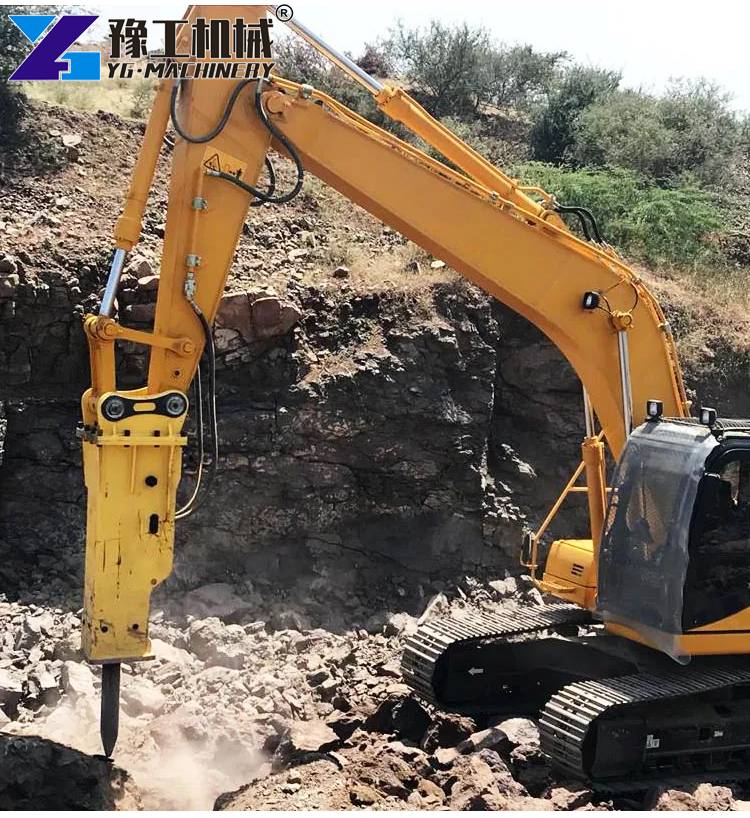
Key Advantages of a Hydraulic Breaker
Why do contractors pick a hammer over blasting or a wrecking ball? Speed, permits, and cost per ton answer that.
No Blasting Permit
Blasting needs permits, storage, and trained crews. A hydraulic breaker starts work the day it arrives. It also works near pipelines, homes, and power lines. Many city sites ban explosives outright.
One Carrier, Many Jobs
The same hammer breaks rock, concrete, asphalt, and frozen soil. A quick coupler lets one operator switch tools in minutes. This keeps a single carrier busy all week. Small fleets gain the most from this flexibility.
Lower Cost Per Ton
A hammer costs less per cubic meter than drilling and blasting on small jobs. Fuel, labour, and wear parts make up most of the running cost. Chisel life depends on rock hardness and operator skill. Track tool changes to see the real cost.
Quiet operation matters in cities. A modern breaker runs below many local noise limits. Water sprays cut dust during concrete work. Both help a contractor keep a permit. Ask for noise and dust guidance with the quote.
Demolition Breaker Case Study: A Quarry Near Riyadh
A demolition hydraulic breaker also suits quarry work when blasting is restricted. One site in Saudi Arabia tested this.
The Site Problem
A limestone quarry near Riyadh needed smaller stone for a cement plant. Blasting was limited near a new housing area. The site had two 20 ton and one 45 ton excavators. They needed tools that fit existing circuits.
What We Supplied
- Two YG1400 units for the 20-ton carriers
- One YG2100 unit for the 45-ton carrier
- Spare chisels, pins, and hose sets
- Bracket drawings checked against pin size
Each YG1400 runs at 160-180 kg/cm² with 120-180 l/min flow. The YG2100 needs 290-350 l/min at 200-240 kg/cm². We sent flow testers with the order. The site confirmed each circuit before mounting.
Results in Four Months
Output rose from 180 to 300 tons per day at the primary face. Blasting trips dropped by half. Tool life averaged six weeks on limestone. Operators reported less arm vibration after the bracket upgrade.
ROI Numbers
The three units replaced one drilling crew and reduced blasting days. Fuel and labour savings covered the tools in about 14 months. Delayed cement orders would have cost far more. The site ordered a fourth unit this year.
Loading and transport were simple. Each unit fit a standard flat rack. The site used its own crane for mounting. No welding was needed on the carriers. Commissioning took one afternoon per machine.
Request Solution for My Business
Hydraulic Breaker Price, Service and Support
Price depends on size, bracket work, and the parts package. Service determines whether the unit keeps earning.
What Drives the Price
- Chisel diameter and body weight
- Bracket fabrication for your pin size
- Hose kit and coupler quality
- Spare chisel and seal package
A 35 mm unit for a mini excavator costs a fraction of a 210 mm mine hammer. Bracket work adds cost but prevents downtime. Ask for a quote with two spare chisels included.
What the Model Numbers Mean
The number in each model name follows the chisel size. YG1400 uses a 140 mm chisel, and YG2100 uses 210 mm. Body weight is listed separately in the table. Buyers also call this tool a hammer, rock hammer, or pecker. All names describe the same attachment class.
Shipping, Customs and Certificates
Each unit ships with a CE certificate and an ISO 9001 factory record. We add a material report for the chisel and a pressure test sheet. Customs papers cover HS code, packing list, and invoice. Sea freight to Jeddah takes about 22 to 28 days. Road transport to Riyadh adds two days. Missing papers can hold a container for weeks.
Service, Training and Spare Parts
Our team checks the carrier spec before the order. We send bracket drawings for approval. Delivery includes a start-up guide and a nitrogen charging sheet. Spare chisels, pins, and seals ship from stock within 48 hours.
Payment terms follow a simple split. Most orders use a deposit with the balance due before shipment. We send photos and a test video before loading. Third-party inspection is welcome at our yard. Documents reach you before the vessel sails.
A spare parts kit pays for itself in one season. Most sites keep two chisels, one hose set, and a seal kit. We list the fast-wearing parts in the manual. Order the kit with the machine and save on freight. Routine service covers bolt torque, hose wear, and gas pressure.
Why Buyers Choose YG
Why do buyers in 40 countries choose YG? We have built and exported attachments for over 20 years. Our team reviews your carrier data before the order. Each unit carries a 12-month warranty. Spare parts ship within 48 hours.
Get Factory Quote | WhatsApp/Tel: +86 183 3715 2861

Common Questions About Rock Breaker Attachment
A1: Match carrier weight first, then oil flow, then rock type.
A2: Most 20-ton carriers run 120-180 l/min at 160-180 kg/cm².
A3: Four to eight weeks on limestone, less on granite.
A4: Only with a matching bracket and similar oil flow.
A5: Chisel, hoses, bracket, nitrogen kit, and manual.
OEM Hydraulic Breaker for Sale-YG Machinery
Ready to size a breaker for your carrier? Send the excavator model, pin diameter, and oil flow. YG Machinery will confirm the right model and send a hydraulic breaker quote within one business day. Ask about spare chisels, brackets, and hose kits. We also quote drill and split machines and pile breakers for the same fleet. Get your free quote today!