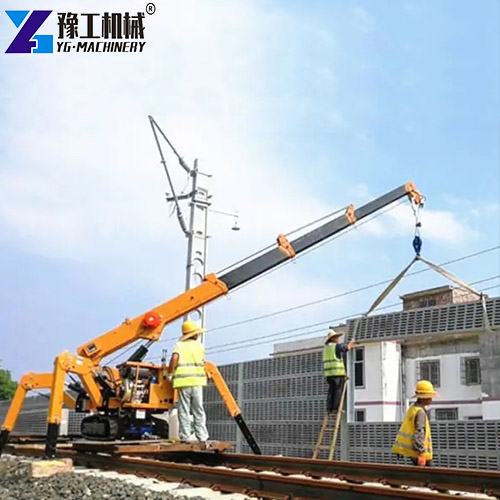
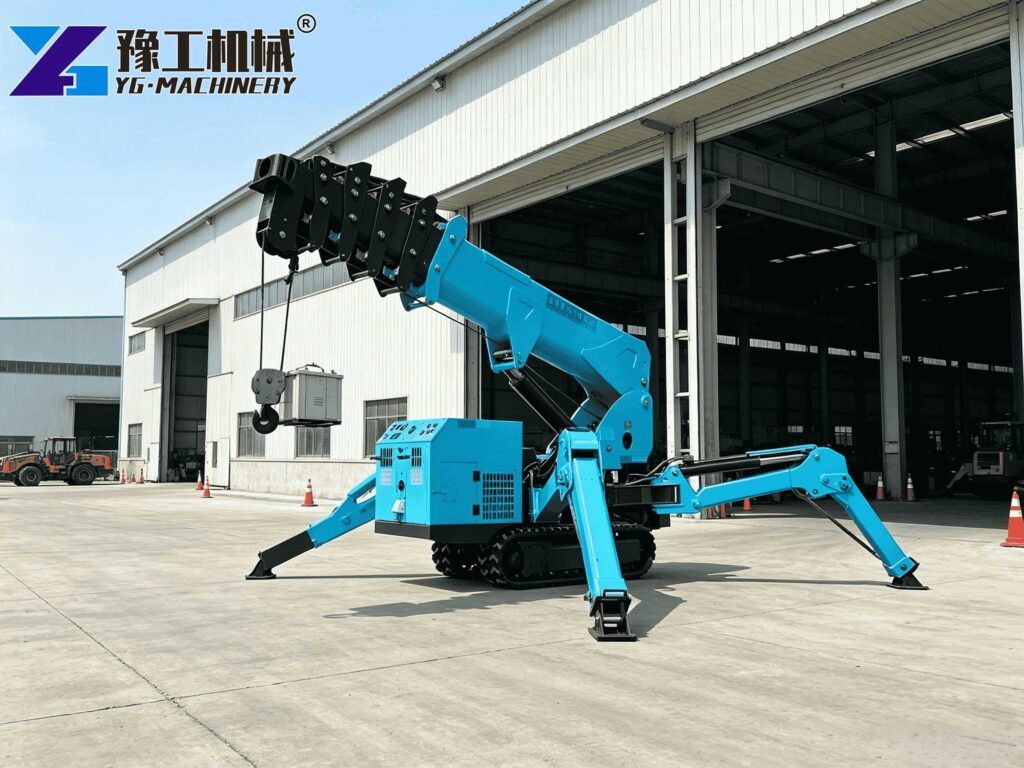
When working on tight urban job sites or restricted indoor spaces, traditional cranes simply cannot fit. A compact lifting solution becomes essential for safe material handling. The spider crane cost plays a central role in this decision for contractors and project owners worldwide. These small but powerful machines deliver serious lifting capacity in a tight footprint. They reach places where larger equipment has no access at all. Buyers face a wide range of options, capacities, and price points today. Choosing the right model means balancing performance, features, and total investment. This guide walks through key pricing factors, technical details, and applications to help you choose wisely.
| Model | YG-3 | YG-5 | YG-8 |
|---|---|---|---|
| Specification | 3t | 5t | 8t |
| Maximum working radius | 8.83m × 0.15t | 14m × 0.5t | 16.5m |
| Maximum above-ground head | 9.9m × 0.7t | 16.8m | 18m |
| Hook speed | 0–8m/min (4 rope) | 12m/min (4 rope) | 12m/min (4 rope) |
| Rope diameter | φ8mm × 45m | Φ11mm × 80m | Φ11mm × 80m |
| Boom type | 5-section boom, pentagonal | 5-section boom, pentagonal | 5-section boom, pentagonal |
| Boom length/time | 3.1–9.2m / 20sec | 12.3m / 54sec | 12.3m / 54sec |
| Boom angle/time | 0°–78° / 13sec | 0°–78° / 13sec | 0°–78° / 13sec |
| Slew angle/speed | 0–360° continuous / 60s | 0–360° continuous / 38s | 0–360° continuous / 38s |
| Walking way | Hydraulic motor drive | Hydraulic motor drive | Hydraulic motor drive |
| Walking speed | 0–2.5km/h | 0–2.5km/h | 0–2.5km/h |
| Grade ability | (25°) 36% | (25°) 36% | (25°) 36% |
| Operation type | Manual + remote option | Manual + remote option | Manual + remote option |
| L×W×H (mm) | 2950×980×1560 | 5000×1500×1900 | 5000×1600×2180 |
| Total weight (kg) | 2700 | 6200 | 7200 |
Key Factors That Shape Spider Crane Cost
The total spider crane cost depends on more than just the base price tag. Several factors combine to determine the final investment. Understanding each one helps you compare quotes accurately and avoid surprise expenses later.
- Lifting capacity and reach. Higher tonnage models use stronger steel and larger hydraulic systems. A 3-ton unit costs less than an 8-ton model with extended boom sections.
- Power source. Electric models suit indoor use but need stable power. Diesel-driven versions cost more but work anywhere on site.
- Control system. Basic manual operation keeps entry prices low. Full radio remote control adds cost but improves safety and precision.
- Outrigger configuration. More outrigger points mean better stability on uneven ground. They also raise overall machine cost.
- Transport and delivery. Shipping a mini crane overseas involves freight, customs, and port fees. The destination country affects total landed price.
How Spider Crane Cost Changes With Lifting Capacity
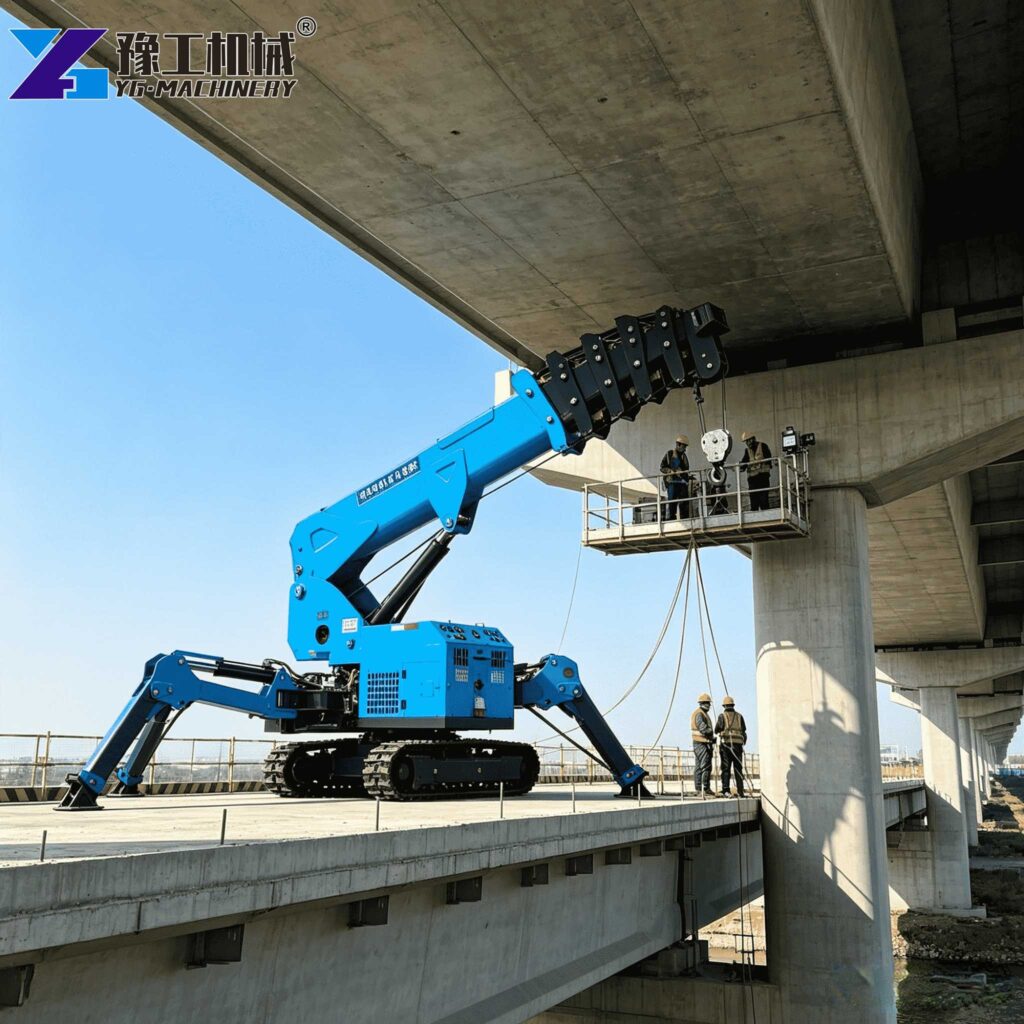
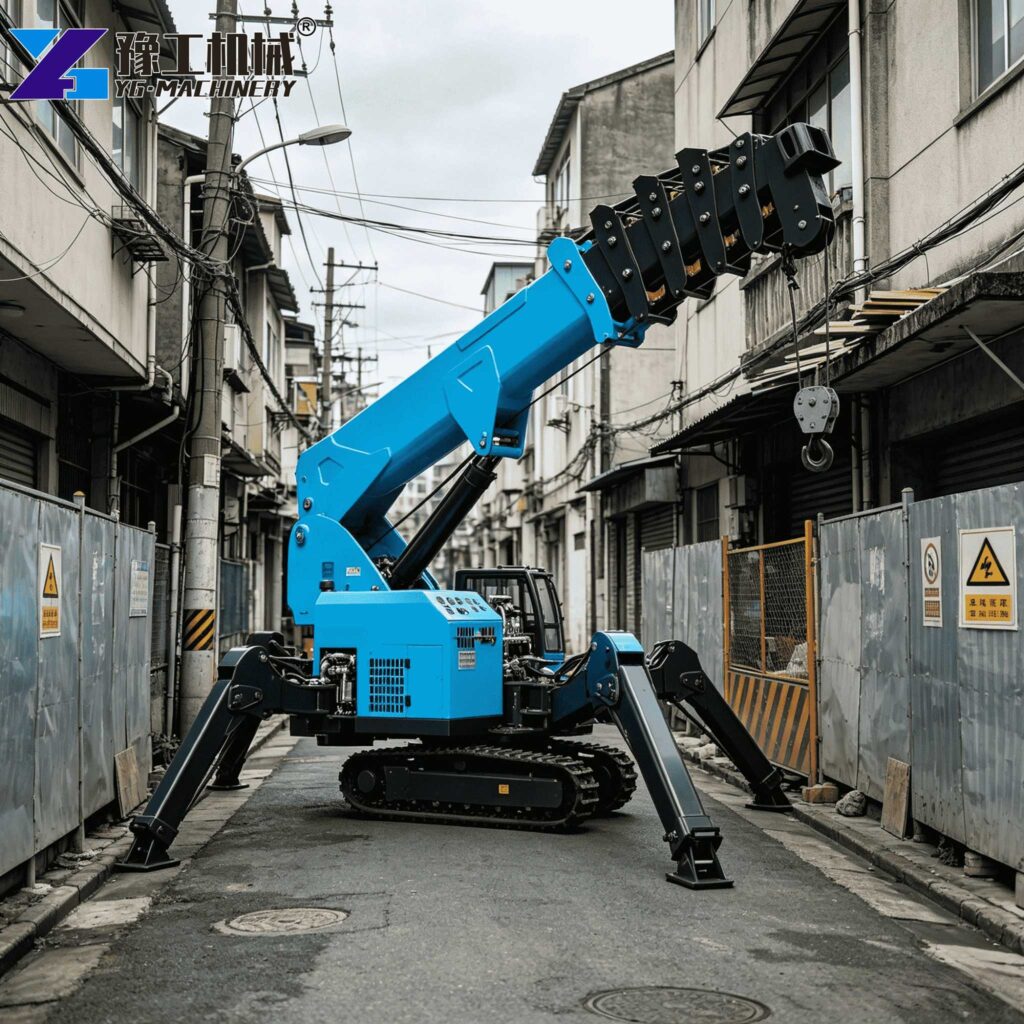
Capacity is the single biggest driver of spider crane cost. Choosing the right capacity requires balancing current needs and future work. Buy too small, and you limit the jobs you can take. Buy too large, and you pay for capacity you rarely use.
For light indoor work, a 3-ton model like the YG-3 often provides enough power. These units weigh under 3000 kg and fit through standard doorways. They represent the lowest entry point for purchase.
Mid-range 5-ton models cover most commercial construction tasks. Glass lifting, steel beam placement, and rooftop HVAC work all fit this class. The YG-5 offers a 14-meter working radius and suits general contractors and rental fleets.
Heavy-duty 8-ton machines handle the largest lifts on busy sites. Their longer booms and higher capacity carry a higher investment. Companies running multiple large projects get the best return from the 8-ton class.
Spider Crane Cost Breakdown by Power and Control Type
Power source and control options directly affect spider crane cost. Electric models cost less upfront and produce zero emissions. They work well inside buildings and enclosed spaces where fumes would be a problem. However, they need reliable power on site.
Diesel-powered units cost more to buy but offer complete independence. They work in remote locations without access to electricity. Many buyers choose diesel for outdoor construction and mining work.
Manual operation keeps the base price down for budget buyers. Most entry-level models come with manual controls as standard. Upgrading to radio remote control adds to the price but delivers clear benefits. Operators can stand back from the load and see the lift from the best angle. This improves both safety and precision on every job.
Spider Crane Cost Differences Between Suppliers and Regions
Pricing for the same capacity can vary a lot between suppliers. This gap does not always reflect quality differences. Often it comes down to factory location and business structure.
Chinese manufacturers generally offer the best value for money. Lower production costs and mature supply chains help them deliver certified machines at competitive rates. European brands carry higher prices, partly for their name and partly for local support.
Always look beyond the headline number when comparing quotes. Check what comes as standard and what counts as an extra. Additional hooks, special tires, or warranties can raise total cost. Request a full breakdown before you decide.
Spider Crane Cost for Crawler vs Wheeled Models
A crawler spider crane uses tracked undercarriages instead of standard wheels. Tracks spread machine weight over a larger area to reduce ground pressure. This design works well on soft soil, muddy ground, or sensitive floors.
Crawler models typically cost more than wheeled versions. The track system adds complexity and material to the chassis. The extra investment pays off on jobs where wheeled units cannot move safely. Outdoor landscaping and unfinished sites often need tracked mobility.
Wheeled spider cranes remain the most common choice for general work. They move faster on hard surfaces, cost less to buy, and work well on finished floors. Most maintenance, renovation, and installation jobs use wheeled mini cranes as standard.
Spider Crane Cost Worth It: Key Applications
Spider cranes serve a surprisingly wide range of industries. Their compact size opens up lifting possibilities that standard mobile cranes cannot match.
- Curtain wall and glass installation. High-rise buildings use spider cranes to lift glass panels from inside floor slabs. The machine fits through openings and works from the interior.
- HVAC and mechanical services. Rooftop units, chillers, and duct sections need precise placement in tight spaces. A spider crane positions itself right next to the work area.
- Steel erection and metalwork. Small steel frames, staircases, and platforms go up faster with a dedicated mini crane on site.
- Museum and heritage projects. Historic buildings need careful handling and low floor loadings. Spider cranes distribute weight through multiple outriggers.

Project Case: Lima, Peru Theater Restoration
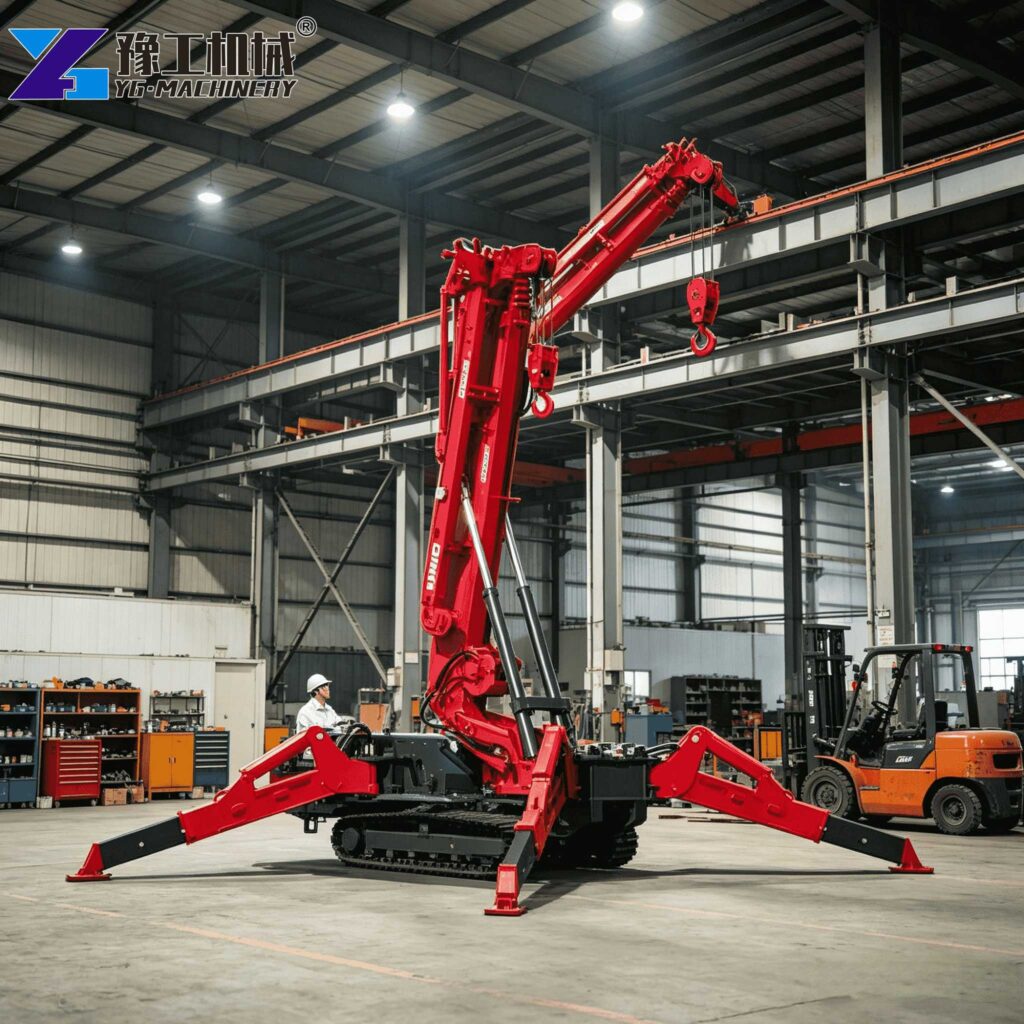
Last year, a restoration team worked on a historic theater in central Lima. They needed to install a new steel lighting truss above the main stage. The building had narrow doorways, plaster ceilings, and no access for a standard crane.
The team chose a YG-5 spider crane for the job. The machine entered through a side service corridor. It unfolded its outriggers on the wooden stage floor with rubber pads for protection.
Over three days, the crane lifted steel sections, lighting fixtures, and acoustic panels. Operators used remote control to fine-tune each lift. The project finished two days ahead of schedule with no incidents. The theater reopened on time for its annual season.
Frequently Asked Questions About Mini Spider Crane
Entry-level 3-ton spider cranes sit at the lower end of the price range. Final pricing depends on configuration, power source, and shipping. Contact a supplier for a detailed quote matched to your needs.
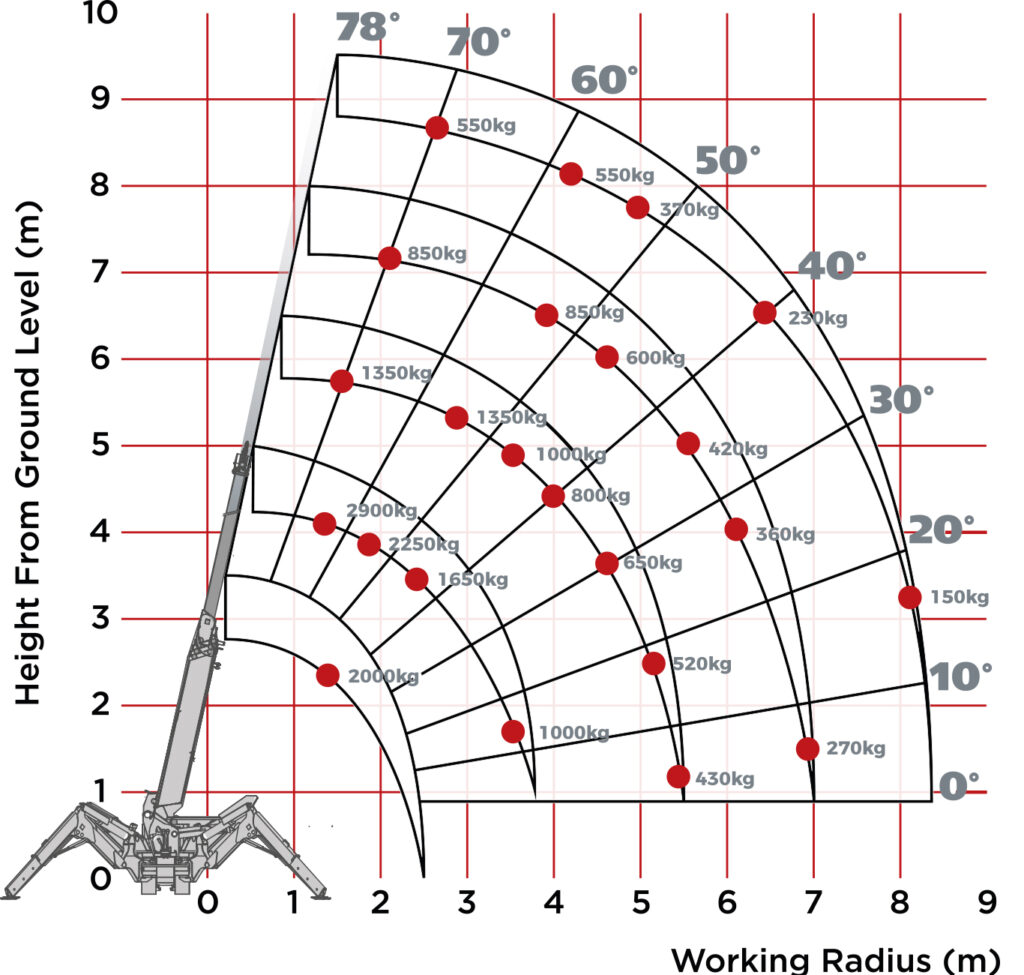
Capacity decreases as the boom extends outward. Every spider crane comes with a load chart for different radii and angles. Always consult the load chart before planning any lift.
Diesel models typically have a higher initial price than electric equivalents. The engine and fuel system add components and cost. Electric versions cost less and produce zero emissions for indoor work.
Yes, crawler models work indoors with the right track pads. Tracks spread weight evenly and move over finished floors without harm. Check manufacturer specs for floor loading limits before use.
Why YG Machinery Is Your Trusted Supplier
YG Machinery supplies reliable spider cranes to customers across six continents. Our factory builds each machine to international safety standards. We use proven hydraulic components and high-strength steel.
We support clients from first inquiry long after delivery. Our technical team helps you select the right model and configuration. We provide operation manuals, spare parts catalogs, and video guidance.
Every machine leaves our factory fully tested and inspected. We arrange professional packaging and handle all export documentation. We tailor our service to match your requirements.
Get Your Personalized Quote Today
Ready to find the right spider crane for your next project? Reach out to YG Machinery for a free, no-obligation quote. Our team reviews your needs and provides clear pricing with no hidden fees.
Contact us by email at admin@yugongheavy.com or send a WhatsApp message to +86 183 3715 2861. Visit our website at yugongheavy.com to see the full product range. Tell us about your project and let us help you make the right choice.