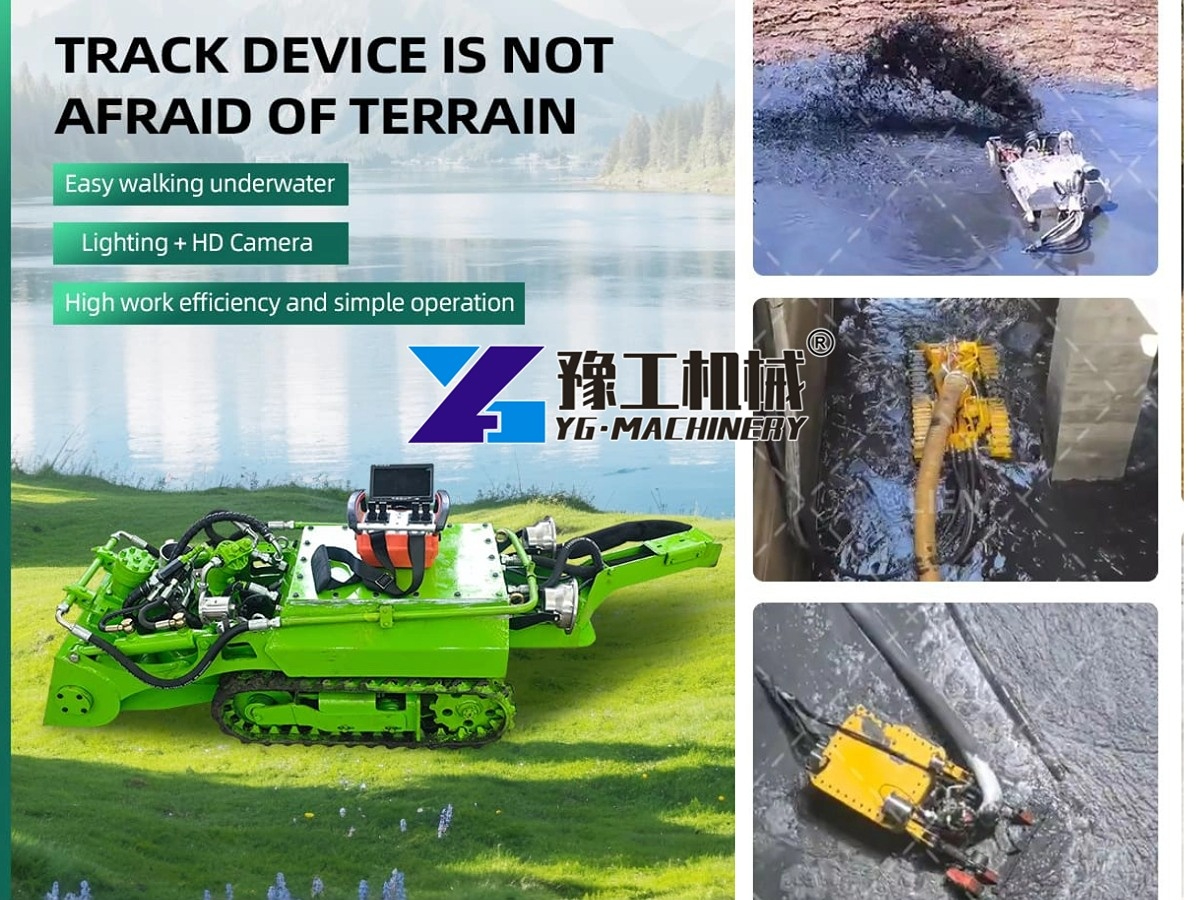
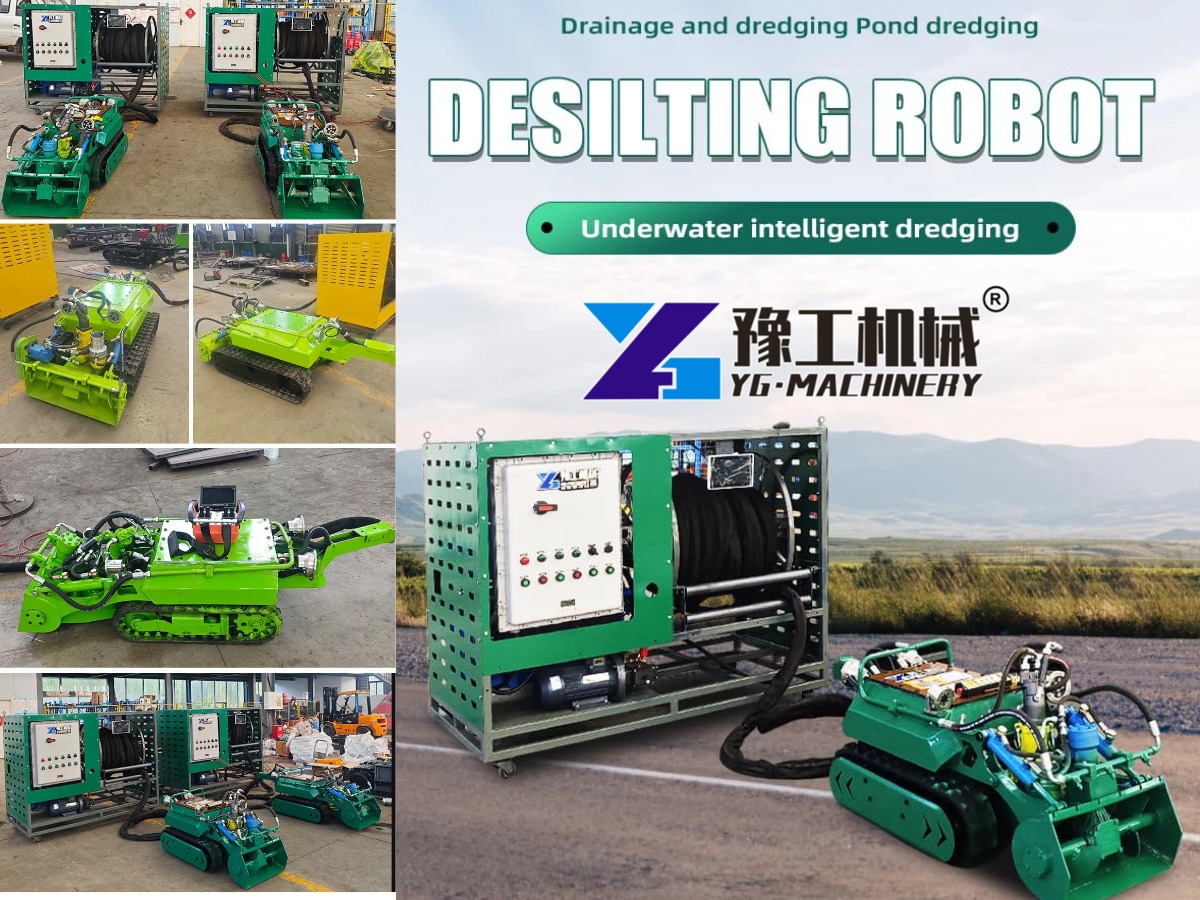
Brisbane Water, a municipal wastewater utility in Queensland, faced a critical sewer capacity crisis in early 2025. Their 2.4km main trunk sewer had not been cleaned in over eight years. Sediment buildup reduced pipe capacity to only 40% of original design flow. Overflow events occurred weekly during heavy rain, violating Environmental Protection Agency regulations. Manual cleaning attempts failed due to toxic hydrogen sulfide gas and unpredictable water flow. Brisbane Water needed a solution that could clean without extended shutdowns. They searched for an underwater pipeline cleaning robot and contacted YG Machinery with detailed project specifications.
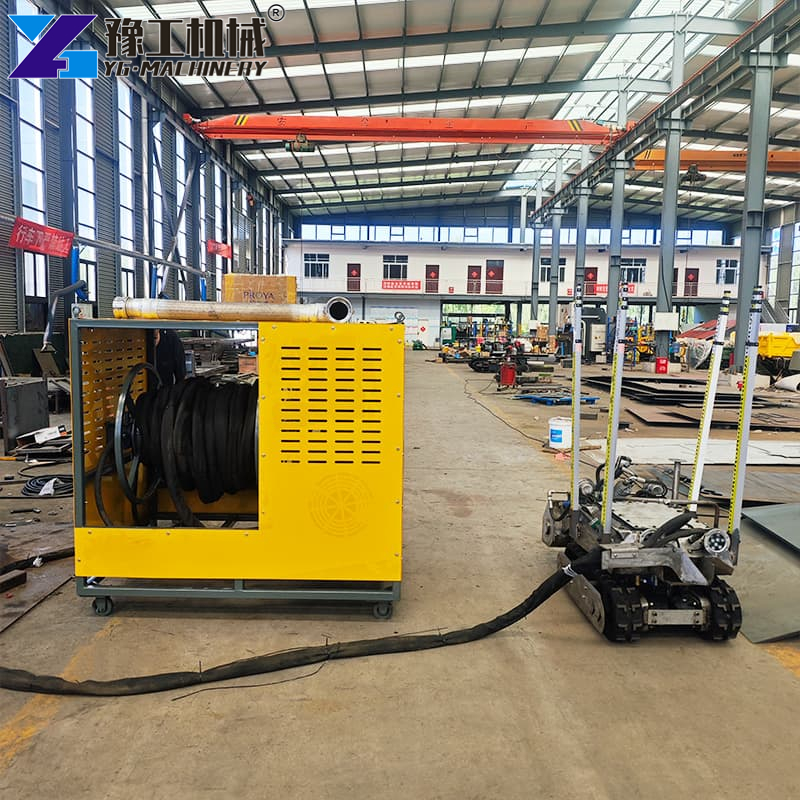
YG Hot Sale Pipeline Cleaning Robot Product Specifications
Why Australian Municipalities Needed an Underwater Pipeline Cleaning Robot
Brisbane Water’s crisis is not unique. Aging sewer infrastructure is a growing challenge across Australian cities. Pipes built in the 1980s and 1990s now exceed their design life. Urban growth has pushed flow volumes beyond original capacity. Traditional cleaning methods struggle with large diameter trunk sewers.
Manual cleaning requires confined space entry. Workers face exposure to toxic gases including hydrogen sulfide and methane. High-pressure water jetting wastes enormous volumes of clean water. It also requires full pipe dewatering, which means long service shutdowns.
The regulatory environment in Australia is tightening. Sewer overflow penalties under the Environmental Protection Act can reach AUD 500,000 per incident. Municipal utilities face pressure to find safer and more efficient cleaning methods.
Brisbane Water needed a solution that met three criteria: remote operation to eliminate confined space entry, continuous operation without full pipe dewatering, and sufficient capacity for heavy sediment loads. They searched for a pipeline dredging robot manufacturer with proven municipal experience and found YG Machinery.
Professional insight: For trunk sewers over DN600, always evaluate remote-operated options before traditional methods. Confined space entry costs include gas monitoring, rescue teams, and ventilation. These add AUD 2,000-5,000 per day to project costs.
How the Underwater Pipeline Cleaning Robot Solved the Problem
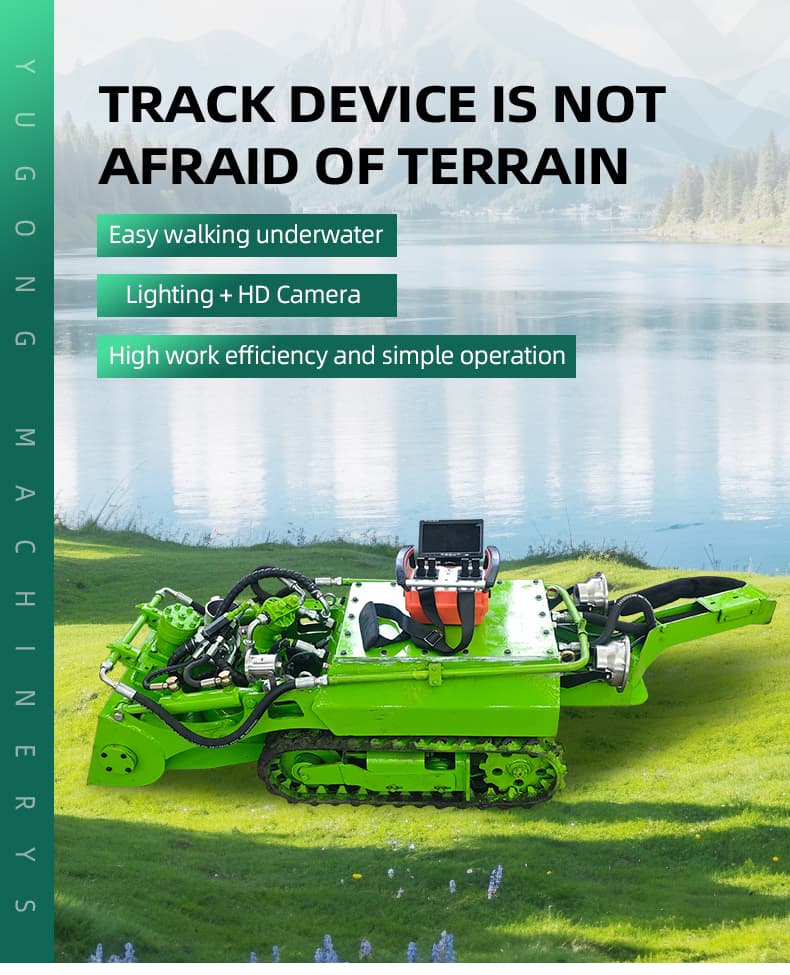
We recommended the YG-800 model for Brisbane Water’s project. Its 800mm dredging width matched the 1000mm internal pipe diameter well. The 200m³/h pump flow handled heavy sediment loads efficiently. The tracked chassis provided stable movement on uneven pipe bottoms.
Key specifications for the selected YG-800 model:
Robot dimensions: 1600×850×700mm, fitting through standard DN600 access points
Robot weight: 400kg, with tracked design for stable pipe bottom traction
Pump flow rate: 200m³/h, sufficient for heavy sediment evacuation
Particle size handling: up to 38mm, covering typical sewer debris
Main motor power: 30kW hydraulic system on surface
Wireless remote control with underwater LED lighting for real-time operation
Standard hydraulic hoses: 50m length for adequate working range
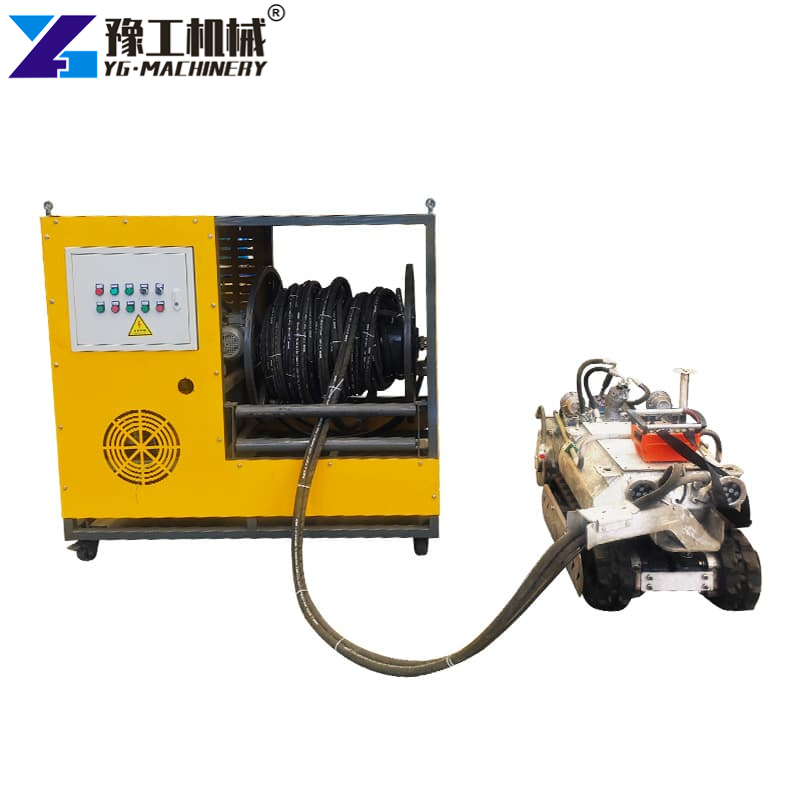
The hydraulic power station was positioned on the surface. Hydraulic hoses connected the surface station to the robot. This arrangement kept heavy equipment out of the work area. The wireless remote control allowed operation from a safe distance.
Professional insight: Always match robot width to 80-90% of the pipe internal diameter. This ensures full-width coverage without getting stuck. For pipes DN700-DN1000, the YG-700 or YG-800 models are ideal choices.
Underwater Pipeline Cleaning Robot On-Site Installation and Commissioning
The robot shipped from Qingdao port via LCL container. It arrived at Brisbane port in 16 days. Customs clearance was completed in 3 days with proper documentation. Local transport delivered the equipment to the first access point.
Before starting work, we conducted a thorough site preparation. The access pit required proper shoring and gas monitoring equipment. The hydraulic power unit was set up on the surface near the access point. All hydraulic connections were tested for leaks.
Safety is critical even with remote-controlled equipment. We verified that the access pit had adequate ventilation. A confined space rescue team remained on standby throughout the operation. The operator was trained on emergency stop procedures.
The first run served as a test in a dry section of pipe. We verified wireless control response and pump pressure settings. The tracked dredging robot moved smoothly across the pipe bottom. Camera feed quality was clear under the underwater LED lights.
The actual cleaning operation started from the downstream section. The robot advanced at controlled speed while the cutter head broke up compacted sediment. The pump simultaneously evacuated the slurry to the surface collection point.
Professional insight: Always start cleaning from the downstream end. Working upstream allows gravity to assist flow and prevents pushing sediment into already-cleaned sections. Test run in dry or low-water conditions first to verify all systems before full deployment.
Underwater Pipeline Cleaning Robot Performance and ROI Analysis
The project completed all 2.4km in 28 working days. The robot operated continuously in three shifts. Average daily progress reached 85 meters of pipe cleaned.
Key performance results:
Flow capacity restored to 98% of original design specification
Sediment removal rate exceeded 95% by volume
Zero safety incidents during the entire project
Zero confined space entries required for workers
Average daily output: 120m³ of sediment removed
The project cost totaled AUD 185,000 including equipment, crew, and surface disposal. Brisbane Water estimated that traditional methods would have cost AUD 420,000 and required 12 weeks of continuous shutdown. The remote-controlled sewer cleaning robot approach saved 56% in cost and 67% in time.
Brisbane Water’s operations manager stated that the underwater pipeline cleaning robot paid for itself in avoided environmental penalties alone. The projected penalties for continued overflow events totaled AUD 280,000. The entire project finished in 4 weeks versus an estimated 12 weeks by manual methods.
The utility now plans to deploy the robot on three additional trunk sewer projects this year. They also recommended YG Machinery to two neighboring utilities facing similar challenges.
Professional insight: When calculating ROI, include avoided regulatory penalties alongside direct cost savings. In Australia, sewer overflow penalties can exceed equipment costs many times over. Remote cleaning also eliminates worker compensation insurance costs for confined space work.
Choosing a Pipeline Dredging Robot Manufacturer for Your Project
Selecting the right manufacturer affects your total project outcome far more than the machine price alone. A reliable pipeline dredging robot manufacturer provides technical support, spare parts availability, and operator training.
Key evaluation factors when selecting a manufacturer:
Verify project experience in similar pipe diameters and sediment conditions
Ask about spare parts lead times and shipping options to your country
Request video demonstrations on sediment types similar to your project
Confirm warranty coverage and technical support response time
Check whether the manufacturer provides on-site training for operators
Ensure the remote control system integrates with your existing CCTV inspection equipment
Professional insight: Always ask for at least three reference projects from municipal or industrial clients. A manufacturer who can connect you with existing customers demonstrates confidence in their product. Also verify that the robot meets local safety standards for electrical equipment and confined space operations.
Proper maintenance determines robot lifespan and operational reliability. Sewer environments are harsh with corrosive gases, abrasive sediment, and constant moisture exposure. Each operation requires post-use cleaning and inspection.
Essential maintenance practices:
Flush the robot thoroughly with freshwater after every use
Inspect hydraulic hoses and electrical connectors every 10 operating hours
Grease all track chain joints weekly during active projects
Check cutter blade sharpness before each deployment and replace when worn
Test wireless control range and battery level daily
Inspect track pad wear monthly and replace when thickness drops below 5mm
Store the robot in a dry, covered area when not in use
The cutter blades typically last 200-300 operating hours before replacement. Track pads last 500-800 hours depending on pipe bottom conditions. Hydraulic seals should be inspected and replaced annually.
Professional insight: Post-use freshwater flushing is non-negotiable in sewer applications. Hydrogen sulfide residue causes rapid corrosion on metal surfaces. A 15-minute flush after every operation extends the robot’s structural life by years. Keep a maintenance log to track component replacement cycles.
Planning a sewer cleaning or pipeline rehabilitation project? YG Machinery provides factory live video tours, real-time robot demonstrations, and full on-site commissioning guidance. Our technical team responds within 24 hours with equipment recommendations matched to your pipe diameter and project scope. Send us your pipe specifications, sediment conditions, and project timeline. We will prepare a customized solution with detailed quotation. Contact YG Machinery today and modernize your pipeline maintenance operations.
pipeline cleaning robot price
pipeline dredging robot manufacturer
hydraulic pipeline cleaning robot
tracked dredging robot pipe cost
Previous slide
Next slide
FAQ About Remote Controlled Sewer Cleaning Robot
What pipe diameters can the underwater pipeline cleaning robot handle?
The YG series covers pipe diameters from DN500 to DN1200. The YG-800 model used in this project works in pipes with 700-1000mm internal diameter. Choose the model based on your pipe’s actual internal measurement.
How fast does the robot move during the cleaning operation?
All models feature 3-15m/s track travel speed. Actual cleaning speed depends on sediment density. For heavily compacted sediment, expect 10-20 meters per hour. For loose sludge, progress can reach 40-60 meters per hour.
Can the robot operate in fully submerged conditions?
Yes, all models are designed for full submersion. The robot features waterproof electric motors, sealed control electronics, and underwater LED lighting. It operates effectively in water depths up to the pipe crown.
What is the maximum sediment particle size the robot can handle?
The YG-800 handles particles up to 38mm. The YG-1200 model handles up to 60mm particles. For pipes with large debris, install a surface screening system to prevent pump blockage.
How many operators are needed to run the robot?
Typical operation requires 2-3 trained personnel. One operator controls the robot via wireless remote. One technician manages the hydraulic power unit. One safety observer monitors the access point and surrounding conditions.
Which model should I choose for my project?
For pipes DN500-DN700, choose YG-500 or YG-600. For DN700-DN1000, choose YG-700 or YG-800. For DN1000-DN1200, choose YG-900 or YG-1200. Send us your pipe diameter, sediment type, and project length for a specific recommendation.