Construction companies face a common question when scaling wall finishing operations. Is the investment in an automatic rendering machine justified by actual project savings? The data from hundreds of global projects shows a clear answer. This equipment delivers 50-80㎡ per hour while cutting plastering labor costs by 30-40%. This article breaks down real costs and project returns. The data helps you make an informed buying decision.
| Parameter | YGWP-3 | YGWP-4 | YGWP-5 |
|---|---|---|---|
| Plaster Thickness | 2-30mm | 2-30mm | 2-30mm |
| Plaster Width | 0.8/1/1.2m | 0.8/1/1.2m | 0.8/1/1.2m |
| Plastering Height | 2.5-3m | 3-4m | 3-5m |
| Operation Efficiency | 50-60㎡/h | 60-70㎡/h | 70-80㎡/h |
| Voltage | 220/380V | 220/380V | 220/380V |
| Power | 2.2kW | 2.2kW | 2.2kW |
Why Automatic Rendering Machine Cuts Labor Costs
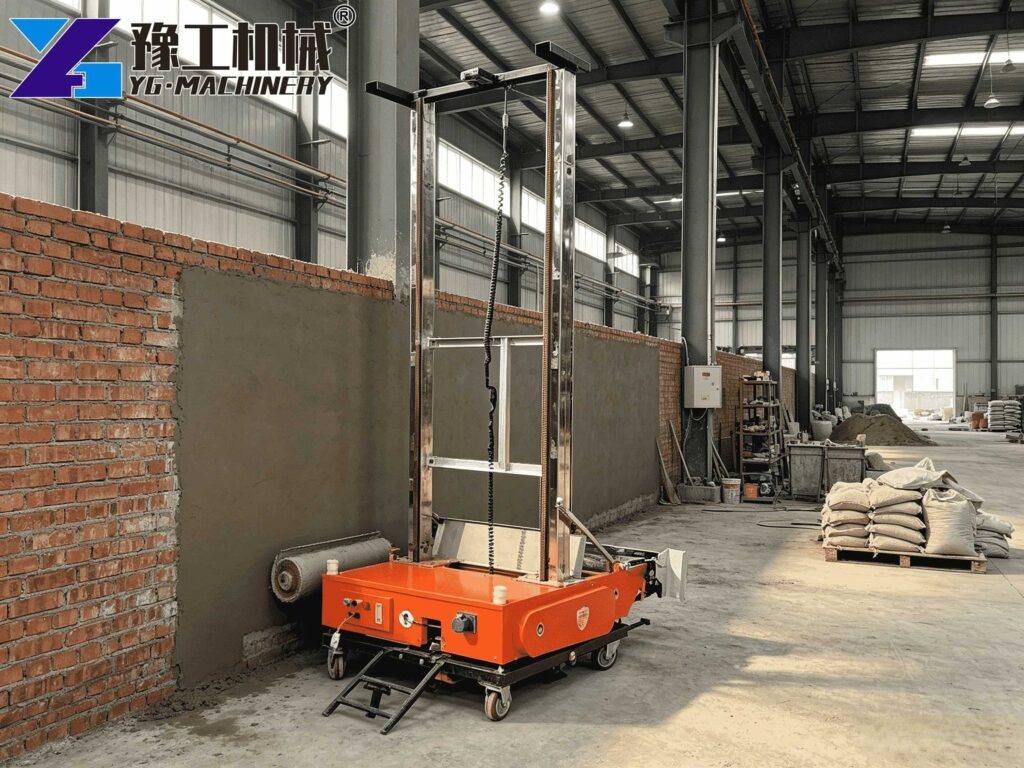
Manual wall plastering requires six to eight skilled workers for steady progress. Skilled plasterers command higher wages in most markets. Qualified worker availability continues to decline each year. An automatic rendering machine completely changes this equation.
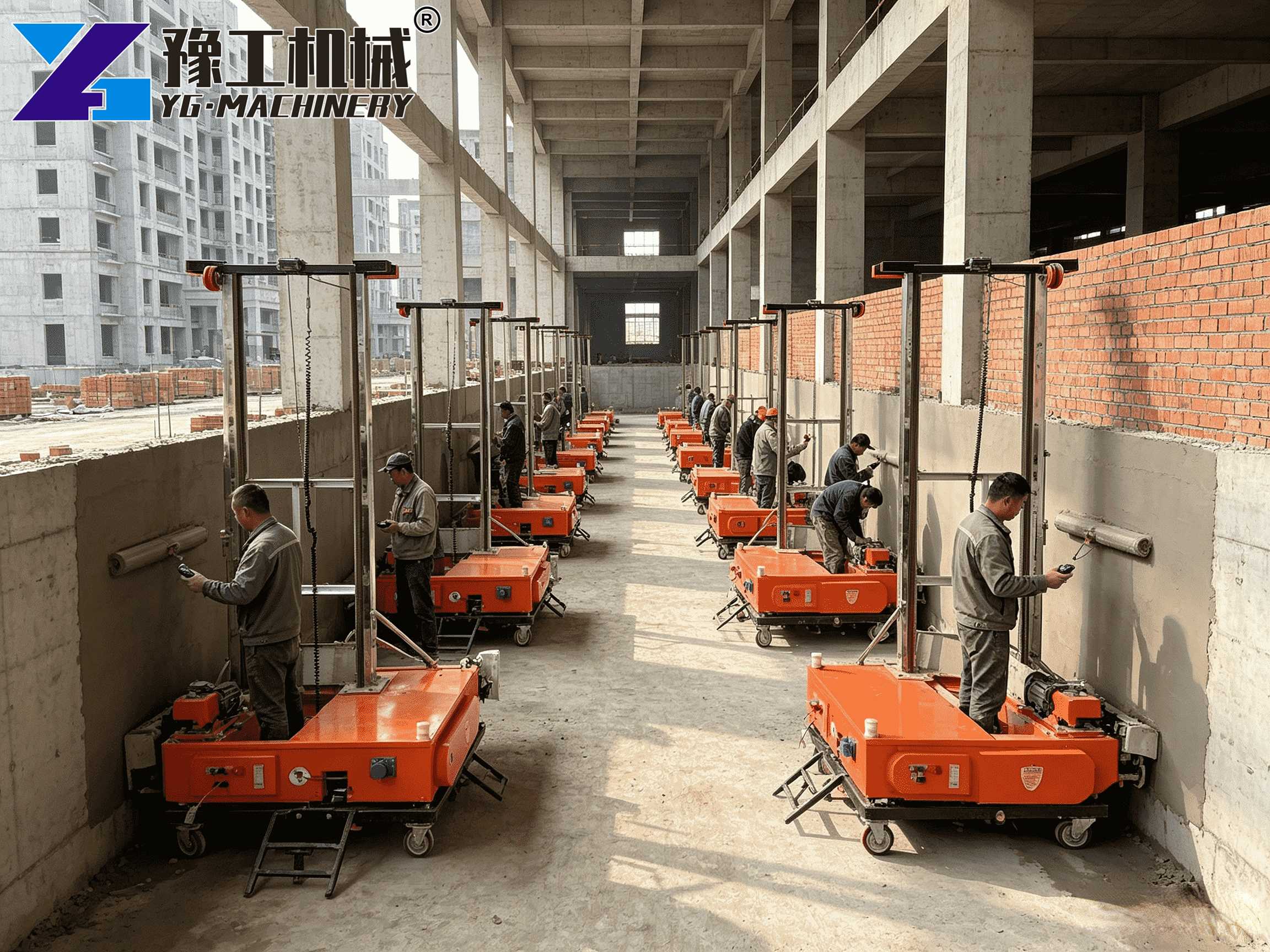
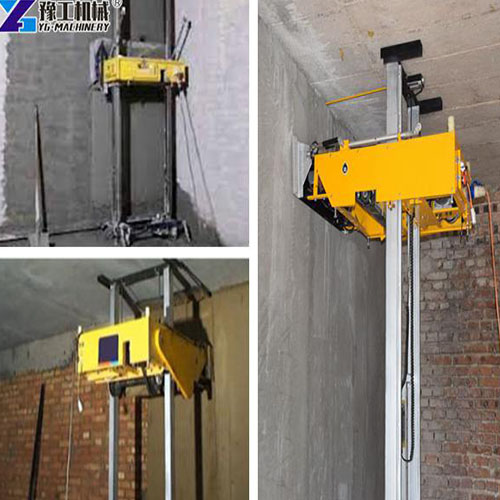
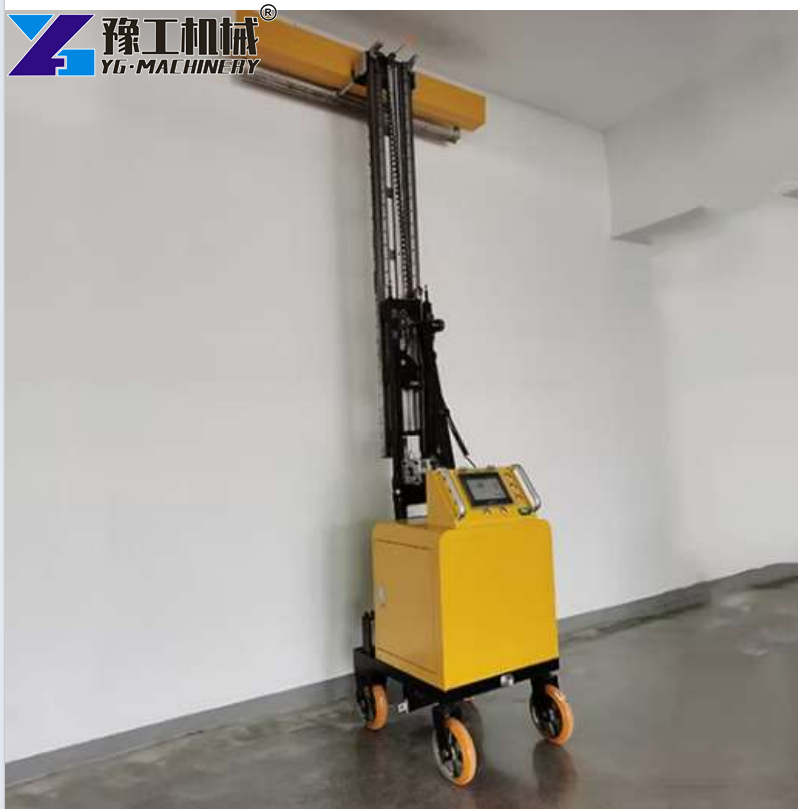
One machine with two operators matches a full manual crew. The YGWP-5 model reaches 70-80㎡ per hour. This speed covers a standard room in under one hour. Fewer workers on site means lower daily payroll.
Labor savings translate to 30-40% cost reduction per project. Most contractors recover the equipment cost within three to four jobs. After payback, every project generates pure savings versus manual methods.
Automatic Wall Plaster Machine Price vs Manual Labor
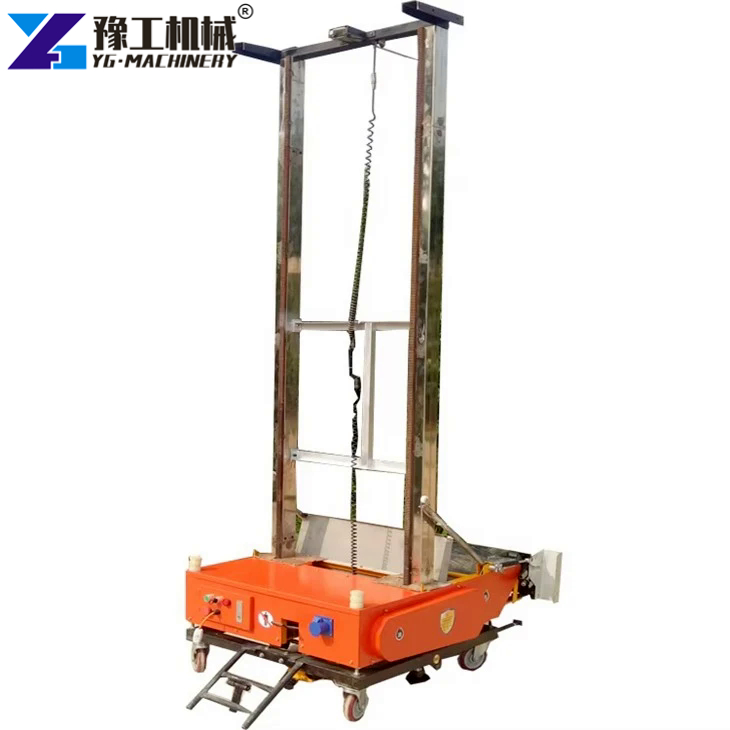
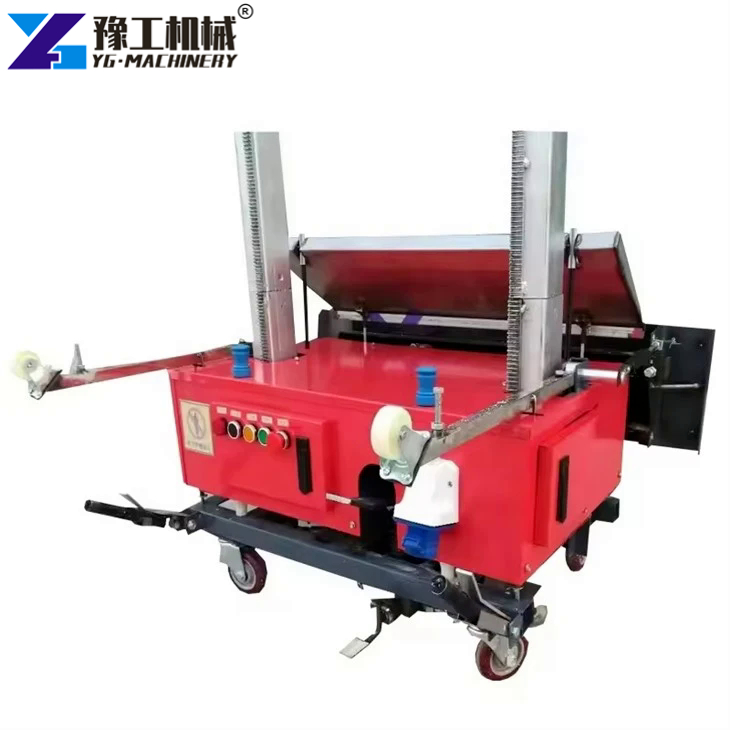
Understanding the automatic wall plaster machine price requires a full cost comparison. The machine cost includes the unit price, shipping, and setup. Manual plastering costs include wages, tools, scaffolding, and rework.
Consider a typical 5,000㎡ residential project. Manual plastering costs about $15,000-20,000 in labor alone. The same project with a machine costs $8,000-10,000 including rental. That is 35-50% savings on a single job.
For contractors with multiple projects per year, purchasing makes more sense than renting. Choose the model that matches your typical ceiling heights and output needs. The investment pays back quickly on any project above 2,000㎡.
Key Features That Make Automatic Rendering Machine Worth It
Compare what the automatic rendering machine delivers versus traditional manual plastering methods:
- Thickness range: 2-30mm adjustable vs 5-25mm by hand
- Working speed: 50-80㎡/h vs 8-10㎡/h per manual worker
- Plaster width: up to 1.2m per pass vs 0.5m by trowel
- Height coverage: up to 5m without scaffolding vs 2m max by hand
- Surface consistency: ±2mm flatness vs ±5mm manual variation
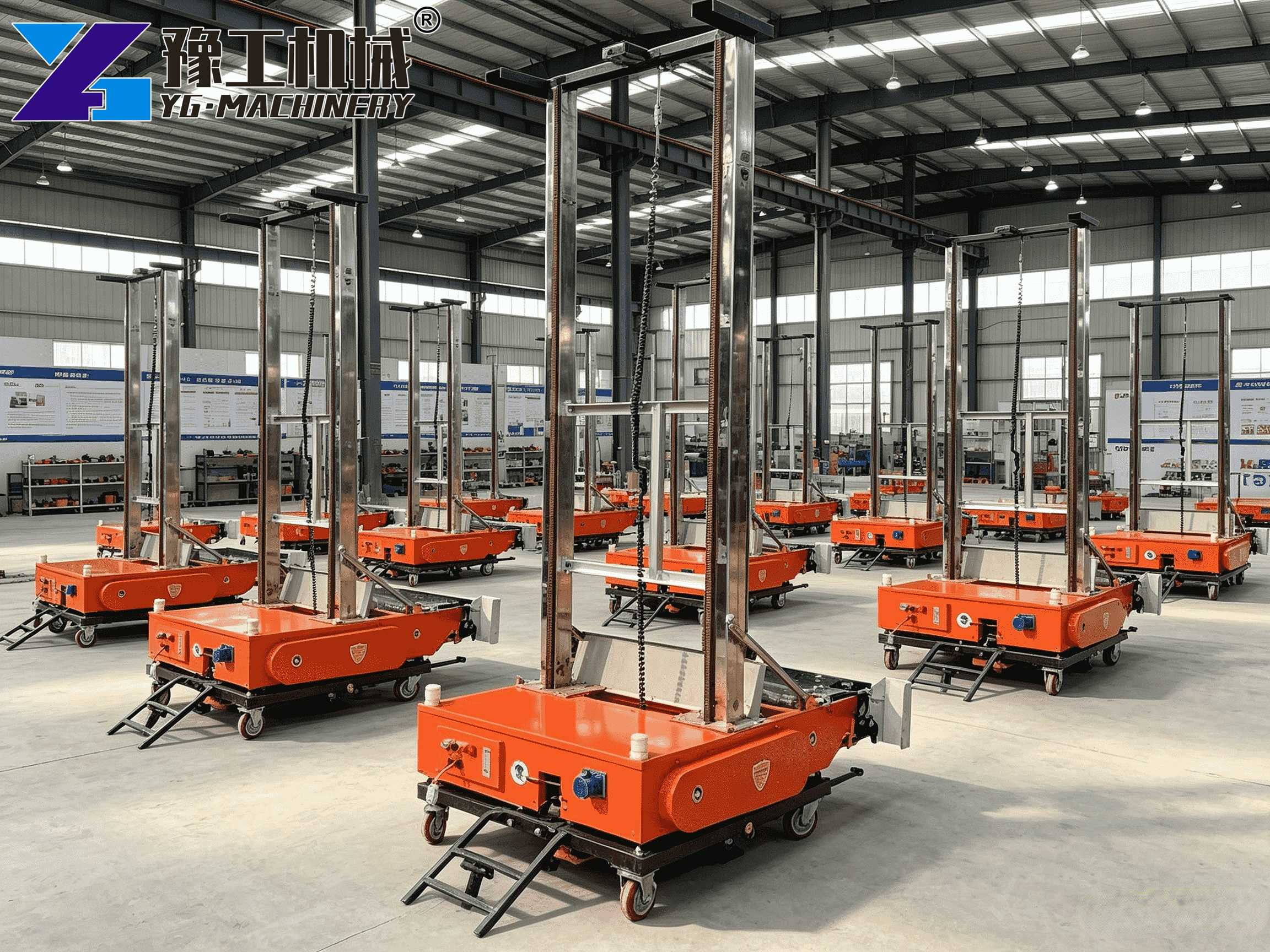
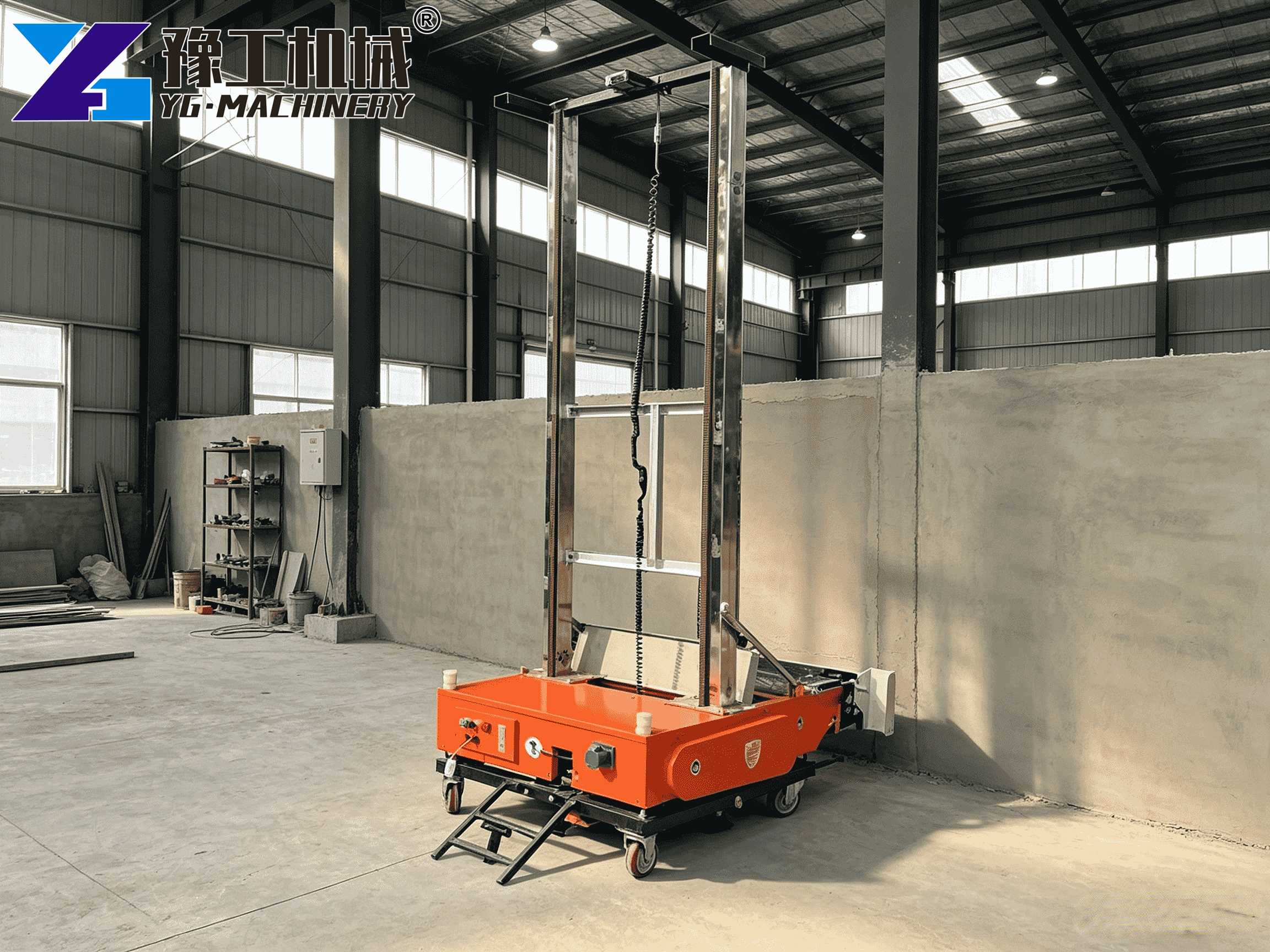
Three model options let buyers match equipment to specific project needs. The YGWP-3 suits rooms up to 3 meters high. The YGWP-4 handles standard commercial ceiling heights. The YGWP-5 covers high ceilings in warehouses and atriums. All three models share the same 2.2kW motor and dual voltage support.
Cost of Plastering Machine Ownership and Maintenance
The cost of plastering machine ownership goes beyond the purchase price. Smart buyers calculate total operating costs over the equipment lifespan. Here is what to expect.
- Electricity: 2.2kW per hour across all models. Daily power costs stay under $5 on most sites.
- Spare parts: Replacement feed tubes and rail components cost under $100 per year.
- Routine maintenance: Daily cleaning and weekly lubrication take under 15 minutes.
- Motor service: The 2.2kW motor needs no servicing for 2,000 operating hours.
Most owners report annual maintenance costs below $500. Compared to labor savings of $10,000-15,000 per year, the return is substantial.
Automatic Rendering Machine Applications and Real Results
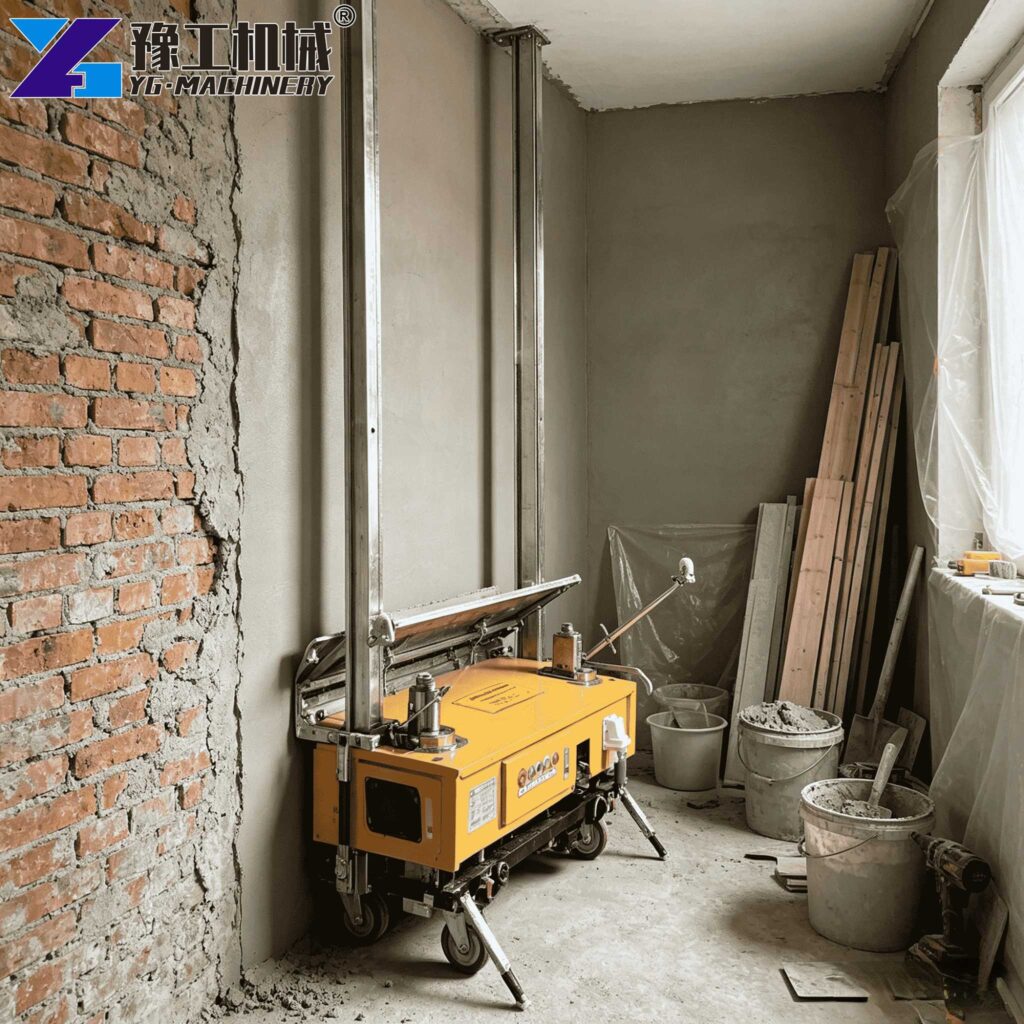
The automatic rendering machine works across multiple building types:
- Government housing: High-volume repetitive layouts suit machine plastering
- Commercial offices: Large floor areas with standard ceiling heights
- Warehouse facilities: High walls benefit from extended height models
- Educational buildings: Classrooms and corridors with uniform surfaces
- Retail centers: Fast turnaround requirements for store fit-outs
Case 1: Government Housing Project in Bogotá, Colombia (High-Altitude & Multi-Story Application)
A government housing complex in Bogotá, Colombia required interior plastering for 12 six-story apartment blocks. Each block contained 24 units with 200㎡ of wall area per floor. The total project scope covered 17,280㎡ across all buildings.
The contractor chose the YGWP-5 model for its 3-5 meter height range. Bogotá sits at 2,640 meters above sea level. The high altitude and cool temperatures affected mortar setting times. Cooler conditions actually helped by extending the working window. Workers applied a 15mm base coat on all exterior-facing walls. Interior partitions received a thinner 10mm finish for painting preparation.
The 1.2m plaster width covered most wall sections in two passes. The machine averaged 75㎡ per hour across all surfaces. Two teams operated in rotation across different blocks each day. All 12 blocks were completed in 40 working days. The project finished 6 days ahead of the original manual schedule. Total plastering costs came in 38% below the initial labor-only budget. The government agency praised the consistent finish quality across all units. The contractor has since purchased additional units for other ongoing projects.
Case 2: Villa Compound Project in Cairo, Egypt (Hot Climate & Flexible Multi-Surface Plastering)
A residential compound in Cairo, Egypt needed plastering for 8 four-story villa buildings. Each building contained 16 separate apartment units. Exterior walls required a 20mm weather-resistant coat. Interior walls used a standard 12mm finish. The combined scope reached 14,400㎡.
Cairo’s hot desert climate caused rapid mortar drying during daytime work. The team added retarder additives to extend working time. The YGWP-4 model handled both exterior and interior heights with its 3-4 meter range. Operators switched between 1.2m width for large exterior walls and 0.8m width for narrow interior sections.
Daily output averaged 65㎡ per hour across all surfaces. Workers completed all 8 buildings in 35 working days. Quality inspections showed 95% of walls passed flatness requirements on the first check. The remaining 5% needed only light touch-up before painting. The project saved 35% compared to the manual plastering quote from a competing contractor. The developer ordered two additional machines for the second compound phase.
FAQ About Automatic Rendering Machine
Most contractors recover the full purchase price within 3-4 residential projects. The payback period shortens with higher annual project volumes.
Pick YGWP-3 for rooms under 3 meters high. Select YGWP-4 for standard 3-4 meter ceilings. Choose YGWP-5 for high ceilings up to 5 meters.
The machine works on concrete, brick, block, and prepared drywall. Ensure surfaces are clean and free of loose debris.
Basic training takes 1-2 days for most workers. We provide video guides and online support for every buyer.
Why Choose YG Machinery
YG Machinery manufactures automatic rendering machines with proven results across 50+ countries. Our YGWP series serves contractors in South America, Africa, the Middle East, and Southeast Asia.
Our service includes:
- Free project assessment and model recommendation
- Custom voltage and width configuration options
- One-year warranty on all core components
- Lifetime spare parts at direct factory pricing
- Online video training and troubleshooting support
Get Your Free Quote Today
Find out how much you can save on your next plastering project. Contact YG Machinery for a tailored cost analysis.
- Email: admin@yugongheavy.com
- WhatsApp/Phone: +86 183 3715 2861